Kurzantwort
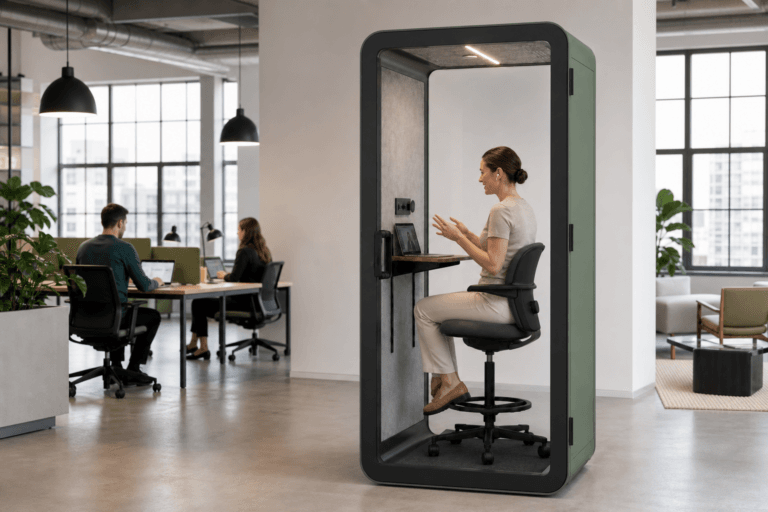
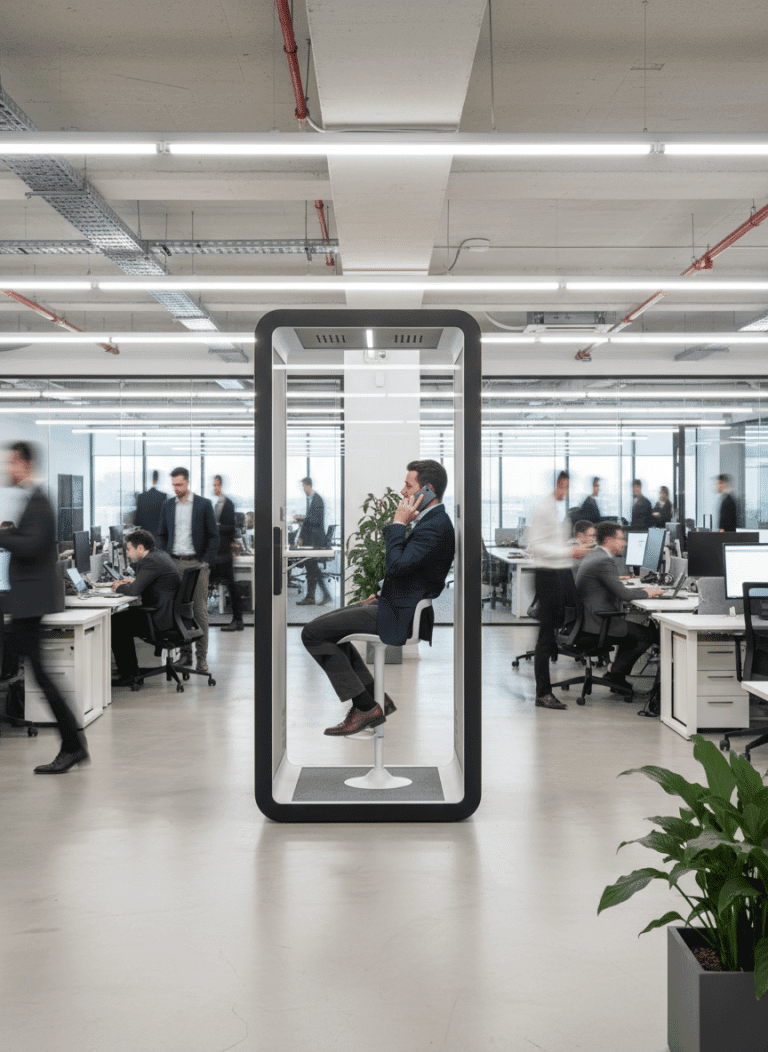
Telefonzellen in Amerika bezeichneten früher geschlossene öffentliche Münztelefone. Diese Zellen sind heute selten, weil persönliche Mobiltelefone den Bedarf an gemeinsam genutzten öffentlichen Telefonen weitgehend beseitigt haben. In heutigen Gesprächen über US-Arbeitsplätze meint „phone booth“ dagegen oft eine kompakte, innen aufgestellte Bürobox für private Anrufe, kurze Videobesprechungen oder konzentrierte Gespräche. B&H Ergonomics liefert dieses moderne Büroprodukt, keine öffentlichen Münztelefone, und kann Lieferungen in die gesamten Vereinigten Staaten organisieren.
Zuletzt aktualisiert: 14. Juli 2026 | Autor: Richard | Geschätzte Lesezeit: 8 Minuten
Was bedeutet „Phone Booth“ heute in Amerika?
Die Bedeutung hängt vom Kontext ab.
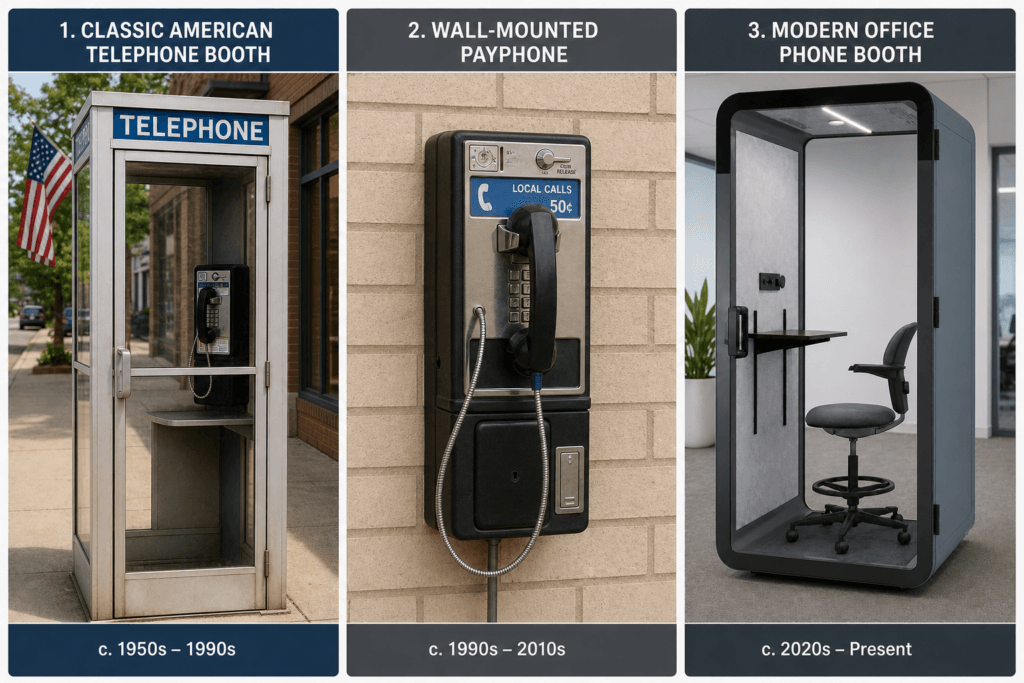
In einem Gespräch über Stadtstraßen, Verkehr oder die Geschichte der Telekommunikation ist eine phone booth gewöhnlich ein öffentliches Telefon in einer kleinen Einhausung. Dabei denkt man vielleicht an ein Münztelefon, eine Falttür und ein Telefonbuchregal.
Bei einem amerikanischen Büroprojekt bedeutet derselbe Ausdruck oft etwas anderes. Facility Manager, Planer, Händler und Arbeitsplatzkäufer verwenden „phone booth“ häufig als Kurzbezeichnung für einen kleinen geschlossenen Arbeitsplatz, in dem eine Person telefonieren kann, ohne einen Besprechungsraum zu belegen oder Kollegen in der Nähe zu stören.
Diese moderne Verwendung ist besonders in Großraumbüros verbreitet. Die Box ist nicht an ein öffentliches Telefonnetz angeschlossen. Beschäftigte nehmen normalerweise ein Mobiltelefon oder einen Laptop mit in die Box, während die Einhausung einen abgegrenzten Ort für das Gespräch bietet.
Drei unterschiedliche Produkte mit ähnlichen Bezeichnungen
| Begriff | Typischer Standort | Hauptzweck | Eingebautes Telefon? | Typischer Nutzer heute |
|---|---|---|---|---|
| Traditionelle Telefonzelle | Straßen, Bahnhöfe, Hotels und andere öffentliche Orte | Einen geschlossenen Ort zur Nutzung eines gemeinsam genutzten Telefons bieten | In der Regel ja | Meist historische, erhaltene oder gelegentliche öffentliche Nutzung |
| Öffentliches Münztelefon ohne vollständige Zelle | Verkehrsbereiche, Institutionen und begrenzte öffentliche Standorte | Zugang zu einem gemeinsam genutzten kostenpflichtigen Telefon bieten | Ja | Personen, die ein öffentliches Telefon benötigen, wo noch eines verfügbar ist |
| Moderne Telefonbox fürs Büro | Büros, Coworking-Bereiche, Bibliotheken und andere Arbeitsplätze | Einen privaten Ort für Anrufe oder kurze Online-Besprechungen schaffen | Normalerweise nicht | Beschäftigte mit eigenem Telefon oder Computer |
Der wichtige Unterschied liegt in Eigentum und Nutzung. Ein öffentliches Münztelefon ist Telekommunikationsinfrastruktur. Eine moderne Bürobox ist Arbeitsplatzinfrastruktur.
Eine kurze Geschichte der Telefonzellen in Amerika
Frühe gemeinschaftlich genutzte Telefone wurden häufig an öffentlichen oder halböffentlichen Orten installiert, wo eine Umhausung dabei half, die telefonierende Person vom umgebenden Geschehen abzuschirmen. Die Zeitleiste zur Erfindung der Telefonzelle unterscheidet zwischen frühen gebührenpflichtigen Telefonzellen, Patenten für Telefonkabinen und münzbetriebenen Mechanismen, anstatt ihnen allen ein einheitliches Erfindungsdatum zuzuweisen. Mit der Ausweitung des Telefondienstes wurden Telefonzellen zu vertrauten Einrichtungen in Hotels, Bahnhöfen, Bürogebäuden, Restaurants, Flughäfen, Tankstellen und an Straßen in Städten.
Die Ausführungen variierten. Manche Zellen bestanden überwiegend aus Holz, spätere Versionen verwendeten oft Metallrahmen und Glasscheiben. Die geschlossene Form wurde optisch so wiedererkennbar, dass sie wiederholt in amerikanischen Filmen, Werbung und der Popkultur erschien.
Das National Museum of American History des Smithsonian bewahrt eine Telefonzelle des Bell Systems, ein Beispiel dafür, wie die Einhausung Teil der materiellen Geschichte der amerikanischen Telekommunikation wurde.
Während eines Großteils des zwanzigsten Jahrhunderts war der Wert einer öffentlichen Telefonzelle praktisch: Sie gab Menschen Zugang zu einem Telefon, wenn sie nicht zu Hause oder bei der Arbeit waren. Die Einhausung bot ein gewisses Maß an Privatsphäre und verringerte Störungen aus der Umgebung.
Gibt es in Amerika noch traditionelle Telefonzellen?
Ja, aber in den meisten amerikanischen Gemeinden gehören sie nicht mehr zum normalen Alltag der Kommunikation.
Einige traditionelle Zellen bleiben als erhaltene Objekte, architektonische Elemente, Sammlerstücke, öffentliche Kunst oder Neuheitsinstallationen bestehen. Münztelefone können auch in bestimmten Verkehrs-, institutionellen, abgelegenen oder auf Notfälle ausgerichteten Umgebungen vorhanden sein. Ihre Präsenz variiert je nach Ort. Deshalb gibt es keine einzelne aussagekräftige Antwort auf die Frage „wie viele Telefonzellen noch übrig sind“, ohne zu definieren, ob geschlossene Zellen, offene Münztelefone, inaktive Geräte und privat betriebene Telefone mitgezählt werden.
Für die meisten Amerikaner ist es heute ungewöhnlich, ein öffentliches Telefon zu finden. Deshalb kann eine aktuelle Suche nach „phone booth America“ eine Mischung aus historischen Fotos, noch vorhandenen Standorten, Filmreferenzen und modernen Arbeitsplatzprodukten liefern.
Warum gingen öffentliche Telefonzellen zurück?
Der Hauptgrund ist einfach: Für die alltägliche Kommunikation brauchten Menschen kein gemeinsam genutztes Telefon mehr.
Als Mobiltelefone allgemein mitgeführt wurden, musste man auf Reisen, bei Verabredungen oder einer Terminänderung nicht mehr nach einem Münztelefon suchen. Auch die Wirtschaftlichkeit änderte sich. Ein öffentliches Telefon benötigt einen Standort, einen Dienstanschluss, Wartung, Reinigung sowie Schutz vor Witterung oder Beschädigung. Bei sinkender Nutzung ist diese Infrastruktur schwer zu rechtfertigen.
Der Rückgang verlief schrittweise und nicht als einheitliche landesweite Abschaltung. Verschiedene Städte, Verkehrssysteme, Eigentümer und Telefonanbieter entfernten oder behielten Geräte zu unterschiedlichen Zeiten. Offene Münztelefonstände blieben mancherorts auch länger bestehen als vollständig geschlossene Straßenzellen.
Wie die Telefonzelle in amerikanische Büros zurückkehrte
Die öffentliche Telefonzelle ging zurück, doch die Grundidee der Einhausung blieb nützlich: Manchmal braucht eine Person einen kleinen privaten Ort zum Sprechen.
Großraumbüros machten diesen Bedarf erneut sichtbar. Beschäftigte verfügen vielleicht über ein Mobiltelefon und schnelles Internet, haben aber dennoch keinen geeigneten Ort für einen Kundenanruf, ein Vorstellungsgespräch, einen Telemedizin-Termin oder eine kurze Videobesprechung. Ein großer Konferenzraum ist für eine Person oft unnötig, während ein Anruf am Schreibtisch Kollegen ablenken und das Gespräch dem übrigen Büro zugänglich machen kann.
Hier passt die moderne Bürobox. Sie bringt die Einhausung nach innen und verzichtet auf das öffentliche Telefon. Praktisch gesehen ist sie ein kompaktes, raumähnliches Produkt, das auf Privatsphäre am Arbeitsplatz statt auf eine Telekommunikationsdienstleistung ausgerichtet ist.
Wenn Kunden in den USA B&H Ergonomics nach einer „phone booth“ fragen, meinen sie gewöhnlich dieses Büroprodukt. B&H verkauft, wartet oder betreibt keine öffentlichen Münztelefone. Wir liefern moderne Boxen für Organisationen, die einen festen Ort für Anrufe am Arbeitsplatz wünschen.
Wofür werden moderne Telefonboxen fürs Büro genutzt?
Die häufigste Nutzung ist unkompliziert: Ein Beschäftigter geht in die Box, um einen Anruf zu tätigen oder anzunehmen.
Weitere praktische Anwendungen sind:
- kurze Videobesprechungen, für die kein vollständiger Konferenzraum erforderlich ist;
- Vorstellungsgespräche oder Einzelgespräche;
- Anrufe mit Bezug zu Personalwesen, Vertrieb, Recruiting, Finanzen oder Kundensupport;
- persönliche Termine, die nicht an einem offenen Schreibtisch stattfinden sollten;
- kurze konzentrierte Arbeit, wenn das umgebende Büro ablenkt.
Eine Telefonbox fürs Büro sollte am besten als Raum für kurzfristige Anrufe einer einzelnen Person betrachtet werden, sofern ein bestimmtes Modell nicht für eine andere Kapazität oder Nutzung ausgelegt ist. Sie ersetzt nicht jeden Besprechungsraum, jedes Einzelbüro oder Bauvorhaben. Organisationen benötigen weiterhin größere Räume für Zusammenarbeit in Gruppen und Räume für längere Arbeitssitzungen.
Ich teile die Entscheidung gewöhnlich in zwei Fragen: Fehlt es an privaten Orten für Anrufe, und passen geschlossene Räume für eine Person in den täglichen Arbeitsablauf des Teams? Wenn beide Antworten ja lauten, kann eine Box eine direktere Lösung sein als für jeden Anruf größere Räume zu reservieren.
Wie B&H Ergonomics Telefonboxen fürs Büro in ganz Amerika liefert
B&H Ergonomics kann die Lieferung von Telefonboxen fürs Büro in den gesamten Vereinigten Staaten organisieren. Die Handelsbedingung und der endgültige Logistikplan hängen vom Bestimmungsort ab.
Für Projekte in den zusammenhängenden Vereinigten Staaten kann B&H DDP bis zu einem vereinbarten Bestimmungsort anbieten. Für Puerto Rico kann B&H CIF bis zu einem vereinbarten Hafen anbieten. Alaska, Hawaii und andere nicht zusammenhängende Ziele müssen einzeln geprüft werden, weil Route, Hafen, Inlandstransport und Anforderungen am endgültigen Standort abweichen können.
DDP und CIF sind Incoterms®-Handelsklauseln. Die Internationale Handelskammer erläutert, dass Incoterms® 2020 festlegt, wie Kosten, Risiken und Pflichten zwischen Verkäufer und Käufer verteilt werden. Der genaue benannte Ort oder Hafen bleibt in jedem Angebot wichtig.
Diese Handelsklauseln sollten nicht mit einer vollständigen Installationszusage verwechselt werden. Vor der Freigabe einer Sendung sollten Käufer und Lieferant Folgendes bestätigen:
- den benannten Lieferort oder Bestimmungshafen;
- wer nach der angebotenen Klausel die Zollabfertigung und Kosten am Bestimmungsort übernimmt;
- ob Entladung, Ladebordwandservice oder Lieferung ins Gebäude enthalten sind;
- den Weg vom Empfangspunkt bis zum endgültigen Bürostandort;
- ob die Montage vor Ort enthalten ist oder separat angeboten wird;
- Zugangsbeschränkungen wie Aufzüge, Türöffnungen, Laderampen und Lieferzeiten.
Dieser Unterschied vermeidet ein häufiges logistisches Missverständnis: „geliefert“ kann die kommerzielle Frachtpflicht beschreiben, ohne automatisch den Transport bis in den endgültigen Raum oder die Montage im Büro einzuschließen.
Für US-Organisationen, die Modelle und Projektoptionen vergleichen, sind die Büro-Telefonboxen der richtige nächste Schritt. Teilen Sie Bestimmungsort, Menge, vorgesehene Nutzung und Angaben zum Standortzugang mit, damit das Angebot dem tatsächlichen Lieferszenario entspricht.
Von der öffentlichen Dienstleistung zur Privatsphäre am Arbeitsplatz
Die amerikanische Telefonzelle verschwand nicht einfach. Ihre Funktion änderte sich.
Die traditionelle Zelle bot Zugang zu einem Telefon außerhalb von Zuhause. Die moderne Bürobox setzt voraus, dass der Nutzer bereits ein Telefon oder einen Computer hat, und bietet stattdessen etwas, das Technik allein nicht bereitstellen kann: einen abgegrenzten Ort für ein Gespräch.
Deshalb kann der Ausdruck zugleich verwirrend und nützlich sein. Im historischen Kontext verweist er auf öffentliche Münztelefone. Im heutigen US-Arbeitskontext verweist er oft auf einen kompakten privaten Ort für Anrufe. Wer den Unterschied versteht, findet leichter das richtige Produkt und kann das tatsächliche Büroproblem benennen, das gelöst werden muss.
FAQ
Wie nennen Amerikaner eine Telefonbox fürs Büro?
„Phone booth“ ist in Gesprächen am US-amerikanischen Arbeitsplatz eine gängige Kurzbezeichnung. Je nach Anbieter und vorgesehenem Einsatz sprechen Käufer auch von „office phone booth“, „call booth“, „privacy booth“ oder „acoustic booth“.
Gibt es in den Vereinigten Staaten noch öffentliche Telefonzellen?
Einige gibt es noch, traditionelle geschlossene öffentliche Telefonzellen sind jedoch selten. Erhaltene Beispiele können aktive Münztelefone, bewahrte Objekte, private Installationen, öffentliche Kunst oder Neuheiten sein. Die Verfügbarkeit hängt daher vom Ort und davon ab, was gezählt wird.
Gehört zu einer Telefonbox fürs Büro ein Telefon?
In der Regel nicht. Der Nutzer bringt ein Mobiltelefon, Headset oder einen Laptop mit. Die Bürobox stellt einen geschlossenen Arbeitsplatz bereit, keine Telefondienstleistung.
Kann B&H Ergonomics eine Telefonbox fürs Büro überall in den Vereinigten Staaten liefern?
B&H Ergonomics kann Lieferungen in die gesamten Vereinigten Staaten organisieren. Für die zusammenhängenden Vereinigten Staaten kann DDP bis zu einem vereinbarten Bestimmungsort angeboten werden, für Puerto Rico CIF bis zu einem vereinbarten Hafen. Nicht zusammenhängende Ziele werden einzeln geprüft. Die endgültigen Bedingungen hängen vom vereinbarten Ziel und den Projektdetails ab.
Ist eine Telefonbox fürs Büro dasselbe wie eine öffentliche Münztelefonzelle?
Nein. Eine öffentliche Münztelefonzelle ist auf den gemeinsamen Zugang zu einem Telefon ausgelegt. Eine moderne Telefonbox fürs Büro ist für die private Nutzung am Arbeitsplatz konzipiert und enthält normalerweise kein öffentliches Telefon.