In breve
Le riunioni ad hoc sono discussioni brevi e mirate, organizzate quando un problema richiede attenzione prima della successiva riunione programmata. Una riunione ad hoc utile ha un unico risultato chiaro, coinvolge soltanto le persone necessarie e dura in genere 5-15 minuti. Concludi registrando decisione, responsabile, passo successivo e scadenza.
Ultimo aggiornamento: 11 agosto 2026 | Autore: Richard | Tempo di lettura stimato: 8 minuti

Che cos'è una riunione ad hoc?
Una riunione ad hoc è un incontro occasionale creato per un'esigenza specifica, anziché programmato in un calendario ricorrente. Un responsabile può convocarla per rimuovere un ostacolo al progetto, gestire l'escalation di un cliente o prendere una decisione che non può attendere la prossima riunione del team.
L'espressione "ad hoc" significa "per questo scopo specifico". La riunione può essere organizzata con pochi minuti di preavviso, ma non deve essere caotica.
Una riunione ad hoc non è automaticamente una riunione d'emergenza. Alcune sono urgenti perché un ritardo avrebbe conseguenze immediate. Altre risolvono una questione circoscritta in modo più efficiente di un lungo scambio di messaggi o dell'attesa della prossima discussione programmata.
Riunioni ad hoc, pianificate e ricorrenti a confronto
Ogni tipo di riunione supporta un diverso tipo di lavoro.
| Tipo di riunione | Uso ideale | Preparazione | Risultato abituale | Rischio principale |
|---|---|---|---|---|
| Riunione ad hoc | Ostacolo attuale, escalation o decisione urgente | Solo i fatti essenziali | Decisione immediata o azione successiva | Interrompere le persone senza uno scopo chiaro |
| Riunione occasionale pianificata | Argomento che richiede ricerca, opzioni o più parti interessate | Ordine del giorno e materiale preparatorio | Decisione valutata o piano dettagliato | Impiegare il tempo della riunione per esaminare informazioni che potevano essere lette prima |
| Riunione ricorrente | Coordinamento, verifica o responsabilizzazione continui | Ordine del giorno standard e aggiornamenti regolari | Monitoraggio dei progressi e decisioni ripetute | Continuare quando la cadenza non offre più valore |
Usa una riunione ad hoc quando la rapidità cambia il risultato. Scegli una riunione pianificata quando la preparazione ne migliora la qualità. Usa una riunione ricorrente quando la stessa esigenza di coordinamento continuerà.
Quando convocare una riunione ad hoc?
Convoca una riunione ad hoc quando attendere il prossimo incontro formale ritarderebbe una decisione, prolungherebbe un blocco operativo o aggraverebbe un problema con un cliente. La conseguenza dell'attesa deve essere specifica, non una generica impressione che l'argomento sia importante.
Buoni motivi includono:
- Un team non può proseguire finché una persona non approva un'opzione.
- Un problema che coinvolge un cliente richiede un responsabile coordinato prima della prossima verifica programmata.
- Due funzioni dispongono di informazioni contrastanti e devono stabilire quale versione sia corretta.
- Un nuovo problema operativo incide sul lavoro in corso oggi.
- Una breve conversazione può chiarire un malinteso che si sta ampliando in uno scambio di messaggi.
Non convocarla soltanto perché parlare sembra più rapido a chi organizza. Usa un aggiornamento asincrono quando non servono discussione o decisione. Pianifica una riunione quando i partecipanti devono esaminare dati, confrontare proposte, consultare altre parti interessate o preparare una risposta ponderata.
Riunioni ad hoc ripetute sullo stesso argomento segnalano un problema di processo. Il team potrebbe aver bisogno di un controllo ricorrente, responsabilità decisionali più chiare, documentazione migliore o un percorso di escalation anticipato.
Ordine del giorno per una riunione ad hoc di 5-10 minuti
L'ordine del giorno non deve essere lungo per fornire una struttura. Inserisci la decisione o il risultato nell'invito o nella frase iniziale: "Dobbiamo decidere X affinché Y possa proseguire oggi".
| Tempo | Fase | Domanda a cui rispondere |
|---|---|---|
| 0:00–1:00 | Indica lo scopo | Che cosa deve essere deciso o risolto? |
| 1:00–3:00 | Condividi il contesto essenziale | Quali fatti modificano la decisione? |
| 3:00–6:00 | Valuta le opzioni praticabili | Che cosa possiamo realisticamente fare ora? |
| 6:00–8:00 | Decisione | Quale opzione seguirà il team? |
| 8:00–10:00 | Assegna l'azione | Chi è responsabile del passo successivo ed entro quando? |
Un ordine del giorno riutilizzabile può essere così semplice:
Obiettivo:
Decisione necessaria:
Fatti essenziali:
Opzioni praticabili:
Decisione:
Responsabile:
Passaggio successivo:
Scadenza:
Se il gruppo non riesce a indicare la decisione necessaria, individuare i fatti pertinenti o raggiungere un esito valido entro 10-15 minuti, fermati. Assegna il lavoro preparatorio e programma un seguito adeguato, invece di lasciare che la riunione improvvisata si espanda senza un piano.
Esempi di riunioni ad hoc
Escalation di un cliente
Un cliente segnala un problema che richiede il contributo di vendite, operations e responsabile tecnico. Attendere la verifica settimanale ritarderebbe la risposta. Una riunione di 10 minuti conferma i fatti noti, assegna a una persona la comunicazione con il cliente e stabilisce la successiva scadenza interna.
Decisione di progetto bloccata
Un team di progetto dispone di due opzioni di layout valide, ma non può procedere finché il responsabile non ne sceglie una. Il responsabile e le due persone incaricate dell'esecuzione si incontrano brevemente, esaminano il vincolo che distingue le opzioni, ne scelgono una e registrano la decisione.
Istruzioni contrastanti
Due reparti hanno ricevuto priorità di consegna diverse. Una breve riunione con chi ha impartito le priorità e chi deve eseguirle stabilisce quale istruzione applicare. Tutti gli altri ricevono la decisione finale per iscritto.
Un problema in un open space
Un piccolo gruppo deve discutere un problema attuale, ma le sale riunioni sono occupate. Una conversazione accanto alle scrivanie distrarrebbe i colleghi o esporrebbe informazioni che non dovrebbero diffondersi nell'ufficio. Il team si sposta in uno spazio chiuso disponibile, risolve il problema e torna al lavoro senza occupare una grande sala conferenze.
Come mantenere produttive le riunioni ad hoc
Invita soltanto le persone necessarie al risultato
Coinvolgi il decisore, la persona che possiede le informazioni essenziali e il responsabile dell'azione. Comunica il risultato a chi deve esserne informato ma non ha un ruolo nella decisione.
Offri ai partecipanti una frase iniziale utile
"Puoi collegarti per una chiamata veloce?" non dice al destinatario come prepararsi. Indica problema, risultato richiesto e limite di tempo. Per esempio: "Ci servono 10 minuti per scegliere tra le due opzioni di consegna, così le operations possono procedere oggi".
Separa i fatti dalle ipotesi
Chiedi quali fatti sono confermati, quali restano ignoti e se un'incognita cambierebbe la decisione. Ciò evita discussioni fondate su versioni diverse della situazione.
Rispetta il limite di tempo
Usa la riunione per risolvere il problema definito, non ogni questione correlata che emerge. Inserisci i nuovi argomenti in un elenco di seguito. Se la decisione richiede un'analisi più profonda, indica il lavoro mancante e concludi la riunione.
Concludi con un verbale della decisione
Prima che qualcuno lasci la riunione, formula la decisione in una frase. Registra responsabile, passo successivo e scadenza nel sistema di progetto o nella conversazione pertinente. Senza questa chiusura, i partecipanti potrebbero in seguito non concordare su quanto deciso.

Dove deve svolgersi una riunione ad hoc?
Scegli il luogo in base a dimensione del gruppo, riservatezza dell'argomento, strumenti necessari e possibile disturbo ai colleghi vicini.
| Posizione | Adatto quando | Da evitare quando |
|---|---|---|
| Scrivania o area aperta | Due persone necessitano di un chiarimento molto breve, a bassa voce e senza contenuti riservati | La discussione distrarrà gli altri, durerà più di pochi minuti o richiederà privacy |
| Videochiamata o telefonata | I partecipanti sono da remoto e possono collegarsi senza ritardare la decisione | Le persone siedono vicino ad altri che potrebbero ascoltare informazioni riservate |
| Sala riunioni | Più partecipanti necessitano di schermo, lavagna o più tempo | Una sala grande non è disponibile o è eccessiva per una decisione tra due persone |
| Piccolo spazio riunioni chiuso | Un piccolo gruppo deve isolarsi dal lavoro circostante | Il gruppo supera la capienza prevista dello spazio o necessita di attrezzature non disponibili |
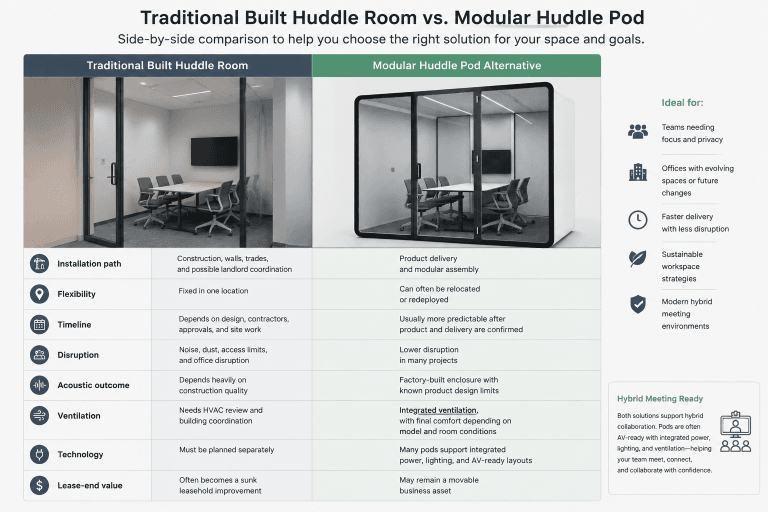
I clienti di B&H Ergonomics si trovano di fronte a un vincolo comune negli uffici open space: le sale riunioni non sono disponibili, mentre una conversazione accanto alla scrivania disturberebbe gli altri o offrirebbe una privacy insufficiente. In questa situazione, un meeting pod per ufficio può offrire uno spazio dedicato per una breve conversazione senza occupare una sala conferenze più grande. Lo spazio appropriato dipende comunque dal numero di occupanti, dalle attrezzature disponibili, dalla riservatezza della discussione e dai requisiti di privacy dell'ambiente di lavoro.
Spostare una conversazione lontano dalle scrivanie protegge la concentrazione dei colleghi e offre ai partecipanti un confine chiaro: entrare, risolvere il problema, registrare l'azione e uscire.
Checklist decisionale per una riunione ad hoc
Prima di interrompere più persone, verifica se la riunione debba svolgersi subito:
- Attendere la prossima riunione pianificata ritarderebbe una decisione, prolungherebbe un blocco o aggraverebbe un problema operativo o con un cliente.
- La riunione ha un solo risultato esprimibile in una frase.
- Il decisore necessario e il responsabile delle informazioni sono disponibili.
- Il problema può probabilmente essere risolto in 5-15 minuti.
- I partecipanti possono collegarsi avendo già a disposizione i fatti essenziali.
- Il luogo o la configurazione della chiamata sono adatti a gruppo, attrezzature e privacy.
- Qualcuno registrerà decisione, responsabile, passo successivo e scadenza.
Se la maggior parte di queste condizioni non è soddisfatta, scegli un aggiornamento asincrono o pianifica una riunione preparata. Se lo è, una breve riunione ad hoc è probabilmente il modo responsabile più rapido per far avanzare il lavoro.
FAQ
Ad hoc significa non pianificato?
Ad hoc significa creato per uno scopo specifico anziché inserito in un programma ricorrente. Una riunione ad hoc è spesso non pianificata o organizzata con breve preavviso, ma i partecipanti possono comunque ricevere un invito e alcuni minuti per prepararsi.
Una riunione ad hoc necessita di un ordine del giorno?
Sì, ma può essere una sola frase. Indica il problema, la decisione o il risultato richiesto e il limite di tempo. Concludi con decisione scritta, responsabile, passo successivo e scadenza.
Quanto deve durare una riunione ad hoc?
La maggior parte delle riunioni ad hoc dovrebbe durare 5-15 minuti perché affronta un unico problema circoscritto. Se la discussione richiede un esame approfondito, più decisioni o il contributo di molte parti interessate, pianifica una riunione con materiali preparatori.
Qual è la differenza tra una riunione ad hoc e una riunione d'emergenza?
Una riunione ad hoc viene organizzata per un'esigenza attuale specifica, urgente o semplicemente sensibile al tempo. Una riunione d'emergenza risponde a un evento grave che richiede attenzione immediata. Può essere organizzata ad hoc, ma molte riunioni ad hoc riguardano normali decisioni aziendali, non emergenze.