Snel antwoord
Een scheidingswand voor kantoorwerkplekken is doorgaans de betere keuze wanneer een kantoor behoefte heeft aan voordelige visuele afscheiding, zonering van werkplekken en een dichtere bureauopstelling. Kantoorunits zijn doorgaans de betere keuze wanneer een open kantoor behoefte heeft aan privételefoongesprekken, gesprekken met HR, geconcentreerd werk of kleine vergaderingen zonder permanente ruimtes te bouwen. De werkelijke beslissing draait niet alleen om de kosten van scheidingswanden versus die van units; het gaat om hoeveel privacy het team nodig heeft, hoe permanent de indeling moet zijn en of het kantoor binnen een beperkte ruimte rustige, bruikbare ruimtes wil creëren.
Laatst bijgewerkt: 16 juli 2026 | Auteur: Richard | Geschatte leestijd: 8 minuten

Waarom teams scheidingswanden en units vergelijken
De meeste kopers vergelijken een scheidingswand voor kantoorwerkplekken niet met een kantoorunit omdat de twee producten er hetzelfde uitzien. Ze vergelijken ze omdat het werkplekprobleem vergelijkbaar is: een open kantoor biedt te weinig privacy en onvoldoende afgesloten ruimte.
Bij praktische facilitaire planning klinkt de vraag vaak als volgt:
“We hebben meer vergaderruimtes nodig, maar het beschikbare kantooroppervlak is beperkt en we willen geen permanente wanden bouwen.”
Daar wordt de vergelijking serieus. Scheidingswanden beloven een voordeligere manier om ruimte te verdelen. Units beloven een snellere manier om afgesloten privacy toe te voegen voor privételefoongesprekken, gesprekken met HR, geconcentreerd werk en kleine vergaderingen. Beide kunnen een open kantoor verbeteren, maar ze lossen verschillende onderdelen van het probleem op.
Scheidingswand voor kantoorwerkplekken versus kantoorunit: snelle vergelijking
| Beslissingsfactor | Cubicle Kantoor Scheidingswand | Kantoor Pod |
|---|---|---|
| Hoofdfunctie | Deelt werkplekken en zichtlijnen in | Creëert een afgesloten privéwerkplek |
| Beste type privacy | Visuele privacy | Spraakprivacy en privacy voor geconcentreerd werk |
| Typische toepassing | Werkplekgroepen, administratieve teams, backofficewerk | Privételefoongesprekken, gesprekken met HR, sollicitatiegesprekken, geconcentreerd werk, kleine vergaderingen |
| Impact op de bouw | Doorgaans minder ingrijpend dan permanente wanden | Vrijstaande of modulaire vervanging voor een afgesloten ruimte |
| Flexibiliteit | Afhankelijk van het paneelsysteem en de installatie | Vaak gemakkelijker te verplaatsen dan gebouwde ruimtes |
| Kostenprofiel | Lagere aanvangskosten per werkplekzone | Hogere kosten per unit, maar een grotere privacywaarde per afgesloten ruimte |
| Belangrijkste beperking | Open bovenzijden en kieren zorgen ervoor dat gesprekken zich verspreiden | Vereist een beoordeling van het ruimtebeslag, de stroomvoorziening, ventilatie en inkoop |
| Belangrijkste vraag voor de koper | “Hebben we visuele afscheiding nodig?” | “Hebben we afgesloten, bruikbare ruimtes nodig?” |
Waar een kantoorwand voor cubicles in uitblinkt
Een kantoorwand voor cubicles is nuttig wanneer het hoofddoel organisatie is. De wand helpt een facilitaire afdeling om afdelingen van elkaar te scheiden, afleiding door directe zichtlijnen te verminderen, individuele werkplekken af te bakenen en de ervaren persoonlijke ruimte in een open kantoor te vergroten.
Afscheidingssystemen zijn een rationele keuze wanneer:
- werknemers vooral behoefte hebben aan afbakening van hun bureau, niet aan afgesloten gesprekken;
- het bedrijf al over voldoende vergaderruimtes beschikt;
- het meeste werk weinig vertrouwelijk is;
- de indeling veel werkplekken binnen een beperkt ruimtebeslag moet bieden;
- budgetdruk zwaarder weegt dan privacybehoefte.
Kantoorafscheidingssystemen vormen ook een erkende meubelcategorie. BIFMA beschrijft paneelsystemen, schermen en paneelgedragen producten binnen de context van zijn normen voor kantoormeubilair. Dit helpt kopers om planning van paneelsystemen te onderscheiden van planning van afgesloten ruimtes aan de hand van een officiële verwijzing naar een productcategorie: Overzicht van BIFMA-normen.
De fout is niet dat je afscheidingen koopt. De fout is verwachten dat afscheidingen hetzelfde presteren als ruimtes.
Waar kantoorwanden tekortschieten
Een standaard kantoorwand voor cubicles verbetert doorgaans de visuele privacy meer dan de akoestische privacy. Open bovenzijden, kieren tussen panelen, gedeelde plafonds, harde vloeren en nabijgelegen looproutes zorgen er nog steeds voor dat gesprekken zich verspreiden.
Dat is belangrijk in open kantoren, omdat gevoelig werk zelden alleen visueel van aard is. Een manager heeft een privé een-op-eengesprek nodig. HR heeft behoefte aan een vertrouwelijk gesprek. Een verkoopteam heeft privacy nodig tijdens telefoongesprekken. Een ontwerper of analist heeft een plek nodig om zich te concentreren zonder elk gesprek in de buurt te horen.
Een hogere scheidingswand kan bepaalde afleidingen verminderen, maar creëert niet dezelfde afbakening als een afgesloten ruimte. Als het probleem op de werkplek is dat mensen elkaar kunnen zien, kunnen scheidingswanden helpen. Als het probleem is dat mensen alles kunnen horen, vereist de oplossing doorgaans meer dan panelen.
Waarom kantoorpods een ander probleem oplossen
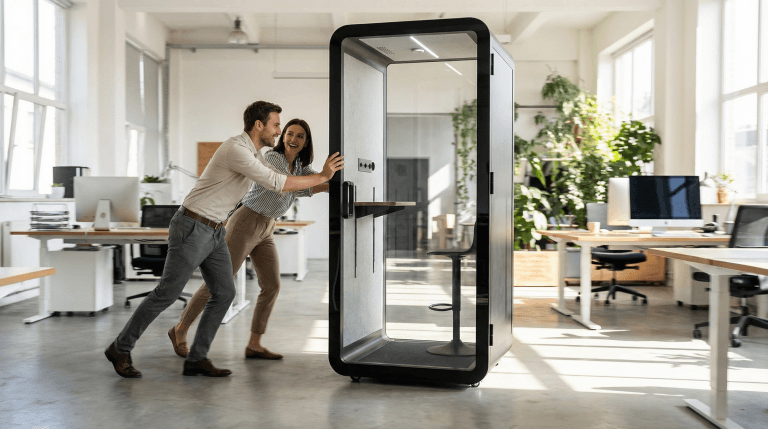
Kantoorpods zijn ontworpen als afgesloten ruimtes, niet als werkplekscheidingen. Dat verandert de aankoopoverwegingen.
Voor teams die afgesloten opties vergelijken, B&H Ergonomics’ kantoorpods zijn relevanter wanneer het doel is om privéruimtes toe te voegen die klaar zijn voor specifieke werkzaamheden binnen een open kantoor, zonder te kiezen voor traditionele permanente bouw.
Dit is vooral belangrijk wanneer het kantoor behoefte heeft aan:
- privégesprekken en videogesprekken;
- HR-gesprekken en gevoelige gesprekken met medewerkers;
- geconcentreerd individueel werk;
- wervings- of sollicitatiegesprekken;
- vergaderingen voor kleine teams;
- flexibele ruimtes die veranderende indelingen kunnen ondersteunen.
Voor akoestische evaluatie moeten kopers vage claims vermijden en vragen wat er is getest. ISO 23351-1 is een officiële norm voor het meten van de vermindering van het spraakniveau door meubelensembles en afgesloten ruimten, waardoor deze relevanter is voor pods en booths dan voor één enkel open scheidingspaneel: ISO 23351-1:2020. Akoestische resultaten variëren nog steeds per testmethode, installatie, omstandigheden op locatie en meetopstelling.
Kosten: waarom de goedkoopste optie niet altijd de beste waarde biedt
Een kantoorafscheiding voor cubicles heeft doorgaans lagere initiële kosten. Daarom lijkt deze vaak aantrekkelijk tijdens de eerste budgettering.
Maar de betere ROI-vraag is:
“Welk probleem betalen we om te voorkomen?”
Als het probleem een slechte organisatie van werkplekken is, kunnen scheidingswanden voldoende zijn. Als het probleem een gebrek aan privéruimtes, voortdurende onderbrekingen of medewerkers die de kantoorvloer verlaten om te bellen is, lost een goedkopere scheidingswand het kostbare probleem mogelijk niet op.
| Probleem op de werkplek | Keuze met minder risico | Waarom |
|---|---|---|
| Te veel open werkplekken zonder visuele afbakening | Kantoorafscheiding met cubicles | De opgave is zonering, niet het creëren van ruimtes |
| Beperkt aantal vergaderruimtes | Kantoorpod | De opgave is het toevoegen van bruikbare afgesloten ruimte |
| Medewerkers hebben privacy nodig voor telefoongesprekken | Kantoorpod | Spraakprivacy is belangrijker dan controle over zichtlijnen |
| Afdelingen hebben behoefte aan een betere indelingsstructuur | Kantoorafscheiding met cubicles | Panelen kunnen teams efficiënt organiseren |
| HR, financiën, juridische zaken of recruitment werkt in een open kantooromgeving | Kantoorpod | Vertrouwelijke gesprekken vereisen planning op het niveau van afgesloten ruimtes |
| Het bedrijf wil flexibele ruimtes zonder gipswanden | Kantoorpod | Een pod kan bepaalde beperkingen van permanente inbouw vermijden |
| Het budget is alleen toereikend voor verbeteringen aan werkplekken | Kantoorafscheiding met cubicles | Het is beter om het beperktere probleem eerlijk op te lossen |
De kostenvergelijking moet meer omvatten dan alleen de aanschafprijs. Facilityteams moeten ook kijken naar verstoring tijdens de installatie, de waarde bij verhuizing, de behoeften aan stroom en ventilatie, toekomstige herindeling en hoe vaak medewerkers daadwerkelijk behoefte hebben aan een privéruimte.
Wanneer een kantoorafscheiding met cubicles de juiste keuze is
Kies voor een kantoorafscheiding met cubicles wanneer de belangrijkste zakelijke behoefte bestaat uit een gestructureerde werkplekplanning.
Het is de sterkere keuze wanneer:
- privacybehoeften voornamelijk visueel zijn;
- er niet veel wordt gebeld;
- vertrouwelijke gesprekken elders plaatsvinden;
- het kantoor veel werkplekken nodig heeft;
- het budget geen afsluitbare ruimtes op grote schaal toelaat;
- het management een duidelijkere indeling wil zonder de volledige plattegrond te wijzigen.
In mijn ervaring werken scheidingswanden het beste wanneer de koper eerlijk is over hun beperkingen. Ze kunnen een open kantoor overzichtelijker laten aanvoelen. Ze mogen intern niet worden verkocht als vervanging voor echte privékamers.
Wanneer een kantoorpod de juiste keuze is
Kies een kantoorpod wanneer het kantoor behoefte heeft aan een afgesloten, reserveerbare ruimte die privacy biedt.
Dit is doorgaans de betere keuze wanneer:
- vergaderruimtes altijd bezet zijn;
- medewerkers privé- of semi-privégesprekken voeren aan hun bureau;
- gesprekken van HR, recruitment, juridische zaken, financiën of management in de open ruimte plaatsvinden;
- geconcentreerd werken wordt onderbroken door spraak in de nabije omgeving;
- het bedrijf meer ruimtes wil, maar geen permanente wanden wil bouwen;
- de indeling in de toekomst kan veranderen.
Als de belangrijkste overweging is om gipswanden of traditionele afbouw te vermijden, ligt de planningslogica dicht bij die van een modulaire kantoorpod vergelijking: hoeveel afgesloten functionaliteit kan worden toegevoegd zonder elke privacybehoefte als een bouwproject te behandelen?
Een praktische beslismatrix voor facilitaire teams
Gebruik deze matrix voordat u leveranciers om offertes vraagt.
| Vraag | Indien ja | Als nee |
|---|---|---|
| Hebben medewerkers behoefte aan vertrouwelijke gespreksprivacy? | Geef prioriteit aan kantoorpods | Scheidingswanden kunnen voldoende zijn |
| Is het huidige probleem voornamelijk visuele afleiding? | Overweeg eerst scheidingswanden | Bekijk akoestische of afgesloten opties |
| Zijn vergaderruimtes al overboekt? | Voeg pods toe voor telefoongesprekken en kleine vergaderingen | Verbeter eerst de zonering van bureaus |
| Zal de kantoorindeling binnen 12-24 maanden veranderen? | Geef de voorkeur aan verplaatsbare of modulaire oplossingen | Vaste scheidingswanden kunnen acceptabel zijn |
| Probeert het team permanente bouwwerkzaamheden te vermijden? | Vergelijk pods met gebouwde ruimtes | Standaardplanning met scheidingswanden kan werken |
| Is het budget de grootste beperking? | Combineer scheidingswanden met een kleiner aantal pods | Pods kunnen de belangrijkste privacyoplossing worden |
| Heeft het team zowel dicht op elkaar geplaatste bureaus als besloten ruimtes nodig? | Gebruik beide producttypen | Kies de oplossing die het daadwerkelijke knelpunt oplost |
Het beste antwoord is vaak niet “alleen scheidingswanden” of “alleen pods”. Veel kantoren hebben scheidingswanden nodig voor werkplekzones en pods voor werkzaamheden die veel privacy vereisen.
Aankoopchecklist voordat u beslist
Verduidelijk deze punten voordat u kiest tussen een scheidingswand voor kantoorwerkplekken en een kantoorpod:
- Hoeveel privégesprekken vinden er per dag plaats?
- Welke teams voeren vertrouwelijke gesprekken?
- Hoe vaak zijn vergaderruimtes volledig volgeboekt?
- Is de grootste klacht geluidsoverlast, zichtbaarheid, een gebrek aan ruimtes of algemene afleiding?
- Verwacht het bedrijf dat het aantal medewerkers of de indeling van afdelingen binnenkort verandert?
- Is permanente bouw acceptabel, of moet de oplossing flexibel blijven?
- Heeft het product stroom, verlichting, ventilatie of datatoegang nodig?
- Wie keurt de vereisten voor installatie, veiligheid, faciliteiten en inkoop goed?
- Hoe ziet succes er na de installatie uit: minder onderbrekingen, meer beschikbare vergaderruimte, betere concentratie of meer privacy voor medewerkers?
De Amerikaanse General Services Administration noemt akoestiek en privacy als aandachtspunten bij werkplekplanning. Dat is een nuttige herinnering dat privacy niet alleen een voorkeur voor meubilair is; het maakt deel uit van de vraag of een werkplek de taken ondersteunt die mensen moeten uitvoeren: Werkplekbeleid van de GSA.
Eindaanbeveling
Een scheidingswand voor kantoorwerkplekken is het juiste hulpmiddel wanneer het kantoor visuele orde, een hoge werkplekdichtheid en een voordelige manier nodig heeft om open ruimte te verdelen. Het is niet het juiste hulpmiddel wanneer het werkelijke probleem bestaat uit privégesprekken, vertrouwelijk werk of een tekort aan afgesloten vergaderruimte.
Kantoorpods zijn geschikter wanneer het kantoor privégesprekken, HR-gesprekken, geconcentreerd werk en kleine vergaderingen nodig heeft zonder permanente ruimtes te bouwen. Voor veel kantoortuinen is een gecombineerde strategie de beste indeling: gebruik scheidingswanden om bureaus te organiseren en pods waar privacy echte zakelijke waarde heeft.
FAQ
Is een kantoorwand voor een cubicle goedkoper dan een kantoor pod?
Meestal wel. Een kantoorpartitionering met cubicles heeft vaak lagere initiële kosten, omdat het een paneel- of werkplekzoneringsoplossing is. Een kantoorpod is duurder, omdat het een afgesloten werkruimte is die uit meer onderdelen bestaat, maar kan meer waarde creëren wanneer het kantoor geen privéruimten heeft.
Kunnen kantoorwanden cubicles geluiddicht maken?
Nee. Kantoorafscheidingen kunnen de visuele privacy verbeteren en bepaalde directe afleiding verminderen, maar open cubicles vormen niet de afgesloten begrenzing die nodig is voor sterke spraakprivacy. Als het doel privégesprekken of vertrouwelijke gesprekken is, vergelijk dan gesloten opties in plaats van uitsluitend te vertrouwen op de hoogte van de panelen.
Moet een kantoor zowel scheidingswanden als pods gebruiken?
Ja, veel kantoren zouden dat moeten doen. Scheidingswanden kunnen werkplekken structureren, terwijl pods geschikt zijn voor telefoongesprekken, HR-gesprekken, focussessies en kleine vergaderingen. Deze gecombineerde aanpak is vaak realistischer dan te verwachten dat één producttype elk probleem in een open kantoor oplost.
Wat moet ik leveranciers vragen voordat ik tot aankoop overga?
Vraag welk probleem het product moet oplossen, hoe het wordt geïnstalleerd, of het later kan worden verplaatst, welke akoestische informatie beschikbaar is, welke stroomvoorziening of ventilatie het vereist en of het aansluit bij uw daadwerkelijke gebruikssituaties: privégesprekken, HR-gesprekken, geconcentreerd werken of kleine vergaderingen.