
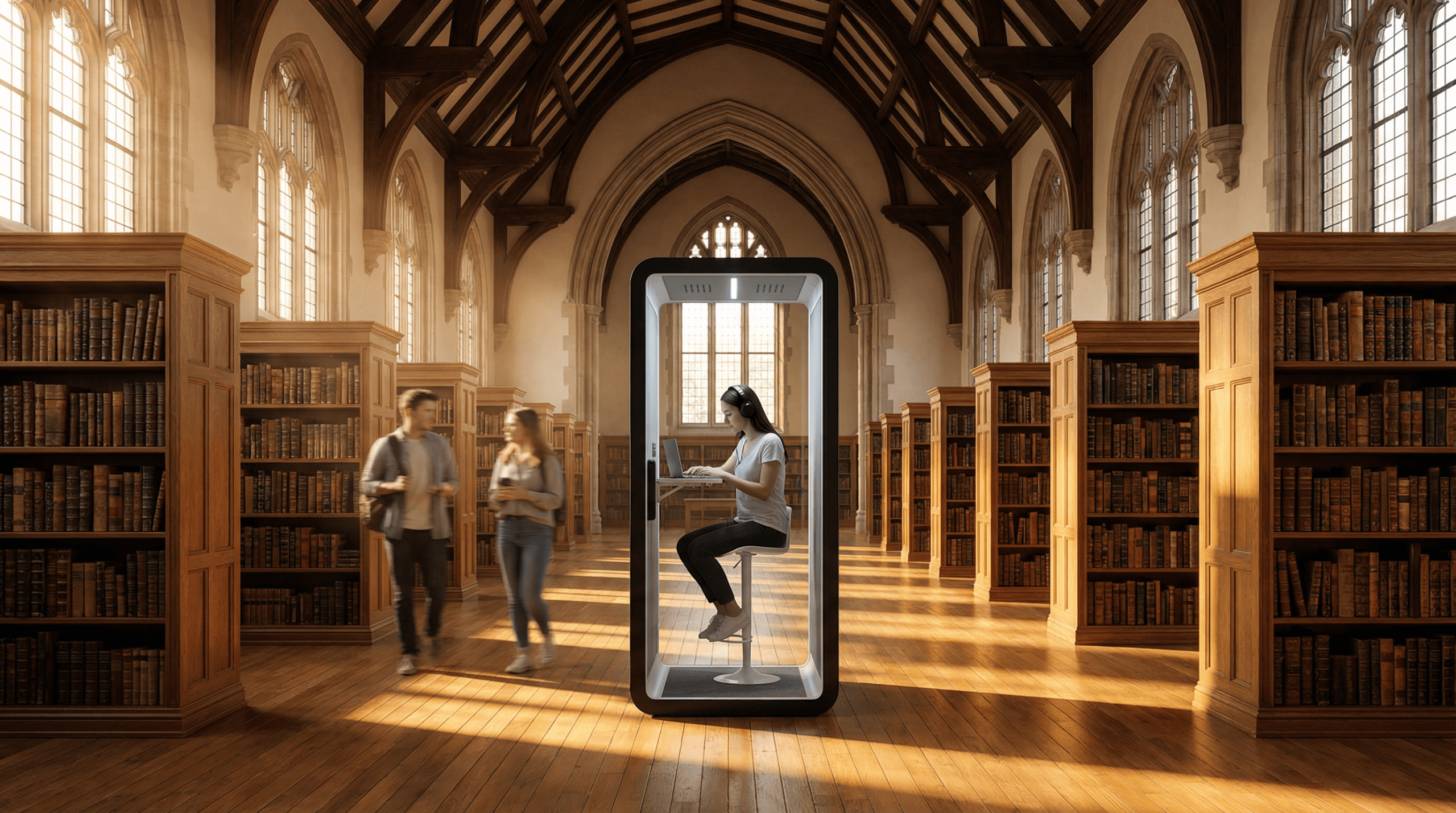
Toepassingen van studiepods voor bibliotheken
Studiepods voor bibliotheken voor geconcentreerd en gezamenlijk studeren
Met B&H Ergonomics kunnen universiteiten en openbare bibliotheken afgesloten ruimtes toevoegen voor individuele concentratie, bijles, werk in kleine groepen en privégesprekken met medewerkers.
Stem het formaat af op de studietaak, de plattegrond, de sessieduur, het gewenste privacyniveau en de projectbeperkingen.
Kort antwoord
Studiepods voor bibliotheken zijn afgesloten, modulaire ruimtes voor individuele concentratie, bijles en werk in kleine groepen. Selecteer het startformaat op basis van het aantal gebruikers, de sessieduur, het gewenste privacyniveau, de benodigde ruimte, ventilatie, stroomvoorziening en toegankelijkheid. Vergelijk de opties voor kantoorcabines, en stem B&H Ergonomics vervolgens af op de toepassing, het aantal, de plattegrond en de leveringsroute.
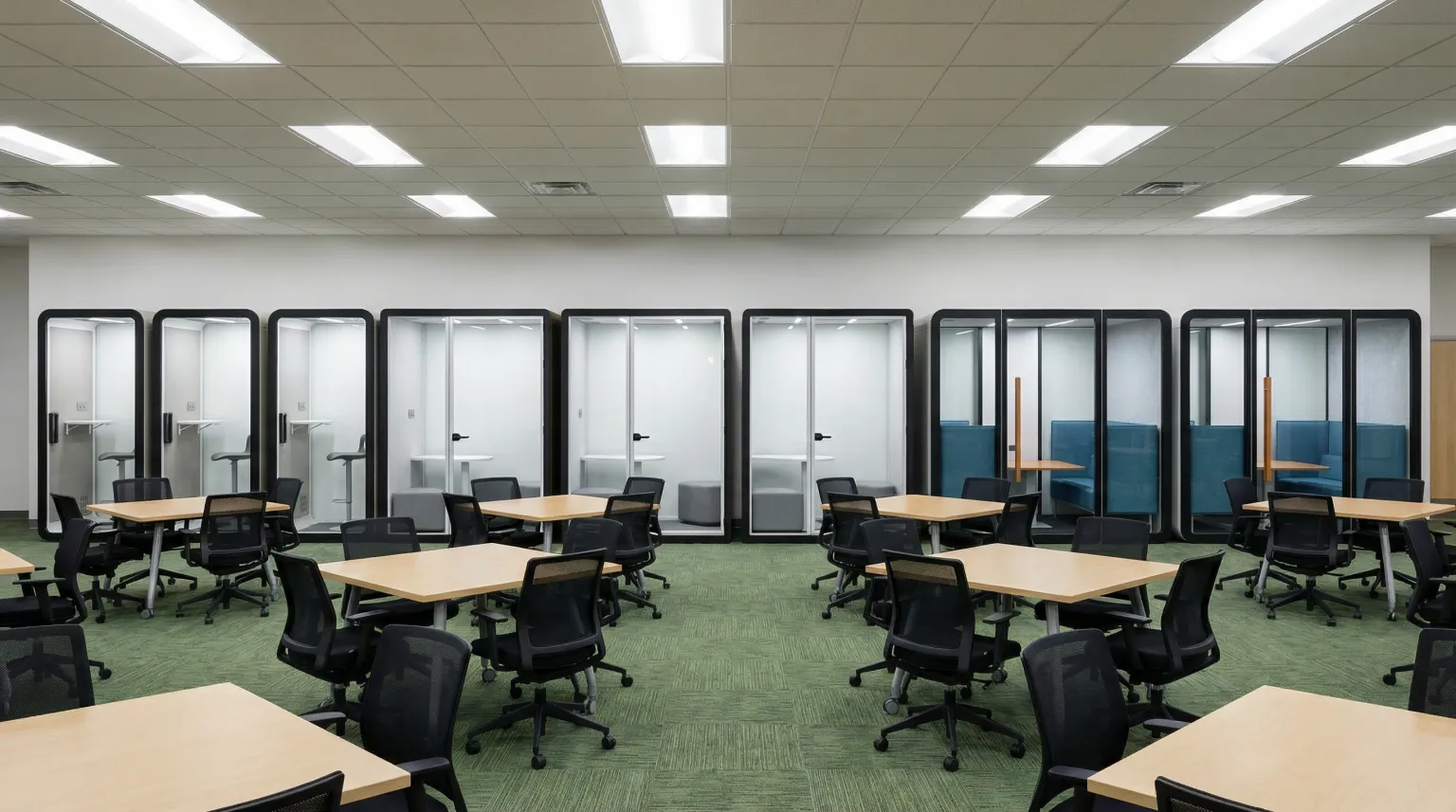
Geschikt voor toepassing
Creëer meer studiecapaciteit zonder elke zone hetzelfde te laten functioneren
Een bibliotheekvloer moet verschillende concentratieniveaus ondersteunen. Een student die zich voorbereidt op een examen heeft een andere omgeving nodig dan een duo voor bijles of een projectteam. Met pods kan de bibliotheek duidelijke gebruikszones creëren, terwijl de rest van de ruimte open en flexibel blijft.
- Individuele concentratie: biedt een meer afgeschermde omgeving voor lezen, schrijven en studeren met digitale apparaten.
- Bijles en samenwerken met z'n tweeën: geeft twee mensen een plek om te praten zonder de hele verdieping in een gesprekszone te veranderen.
- Studie in kleine groepen: ondersteun overleg, taaloefening en projectcoördinatie binnen een afgebakende ruimte.
- Planning voor gemengd gebruik: plaats verschillende formats alleen samen wanneer looproutes, zichtlijnen en akoestische verwachtingen zijn beoordeeld.
Formatselectie
Stem de studiepod af op de taak en vergelijk vervolgens afwerkingen
Definieer de terugkerende gebruikstaak voordat u de afwerkingen van studiepods vergelijkt. De onderstaande matrix maakt onderscheid tussen zelfstandig studeren, bijles, groepssamenwerking en behoeften op gemengde verdiepingen. Gebruik voor geplande bijlessen of door een docent geleide sessies de planninggids voor classroom pods om te controleren hoe de onderwijsactiviteit, het toezicht, het meubilair en de toegangsvereisten de projectomschrijving veranderen. Een indeling die geschikt is voor zelfstandig lezen, is niet automatisch geschikt voor een docent die met een kleine groep werkt.
| Studietaak | Startformat | Projectvereisten |
|---|---|---|
| Zelfstandig lezen of schrijven | Individuele studiepod of compacte werkpod | Comfort van stoel en bureau, verlichting, toegang tot stroom, zichtlijnen, deurbediening en verwachte sessieduur. |
| Een-op-eenbegeleiding of studeren met een partner | Studie- of werkformat voor twee personen | Tafelpositie, zitplaatsen, privacy tijdens gesprekken, vrije looproutes en behoeften aan scherm of whiteboard. |
| Samenwerking met drie tot zes personen | Vergaderpod of groter format voor groepsstudie | Beoogde bezetting, tafelindeling, behoeften voor videogesprekken, ventilatie, stroom en data, en de beschikbare toegangsroute. |
| Studieverdieping voor gemengd gebruik | Een geplande combinatie van individuele en groepsindelingen | Zonering, looproutes, visueel toezicht, schoonmaakroutine, aangrenzende geluidsbronnen en de gebruiksregels van de bibliotheek. |
Capaciteitsplanning
Gebruik gegevens over de vraag om de juiste mix van bibliotheekpods te plannen
Bepaal niet alleen op basis van het aantal personen op de campus hoeveel pods nodig zijn. Breng in kaart waar de vraag zich voordoet, wie de ruimte nodig heeft en hoe lang elke sessie duurt. Deze signalen tonen aan of het project meer individuele pods, meer capaciteit voor groepen of een ander gebruiksbeleid nodig heeft.
| Vraagsignaal | Waarover het helpt beslissen | Wat te registreren |
|---|---|---|
| Wachtlijsten voor studieruimtes en afgewezen aanvragen | Of de huidige capaciteit van de beschikbare ruimtes tekortschiet en wanneer extra afgesloten ruimte het meest nuttig is. | Dag, tijd, aangevraagde duur en of de gebruiker behoefte had aan stille concentratie, een gesprek, begeleiding of groepswerk. |
| Gebruikelijke groepsgrootte | De balans tussen individuele, tweepersoons- en grotere groepsindelingen. | Aantal gebruikers per aanvraag en hoe vaak een grotere ruimte slechts door één of twee personen wordt gebruikt. |
| Sessieduur en doorstroming | Comfort, ventilatie, boekingslimieten, toegang voor schoonmaak en het aantal beschikbare sessies per pod per dag. | Gebruikelijke en langste sessieduur, wisseltijd en periodes van aansluitend gebruik. |
| Activiteit en behoefte aan privacy | Vereisten voor plaatsing, akoestiek, stroomvoorziening, data, beeldscherm en toezicht. | Lezen, online examen, videogesprek, begeleiding, overleg met personeel of mondeling groepswerk. |
| Piekperioden in de kalender | Of u capaciteit gefaseerd wilt invoeren, reserveringen wilt aanpassen of prioriteit wilt geven aan locaties die tijdens examens en grote opdrachten het meest worden gebruikt. | Wekelijkse pieken, examenperiodes, opleidingsroosters en terugkerende vraag per verdieping of servicegebied. |
Geen reserveringsgegevens? Observeer zowel normale als piekperioden. Leg onvervulde aanvragen en werkelijke groepsgroottes vast, bepaal een eerste capaciteitsbereik en toets dat aan productafmetingen, vrije ruimtes, toegang voor levering en locatievereisten.
Zet uw vraaggegevens om in een podplan
Deel het primaire gebruik, de verwachte groepsgroottes, de aantallenbandbreedte, de plattegrond en de leverlocatie. B&H Ergonomics gebruikt deze gegevens om het product- en indelingsgesprek voor te bereiden.
Aandachtspunten voor kopers
Wat u moet vergelijken voordat u studiepods voor een bibliotheek koopt
Bibliotheekprojecten zijn omgevingen voor herhaald gebruik. Beoordeel elke pod als een ruimtesysteem dat comfort, onderhoud, plaatsing en installatie omvat.
Akoestische privacy
Vraag naar modelspecifieke akoestische informatie en de gebruikte testmethode. Gebruik termen zoals spraakprivacy, geluidsisolatie of geluidsniveauverschil nauwkeurig. Akoestische resultaten variëren per model, testmethode, installatie, locatieomstandigheden en meetopstelling.
Ventilatie en comfort
Beoordeel luchtverplaatsing, ventilatorgeluid, verlichting en binnentemperatuur aan de hand van de langste verwachte studiesessie. Een oncomfortabele pod biedt geen bruikbare capaciteit, zelfs wanneer het vloeroppervlak efficiënt lijkt.
Stroomvoorziening en apparaatgebruik
Specificeer het aantal en de locatie van stopcontacten, oplaadpunten, data-aansluitingen en beeldaansluitingen. Stem de module af op de toepassing; configuraties verschillen per formaat.
Toegankelijkheid en locatie-inpassing
Breng vrije ruimtes, deurwerking, drempels en looproutes in kaart op de daadwerkelijke plattegrond. Het projectteam keurt de geïnstalleerde indeling goed conform de lokale bouw- en toegankelijkheidseisen.
Duurzaamheid en onderhoud
Specificeer reinigbare oppervlakken, vervangbare onderdelen, duurzaam deurbeslag, toegang tot de ventilator en een routine voor het inspecteren van veel aangeraakte zones. Kies afwerkingen die de bibliotheek consequent kan onderhouden.
Levering en montage
Documenteer de bestemming, verdieping, omstandigheden bij lift of trap, deurbreedtes, opstelruimte en installatievolgorde. De toegang tot de locatie bepaalt welke formaten en montageplannen haalbaar zijn.
Projectverantwoordelijkheid: het projectteam en de bevoegde autoriteit de vereisten voor brandbeveiliging, elektra, toegankelijkheid, ventilatie en bezetting voor de geïnstalleerde locatie goedkeuren.
Indelingsplanning
Een praktische checklist voor de plaatsing van studiepods in bibliotheken
Gebruik de bestaande plattegrond om pods te plaatsen waar ze in de duidelijkste behoefte voorzien, en bepaal vervolgens de operationele details voor elke locatie.
Breng terugkerende activiteiten in kaart
Markeer zones voor rustig lezen, begeleiding, groepsdiscussie, personeelsondersteuning en studie met veel apparaten. De activiteitenkaart bepaalt de mix van individuele en groepsindelingen.
Meet de route op
Leg de uiteindelijke benodigde vloeroppervlakte, draairichting van deuren, vrije ruimte in gangpaden, liftafmetingen, opstelruimte en eventuele scherpe bochten tussen levering en de installatielocatie vast.
Stel de gebruiksregels vast
Bepaal of pods vrij beschikbaar, reserveerbaar, door personeel beheerd of toegewezen aan een specifiek programma zijn. Het gebruiksmodel beïnvloedt capaciteit en onderhoud.
Bepaal de comfortvereisten
Controleer de verlichting, ventilatie, stroomvoorziening, zitplaatsen, bureauhoogte, akoestische verwachtingen en de langste gebruikelijke sessie voor elke indeling.
Breng de locatiebeperkingen in kaart
Stem de vereisten voor faciliteiten, IT, toegankelijkheid, brandbeveiliging, levering en installatie af in één locatieplan.
Vraag een projectspecifieke offerte aan
Stuur de toepassing, hoeveelheid, bestemming, gewenste afmetingen, gewenste afwerking, stroombehoefte en opmerkingen over de toegang, zodat de offerte op het daadwerkelijke project aansluit.
Waarom modulariteit belangrijk is
Voeg ruimte voor geconcentreerd werk toe terwijl de bibliotheek operationeel blijft
Permanente ruimtes zijn geschikt voor grote renovaties. Modulaire pods voegen studiecapaciteit toe binnen een operationele bibliotheek, ondersteunen gefaseerde installatie rond de academische kalender en maken het mogelijk om het ruimteplan aan te passen aan de vraag.
Plan de leveringsroute, definitieve plaatsing, stroomvoorziening, ventilatie, toegankelijkheid, brandbeveiliging en het dagelijkse beheer als één installatiepakket.
Vergelijk voor eenpersoonsopstellingen gericht op geconcentreerd werken de categorie werkpods met de verwachte sessieduur en benodigde vloeroppervlakte. Vergelijk voor groepsopstellingen de categorie vergaderpods met de daadwerkelijke bezetting en studiepatronen.
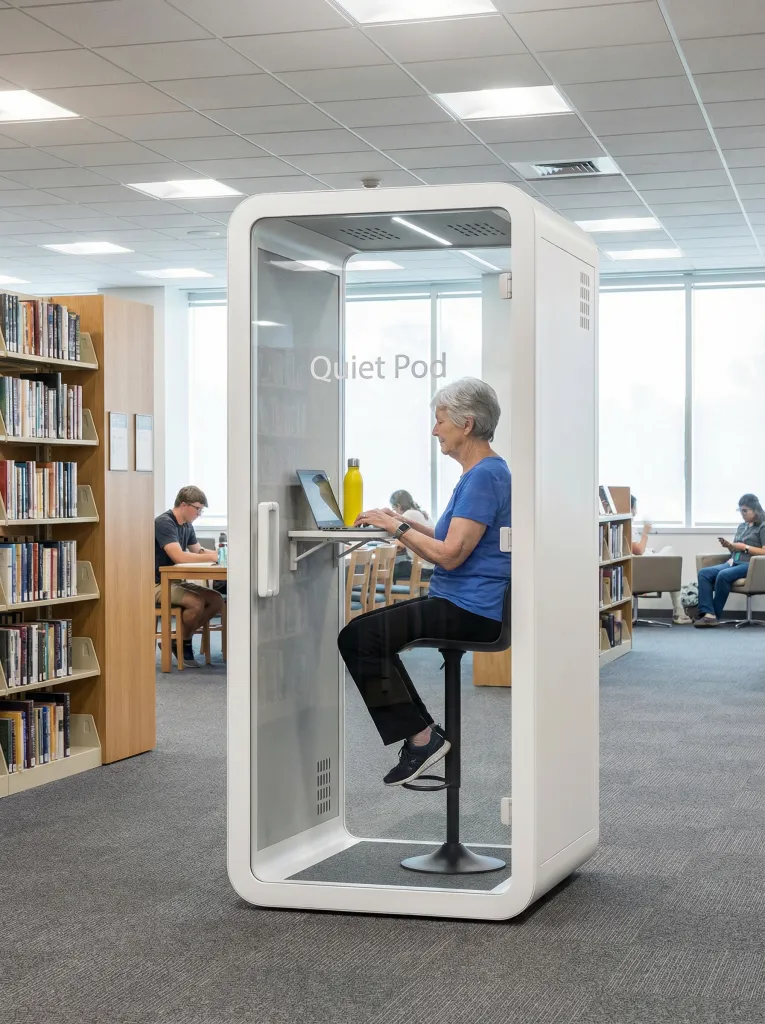
Projectondersteuning
Vertrek vanuit de toepassing in de bibliotheek, niet alleen vanuit een productnaam
Begin met hoe studenten en medewerkers de ruimte zullen gebruiken. B&H Ergonomics gebruikt die informatie om het formaat, de configuratie en de projectomvang voor de offerte te bepalen.
Vraag een offerte voor bibliotheken aanHoud deze gegevens bij de hand
- Primair gebruik: individueel concentratiewerk, begeleiding, groepsstudie of gemengd gebruik.
- Verwachte capaciteit en de langste gebruikelijke sessie.
- Aantal, gewenste afmetingen, afwerkingsrichting en privacybehoeften.
- Bestemming, toegangsroute, opstelruimte en installatiemoment.
- Vragen over stroom, data, ventilatie, toegankelijkheid en lokale toetsing.
FAQ