Szybka odpowiedź
Etykieta korzystania ze wspólnych budek w otwartym biurze to system uczciwego korzystania, który zapewnia dostępność prywatnej przestrzeni dla pracy, która najbardziej jej potrzebuje. Priorytetowo traktuj rozmowy telefoniczne, spotkania wideo i poufne rozmowy; zwalniaj niewykorzystane rezerwacje; zostawiaj budkę gotową dla następnej osoby; a przypadki powtarzającego się długotrwałego zajmowania przestrzeni omawiaj prywatnie. Jeśli kilku pracowników ma uzasadnioną potrzebę korzystania z budki, a żadna osoba nie nadużywa tej przestrzeni, problemem jest przepustowość, a nie etykieta. W takim przypadku należy ocenić, czy biuro potrzebuje więcej budek.
Ostatnia aktualizacja: 20 sierpnia 2026 | Autor: William | Zweryfikował: Richard | Szacowany czas czytania: 10 minut
Co oznacza etykieta w otwartym biurze, gdy budki są współdzielone
Etykieta w otwartym biurze jest zwykle opisywana jako zbiór zasad dobrego zachowania: mów ciszej, szanuj prywatność i unikaj przerywania pracy współpracownikom. Współdzielone budki wymagają bardziej operacyjnych zasad, ponieważ są ograniczonym zasobem w miejscu pracy.
Budka może być praktycznym miejscem na rozmowę z klientem, spotkanie wideo lub poufną rozmowę, gdy stanowiska pracy w otoczeniu nie zapewniają wystarczającej prywatności. Może też stać się nieformalnym prywatnym biurem, jeśli jedna osoba zajmuje ją każdego dnia do rutynowej pracy. Różnica nie polega na tym, czy ktoś pracuje sam. Chodzi o to, czy sposób korzystania odpowiada przeznaczeniu budki i zapewnia uczciwą możliwość skorzystania z niej kolejnemu użytkownikowi.
Zgodnie z wytycznymi dotyczącymi środowiska pracy B&H Ergonomics, rozmowy telefoniczne i spotkania wideo są priorytetowym zastosowaniem współdzielonej budki. Zespół może uwzględnić inne uzasadnione zastosowania, takie jak rozmowa z działem HR lub zadanie, które rzeczywiście wymaga prywatności, jednak takie wyjątki powinny być jasno określone dla osób zarządzających dostępem.
Czy to problem zasad, czy problem przepustowości?
Długotrwałe zajmowanie budki jest najbardziej widocznym problemem zgłaszanym w przypadku współdzielonych budek, ale nie zawsze ma tę samą przyczynę. Zdiagnozuj schemat, zanim zmienisz zasady.
| Co obserwujesz | Bardziej prawdopodobny problem | Lepsza reakcja |
|---|---|---|
| Jedna osoba wielokrotnie korzysta z budki do rutynowej pracy przy biurku | Problem zasad lub przydziału | Przekaż prywatne przypomnienie, wyjaśnij przeznaczenie budki i przeanalizuj potrzeby pracownika dotyczące stanowiska pracy |
| Rezerwacja pozostaje niewykorzystana, podczas gdy inni czekają | Problem z rezerwacjami | Dodaj zasadę potwierdzenia obecności i automatycznego zwalniania rezerwacji |
| Kilka osób ma uzasadnioną potrzebę prowadzenia rozmów w ciągu dnia | Problem przepustowości | Zmierz zapotrzebowanie i sprawdź, czy potrzebne są dodatkowe budki |
| Liczba sesji jest odpowiednia, ale czas oczekiwania pozostaje długi | Problem przepustowości | Zwiększ liczbę miejsc lub zmień proporcje typów kabin |
| Użytkownicy nie są zgodni co do tego, czy pierwszeństwo mają rezerwacje, czy osoby korzystające bez rezerwacji | Problem z procesem | Opublikuj jedną zasadę rezerwacji i stosuj ją konsekwentnie |
| Skargi dotyczą hałasu na zewnątrz kabiny, a nie dostępu do niej | Problem z przestrzenią pracy | Przeanalizuj szerzej układ biura otwartego i strategię akustyczną |
Kluczowym kryterium jest koncentracja korzystania. Jeśli jeden pracownik wielokrotnie zajmuje tę samą wspólną kabinę bez uzasadnienia związanego z pracą, zasady wymagają uwagi. Jeśli wiele osób korzysta z kabin do uzasadnionych rozmów i spotkań, bardziej rygorystyczne zasady etykiety nie zwiększą dostępności.
Zasady korzystania ze wspólnych kabin biurowych, których pracownicy mogą przestrzegać
Najbardziej użyteczne zasady są na tyle krótkie, by je zapamiętać, i na tyle konkretne, by je stosować.
1. Rezerwuj kabinę do pracy wymagającej prywatności
Korzystaj z kabiny przede wszystkim do rozmów telefonicznych, spotkań wideo, poufnych rozmów i pracy wymagającej skupienia, której nie można rozsądnie wykonywać przy biurku. Rutynowa obsługa e-maili, ogólne zadania administracyjne i przerwy osobiste nie powinny automatycznie pozbawiać dostępu współpracownika, który potrzebuje prywatnej rozmowy.
To zasada dotycząca celu korzystania, a nie ocena, czyja praca jest ważniejsza. Chroni wspólny zasób w sytuacjach, do których rozwiązania został wprowadzony.
2. Jasno określ priorytet rezerwacji
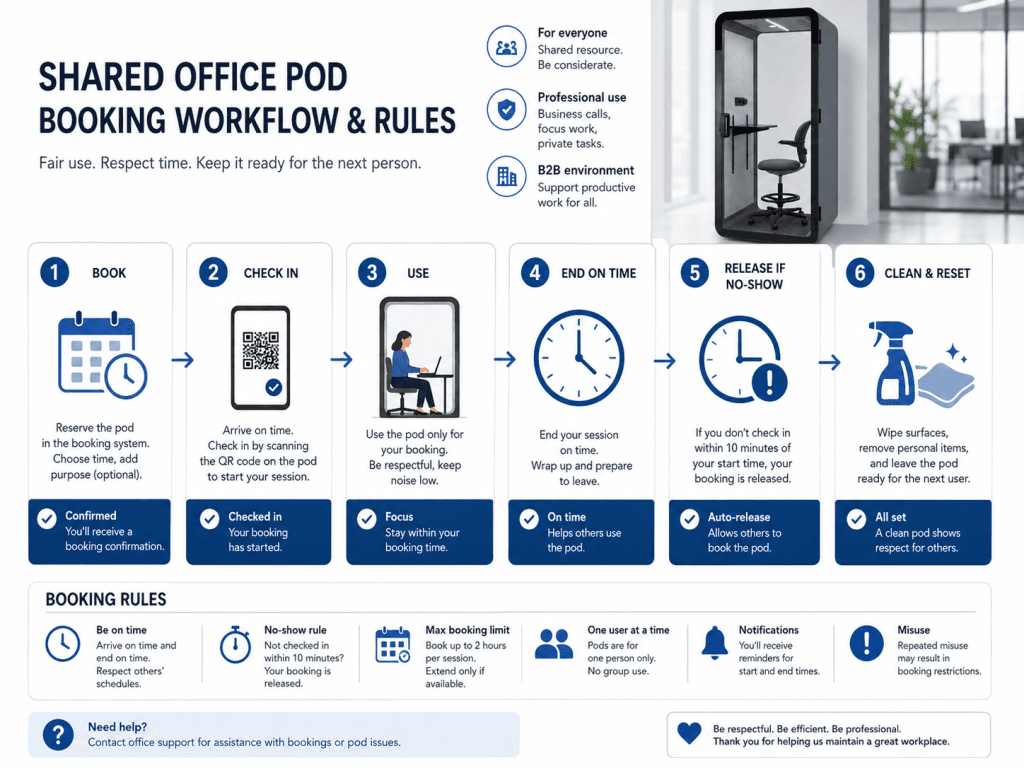
Jeśli w biurze obowiązują rezerwacje, potwierdzona rezerwacja powinna mieć pierwszeństwo przed osobą korzystającą bez rezerwacji. Opublikuj tę zasadę w miejscu rezerwacji kabiny i zadbaj o widoczność godziny rozpoczęcia oraz zakończenia.
Jeśli biuro jest na tyle małe, że kabiny są dostępne bez rezerwacji, określ, co dzieje się, gdy dwie osoby przychodzą jednocześnie. Niejednoznaczność prowadzi do negocjacji na korytarzu i zachęca osobę, która przyszła pierwsza, do pozostania dłużej, niż planowała.
3. Zwolnij rezerwacje niewykorzystane przez rezerwującego
Niewykorzystana rezerwacja blokuje dostęp równie skutecznie jak zajęta kabina. Ustal lokalne okno czasowe na potwierdzenie obecności, a następnie zwolnij rezerwację, jeśli użytkownik nie przyjdzie. Dokładny czas powinien odpowiadać organizacji pracy w biurze; B&H nie określa jednej uniwersalnej wartości dla każdego miejsca pracy.
4. Pozostaw neutralną przestrzeń do pracy
Zabierz ze sobą rzeczy osobiste, jedzenie, notatniki i ładowarki. Wytrzyj widoczne rozlania i pozostaw siedzisko, stół oraz elementy sterujące gotowe dla następnej osoby. Wspólne przestrzenie intensywnie użytkowane każdego dnia wymagają prostego standardu przywracania porządku, a nie założenia, że następny użytkownik posprząta.
W przypadku procedur czyszczenia i dezynfekcji we wspólnym obiekcie należy dostosować listę kontrolną obiektu do aktualnych Wytyczne CDC dotyczące czyszczenia oraz do wymagań obowiązujących w danym obiekcie.
5. Utrzymuj odpowiedni poziom głosu
Kabina może poprawić izolację akustyczną, ale nie oznacza to przyzwolenia na krzyczenie. Mów normalnym głosem podczas spotkań, całkowicie zamykaj drzwi i unikaj korzystania z trybu głośnomówiącego, gdy dostępny jest zestaw słuchawkowy. Celem jest ochrona rozmowy użytkownika bez tworzenia nowego źródła rozproszenia dla osób pracujących przy pobliskich biurkach.
6. Zakończ na czas i przygotuj kabinę przed następną rezerwacją
Spakuj się przed planowanym zakończeniem. Jeśli spotkanie wymaga więcej czasu, sprawdź dostępność i przedłuż je tylko wtedy, gdy nikt nie czeka. Krótki czas na zmianę użytkownika zapobiega sytuacji, w której następna osoba musi negocjować dostęp do już zarezerwowanej przestrzeni.
7. Nie traktuj wspólnej przestrzeni jak przestrzeni przypisanej
Kabina może wspierać pracę indywidualną, nie stając się stałym biurem jednego pracownika. Nie zostawiaj w niej monitora, prywatnego miejsca do przechowywania ani innych oznak własności, chyba że kierownictwo formalnie wyznaczyło ją jako przestrzeń przypisaną.
Jak ustalać limity czasu bez tworzenia arbitralnej polityki
Nie istnieje jeden limit czasu B&H, który pasowałby do każdej kabiny, zespołu lub wzorca zapotrzebowania. Rozmowa telefoniczna, długie spotkanie wideo z klientem i poufna rozmowa z działem HR mogą wymagać różnej ilości czasu. Polityka powinna zatem określać, w jaki sposób biuro ustala i weryfikuje limity, zamiast udawać, że jedna wartość jest uniwersalnie właściwa.
Zacznij od czterech lokalnych czynników:
- Zastosowanie: Jaką pracę ma chronić kabina?
- Zapotrzebowanie: Kiedy rozmowy telefoniczne i spotkania wideo są najbardziej skoncentrowane?
- Dostępność: Ile kabin jest dostępnych dla każdego istotnego zastosowania?
- Zmiana użytkownika: Ile czasu potrzeba, aby pozostawić kabinę gotową dla następnej osoby?
Wykorzystaj te dane, aby ustalić standardowy maksymalny czas rezerwacji w okresach szczytowego zapotrzebowania. Dopuść wyjątki dla udokumentowanych zadań, które rzeczywiście wymagają prywatności, ale wymagaj od użytkownika zwolnienia kabiny po zakończeniu zadania. Zweryfikuj tę zasadę po krótkim okresie pilotażowym, zamiast wprowadzać na stałe ograniczenie oparte na przypuszczeniach.
Jak zarządzać długotrwałym zajmowaniem kabiny
Powtarzające się zajmowanie kabiny należy traktować jako wzorzec funkcjonowania w miejscu pracy, a nie jako podstawę do publicznych oskarżeń.
Zacznij od prywatnego przypomnienia
Wypróbuj neutralne pytanie:
“Mam wkrótce zaplanowaną rozmowę. Jak długo jeszcze przewidujesz, że będziesz potrzebować kabiny?”
To pytanie uwidacznia współdzielony charakter zasobu, nie zakładając złych intencji.
Zapytaj, jaki problem rozwiązuje kabina
Jeśli ta sama osoba korzysta z kabiny każdego dnia, zapytaj, czy przypisane jej stanowisko pracy jest zbyt rozpraszające, czy jej rola wiąże się z wyjątkowo dużą liczbą rozmów albo czy inne rozwiązanie zapewniające prywatność nie sprawdziłoby się lepiej. Odpowiedź może wskazać potrzebę zmiany miejsca siedzącego, innego obszaru pracy, dostosowania harmonogramu lub zwiększenia dostępnej liczby kabin.
Zajmij się powtarzającymi się przypadkami za pośrednictwem przełożonego
Przełożeni powinni prywatnie i konsekwentnie analizować powtarzające się zachowania. Należy skoncentrować się na przeznaczeniu kabiny, wpływie na innych użytkowników oraz alternatywie, która umożliwiłaby pracownikowi wykonanie pracy. Eskalacja powinna dotyczyć ciągłego lekceważenia wspólnych zasad, a nie uzasadnionego długiego spotkania, które jednorazowo się przedłużyło.
Udokumentuj wzorzec przed zmianą zasad
Krótki przegląd sposobu użytkowania może pokazać, czy problem koncentruje się wokół jednego użytkownika, jednego zespołu, jednego przedziału czasowego czy całego biura. Takie dane sprawiają, że kolejna decyzja jest łatwiejsza do uzasadnienia.
Kiedy właściwym rozwiązaniem jest więcej kabin
Zwiększ liczbę kabin, gdy zapotrzebowanie jest powszechne, uzasadnione i utrzymuje się w czasie. Przydatne sygnały obejmują:
- wielu pracowników potrzebuje kabin do rozmów lub spotkań wideo przez cały dzień;
- użytkownicy przestrzegają opublikowanych zasad, ale czas oczekiwania nadal jest długi;
- żadna osoba ani zespół nie zawłaszcza nieformalnie tej przestrzeni;
- rezerwacje są zwalniane, a rotacja użytkowników jest rozsądna, jednak dostępność nadal pozostaje niska;
- zespoły prowadzące dużo rozmów lub pracujące hybrydowo rywalizują o ten sam ograniczony zasób zapewniający prywatność.
Gdy warunki te są spełnione, dodawanie kolejnych zasad jedynie redystrybuuje niedobór. Przeanalizuj liczbę, lokalizację, strukturę użytkowników i zamierzone przeznaczenie dostępnych kapsuły biurowe zamiast tego.
Gotowa do wdrożenia polityka korzystania ze wspólnych kabin biurowych
Dostosuj poniższy szablon do rzeczywistego systemu rezerwacji i zapotrzebowania w biurze. Pola w nawiasach są celowo lokalne; nie stanowią uniwersalnych standardów B&H.
Cel: Wspólne kabiny chronią prywatność podczas rozmów telefonicznych, spotkań wideo, poufnych rozmów i innych zadań, których nie można rozsądnie wykonywać przy otwartym biurku.
Priorytetowe zastosowanie: W przypadku konfliktu zapotrzebowania pierwszeństwo mają zaplanowane rozmowy, spotkania wideo i praca poufna przed rutynowymi zadaniami wykonywanymi przy biurku.
Rezerwacje: Korzystaj z wyznaczonego w biurze systemu rezerwacji lub opublikowanej procedury korzystania bez rezerwacji. Potwierdzona rezerwacja ma pierwszeństwo przed korzystaniem bez rezerwacji.
Zwolnienie rezerwacji w przypadku nieobecności: Zwolnij rezerwację po upływie opublikowanego w biurze czasu na zameldowanie, jeśli użytkownik nie przybył.
Limit sesji: W określonych przez biuro godzinach szczytu stosuj opublikowane standardowe okno rezerwacji. Wyjątki są dozwolone, gdy praca rzeczywiście wymaga prywatności i żaden inny użytkownik nie czeka.
Przygotowanie po użyciu: Usuń rzeczy osobiste, żywność i odpady. Wytrzyj widoczne rozlane płyny i pozostaw kabinę gotową dla następnego użytkownika.
Wspólny dostęp: Nie przechowuj sprzętu ani nie traktuj kabiny jako przypisanego stanowiska pracy, chyba że kierownictwo formalnie ją przydzieliło.
Recenzja: Kierownicy analizują powtarzające się wzorce użytkowania i sygnały dotyczące pojemności. Jeśli uzasadnione zapotrzebowanie pozostaje wysokie po zastosowaniu zasad, biuro ocenia, czy potrzebne są dodatkowe kabiny.
Co mierzyć podczas pilotażu polityki
W pierwszym okresie przeglądu śledź niewielki zestaw sygnałów operacyjnych:
- obłożenie według godzin i dni;
- raporty dotyczące średniego czasu oczekiwania lub nieudanego dostępu;
- rezerwacje, z których nie skorzystano;
- koncentrację wielokrotnego korzystania według osoby lub zespołu;
- rzeczywiste zapotrzebowanie na rozmowy telefoniczne i wideospotkania;
- skargi dotyczące dostępu, hałasu lub stanu po przywróceniu do użytku.
Celem nie jest monitorowanie pracowników dla samego monitorowania. Chodzi o ustalenie, czy zasady poprawiają dostęp, czy też miejsce pracy potrzebuje większej liczby przestrzeni zapewniających prywatność.
FAQ
Jakie są najważniejsze zasady etykiety w otwartym biurze dotyczące wspólnych budek?
Priorytetowo traktuj rozmowy telefoniczne, spotkania wideo i pracę poufną; przestrzegaj zasad rezerwacji; anuluj rezerwacje niewykorzystane przez osoby, które się nie pojawiły; utrzymuj odpowiedni poziom głosu; pozostaw kapsułę w czystości; nie przekształcaj wspólnej przestrzeni w stałe stanowisko pracy.
Jak zapobiec zajmowaniu budki biurowej przez jedną osobę przez cały dzień?
Zacznij od prywatnego przypomnienia, a następnie zapytaj, jaki problem związany z pracą rozwiązuje kabina. Jeśli sytuacja się powtarza, kierownik powinien wyjaśnić zasady wspólnego korzystania i zaproponować odpowiednią alternatywę. Przed wprowadzeniem bardziej rygorystycznych ograniczeń należy przeanalizować dostępne dowody.
Czy każda wspólna kabina powinna mieć taki sam limit czasu?
Nie. Budka do rozmów dla jednej osoby, budka do pracy w skupieniu i budka do współpracy mogą służyć różnym zadaniom. Ustal lokalne przedziały rezerwacji na podstawie rzeczywistego zapotrzebowania, potrzeb związanych z rotacją użytkowników oraz przeznaczenia budki. B&H nie stosuje jednego uniwersalnego standardu czasu trwania dla każdego miejsca pracy.
Kiedy biuro powinno dodać więcej kabin, zamiast zaostrzać zasady?
Zwiększ dostępność, gdy kilku pracowników ma uzasadnione, stałe zapotrzebowanie, czas korzystania jest rozsądny, nikt nie zawłaszcza nieformalnie tej przestrzeni, a czas oczekiwania pozostaje długi. Taki schemat wskazuje na problem z dostępnością, a nie na problem z zasadami korzystania.
Czy rozmowy telefoniczne i spotkania wideo to najlepsze wykorzystanie wspólnej kabiny?
Stanowią one priorytetowe zastosowanie w wytycznych B&H dotyczących współdzielonych kapsuł, ponieważ wymagają prywatności i separacji akustycznej od otwartych stanowisk pracy. Biura mogą określić dodatkowe zastosowania, ale priorytet powinien pozostać widoczny w przypadku konfliktu zapotrzebowania.