Resposta rápida
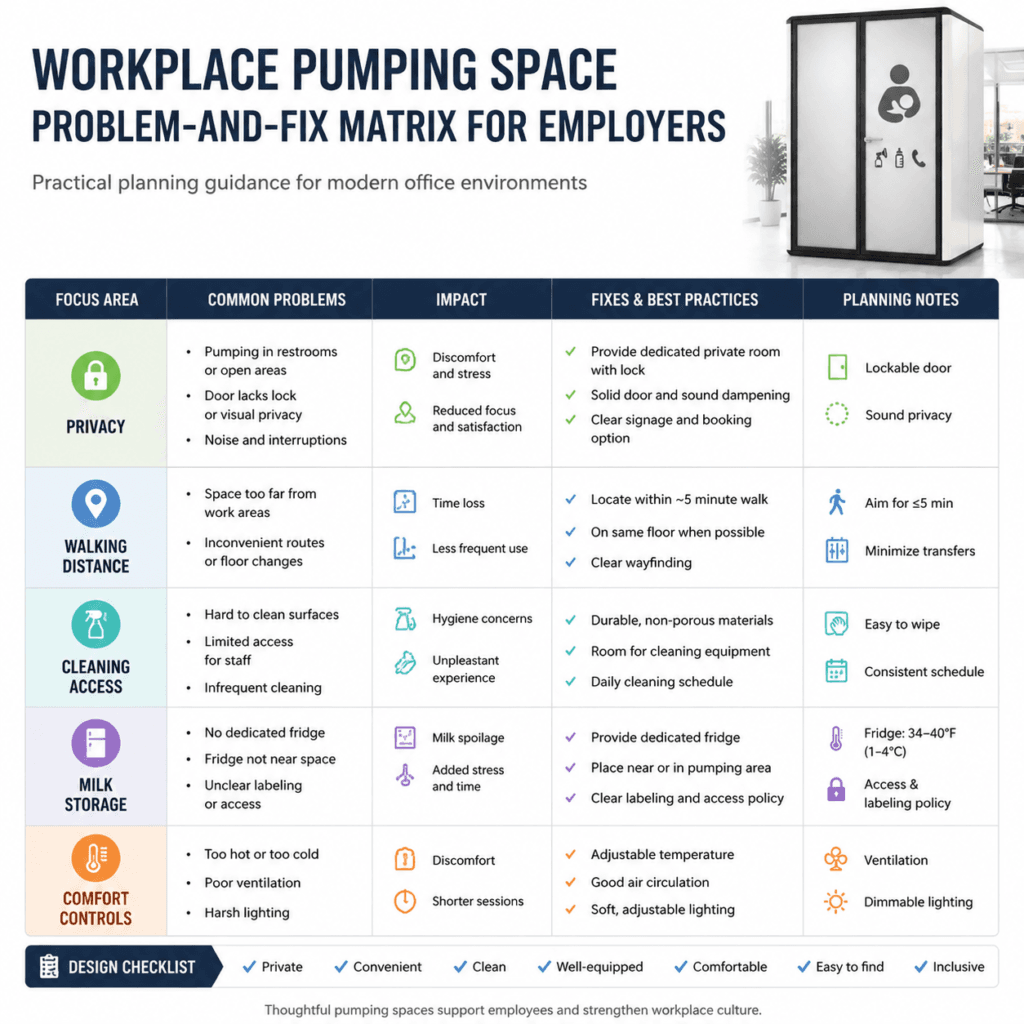
A extração de leite no local de trabalho torna-se mais fácil quando os empregadores resolvem cinco questões relacionadas com o espaço: privacidade, tempo de deslocamento, acesso para limpeza, armazenamento do leite e conforto. Um espaço adequado para a extração de leite precisa de mais do que uma porta trancada. Deve estar próximo das colaboradoras, protegido de olhares curiosos, fácil de limpar, dotado de um plano de armazenamento e suficientemente confortável para uma utilização diária repetida.
Última atualização: 7 de julho de 2026 | Autor: William | Crítica: Richard | Tempo estimado de leitura: 12 minutos
Por que razão a extração de leite no trabalho não resulta, mesmo quando existe uma sala destinada a esse efeito
A maioria dos empregadores não falha na criação de espaços de apoio por estar a agir de forma descuidada. Falham porque a sala parece adequada na planta, mas revela-se inadequada durante um dia de trabalho real.
Um escritório reconvertido pode ter uma porta, mas não dispor de um processo de marcação fiável. Uma sala de bem-estar pode parecer privada até que alguém a utilize para fazer uma chamada telefónica. Uma sala de amamentação pode estar tecnicamente disponível, mas tão longe do departamento da colaboradora que cada sessão se torna um problema de gestão do tempo.
É por isso que, normalmente, encaro a extração de leite no trabalho, em primeiro lugar, como uma questão de infraestruturas. As políticas de RH são importantes, tal como a análise jurídica, mas é através do espaço que a colaboradora sente esse apoio: a fechadura, a cadeira, a tomada, a distância a percorrer, o acesso aos serviços de limpeza e a organização do espaço de arrumação.
Para os empregadores, o objetivo é simples: tornar a extração de leite no local de trabalho previsível, privada, higiénica e algo normal de se fazer.
Os 5 problemas relacionados com o espaço que os empregadores podem resolver
| Problema | O que os funcionários experimentam | Correção do empregador |
|---|---|---|
| Privacidade frágil | Preocupação em ser visto, interrompido ou ouvido por alguém | Adicionar proteção visual, fecho interior, indicador de ocupação e uma política de utilização clara |
| Longa distância a pé | Cada sessão demora mais tempo do que deveria | Colocar o espaço mais próximo das zonas de trabalho ou adicionar opções satélite |
| Apoio insuficiente na limpeza | Os utilizadores improvisam com toalhetes, lavatórios ou superfícies partilhadas | Assegurar o acesso a locais próximos para lavar as mãos, materiais de limpeza e a responsabilidade pela manutenção |
| Armazenamento complicado do leite | Os funcionários recorrem a frigoríficos partilhados ou a geleiras pessoais | Criar um plano específico para o armazenamento de leite materno no local de trabalho |
| Configuração pouco confortável | O quarto transmite uma sensação de provisório, de estar apertado ou de ser stressante | Planear adequadamente os assentos, as superfícies, a iluminação, a ventilação e a temperatura |
Não se trata de detalhes de luxo. São eles que determinam se o espaço é, de facto, utilizável.
Problema 1: A sensação de que a privacidade é frágil
Um espaço de extração de leite pode ser privado, em teoria, e, na prática, dar a sensação de estar exposto.
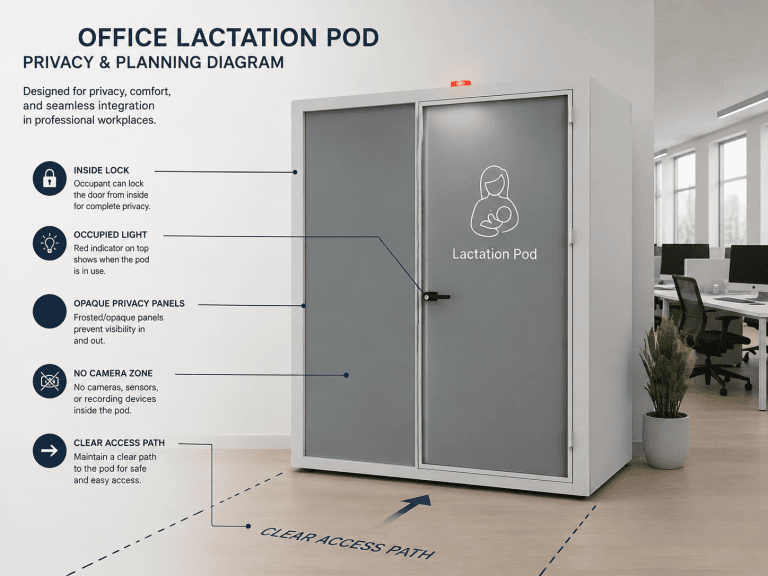
Entre os problemas mais comuns contam-se portas de vidro sem proteção suficiente, uma porta que possa ser aberta do exterior, a ausência de um sinal de «ocupado», uma sala situada junto a uma zona de grande afluência ou um calendário partilhado que permita a outros funcionários reservar a sala para fins não relacionados.
No que diz respeito à extração de leite no trabalho, a privacidade tem três níveis:
- Privacidade visual: o utilizador não deve ser visível a partir de corredores, janelas, câmaras ou paredes de vidro.
- Controlo físico: o utilizador deve poder trancar o espaço a partir do interior.
- Confiança social: os colegas de trabalho devem compreender que o espaço é protegido, não está apenas à disposição.
Se o trabalhador tiver de ficar à espera que ninguém entre, o empregador não resolveu o problema.
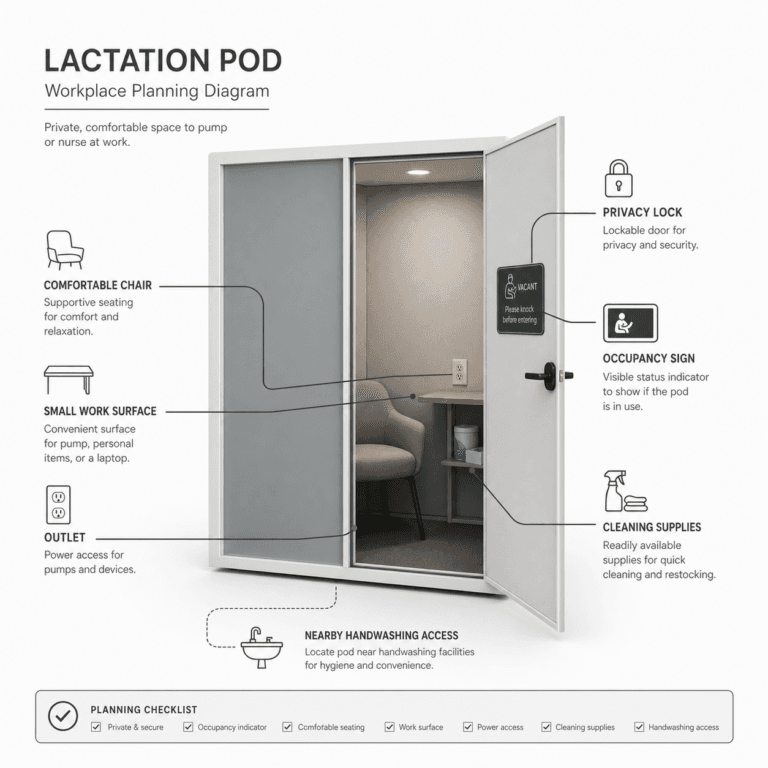
Uma configuração mais adequada inclui uma fechadura interior, sinalética clara, um indicador de ocupação, proteção visual e uma política que impeça que a sala passe a ser utilizada como sala de reuniões suplementar. Se uma entidade patronal estiver a avaliar uma opção concebida especificamente para o efeito, B&H Ergonomics’ opções de cabines de amamentação pode ser comparado com a adaptação do espaço em termos de privacidade, alimentação elétrica, ventilação, localização e controlo pelo utilizador.
Problema 2: O quarto fica demasiado longe
Uma sessão de extração de leite não se resume apenas ao tempo que se passa a extrair leite. Inclui também caminhar, preparar o equipamento, limpar tudo, arrumar as coisas e regressar ao trabalho.
Para uma equipa de gestão de instalações, a questão subjacente não é “Temos uma sala?”, mas sim “Quanto tempo é que a sala acrescenta a cada sessão?”
| Fator tempo | Exemplo de mau planeamento | Melhor Opção de Planeamento |
|---|---|---|
| Distância a pé | O quarto fica noutro piso ou num canto afastado | Colocar o espaço mais próximo da zona de trabalho do colaborador |
| Tempo de configuração | Sem superfície, sem tomada, sem ganchos nem local de arrumação | Disponibilizar uma mesa estável, acesso à eletricidade e espaço para as malas |
| Tempo de espera | A sala de bem-estar partilhada está ocupada | Utilizar uma política de utilização exclusiva ou prioritária |
| Hora de arrumar tudo | Não está claro quais são o lavatório e os acessórios | Assegurar acesso a serviços de limpeza nas proximidades e definir por escrito as expectativas |
| Dificuldades no regresso ao trabalho | O colaborador considera que a sua ausência já se prolongou demasiado | Reduzir as deslocações desnecessárias e a incerteza |
Esta é uma das razões pelas quais a disposição modular pode ser importante. Uma sala fixa pode ser aceitável num escritório pequeno. Num local de trabalho de maiores dimensões, num hospital, num armazém, num campus ou num edifício com vários andares, uma única sala afastada pode não ser suficiente.
Problema 3: A limpeza é tratada como algo secundário
A limpeza não deve depender de o próximo utilizador ser excepcionalmente cuidadoso.
Um espaço de extração de leite necessita de um processo de limpeza prático. Isso nem sempre implica a existência de canalização no interior da sala ou da cabina. Em muitos escritórios, um espaço de extração de leite «seco», com acesso próximo a um lavatório, materiais de limpeza e um responsável pela manutenção claramente definido, é mais fácil de gerir do que um interior «húmido», com humidade adicional e riscos de manutenção.
Os empregadores devem decidir:
- Onde é que o utilizador pode lavar as mãos?
- Onde é que as peças ou superfícies das bombas podem ser manuseadas de forma higiénica?
- Quem repõe os toalhetes, as toalhas, os forros e os consumíveis?
- Quem limpa o espaço diariamente?
- O que devem os utilizadores fazer se o espaço estiver sujo ou se faltar algum material?
É aqui que muitas salas “suficientemente boas” falham. Proporcionam privacidade, mas deixam que seja o próprio funcionário a encarregar-se da limpeza.
Para efeitos de planeamento legal e de referência das instalações, os empregadores podem consultar o B&H Ergonomics’ Guia para empregadores sobre a Lei PUMP e o mais vasto lista de verificação dos requisitos para salas de amamentação. Este artigo centra-se na experiência quotidiana no espaço e não constitui aconselhamento jurídico.
Problema 4: Guardar leite materno no trabalho é complicado
Guardar leite materno no trabalho é um dos pormenores mais práticos, mas é muitas vezes deixado para o fim.
Tecnicamente, pode haver um frigorífico partilhado no escritório, mas isso pode causar algum desconforto à funcionária. Um refrigerador pessoal pode ser uma solução para algumas utilizadoras, mas implica ter de preparar diariamente o que levar, incluir bolsas de gelo e mais um objeto para transportar. Um frigorífico dentro do espaço de amamentação pode ser útil em alguns layouts, mas também pode fazer com que uma sala já compacta pareça ainda mais cheia.
Uma estratégia mais eficaz por parte do empregador consiste em decidir deliberadamente como armazenar o leite.
| Opção de armazenamento | Quando funciona | Precaução no planeamento |
|---|---|---|
| Refrigerador pessoal | Pequeno escritório ou necessidade temporária | O colaborador suporta esse fardo todos os dias |
| Frigorífico comum do escritório | Apenas se a política e a privacidade forem aceitáveis | Pode parecer estranho e suscitar preocupações relacionadas com a atribuição de rótulos |
| Mini-frigorífico exclusivo junto ao espaço | Adequado para muitos locais de trabalho | Regras relativas à limpeza, ao acesso e à rotulagem |
| Mini-frigorífico no interior do quarto ou do módulo | Útil quando o espaço o permite | Pode sobrelotar a sala e tem de ser mantido |
No que diz respeito ao armazenamento de leite materno no local de trabalho, os empregadores devem basear-se nas orientações de saúde atuais e nas políticas internas, em vez de se basearem em suposições. As orientações do CDC orientações sobre o armazenamento e a preparação do leite materno é uma referência externa útil para tomar decisões relativas ao manuseamento e ao armazenamento.
Problema 5: O espaço é funcional, mas pouco confortável
Um espaço para extrair leite não precisa de parecer um spa. Mas tem de transmitir uma sensação de que foi pensado de forma deliberada.
Uma cadeira dura, luz intensa, pouca ventilação, falta de superfícies de apoio e uma sala cheia de objetos guardados que já não servem transmitem uma imagem errada. Além disso, tornam a utilização diária mais difícil do que deveria ser.
O princípio básico não é complicado:
- Assentos confortáveis com apoio para as costas
- Uma superfície estável para peças da bomba e objetos pessoais
- Alimentação de corrente acessível junto ao assento
- Iluminação suave, mas adequada
- Planeamento da ventilação ou do ar fresco
- Um gancho, uma prateleira ou um espaço para um saco pequeno
- Acabamentos sóbrios e sinalética clara
- Sem material de limpeza guardado, caixas de reserva ou desordem não relacionada
Quando comparo uma sala adaptada com uma cabine modular de amamentação, não começo pelo produto. Começo pela experiência do utilizador. Será que a colaboradora consegue entrar, trancar a porta, sentar-se confortavelmente, ligar o aparelho à corrente, extrair leite, limpar tudo, guardar o leite e regressar ao trabalho sem stress nem improvisações?
Se a resposta for «não», o espaço precisa de ser melhorado.
Noções básicas sobre a extração de leite no local de trabalho: Lista de verificação para a preparação por parte da entidade patronal
Esta é a lista de verificação que eu utilizaria antes de considerar um espaço de bombeamento pronto.
| Essencial | Pergunta do empregador | Porque é que é importante |
|---|---|---|
| Localização privada | O espaço está protegido da vista do público? | Reduz a exposição e a hesitação |
| Fecho interior | O utilizador pode controlar a entrada a partir do interior? | Impede a intrusão acidental |
| Indicador de ocupado | Os colegas de trabalho vão saber que a sala está ocupada? | Reduz o ruído e a rigidez |
| Assentos | A cadeira é confortável para uma utilização repetida? | Permite sessões diárias mais longas |
| Superfície de trabalho | Existe algum local fixo para guardar os artigos da bomba? | Evita utilizar o colo, o chão ou prateleiras instáveis |
| Potência | É fácil aceder a uma tomada a partir da cadeira? | Compatível com bombas e dispositivos elétricos |
| Acesso para limpeza | A lavagem das mãos e os materiais necessários estão previstos? | Torna a divisão mais prática e higiénica |
| Armazenamento de leite | Existe uma política de armazenamento bem definida? | Evita situações embaraçosas de improvisação quando se partilha o frigorífico |
| Regra de reserva | Os utilizadores conseguem aceder à sala quando necessário? | Evita conflitos com a utilização para atividades de bem-estar ou reuniões |
| Responsável pela manutenção | Quem mantém o espaço limpo e abastecido? | Evita o declínio após o lançamento |
[Inserir imagem aprovada: lista de verificação dos elementos essenciais para a extração de leite no local de trabalho; texto alternativo: elementos essenciais para a extração de leite no local de trabalho]
Quando faz sentido utilizar uma cabine de amamentação
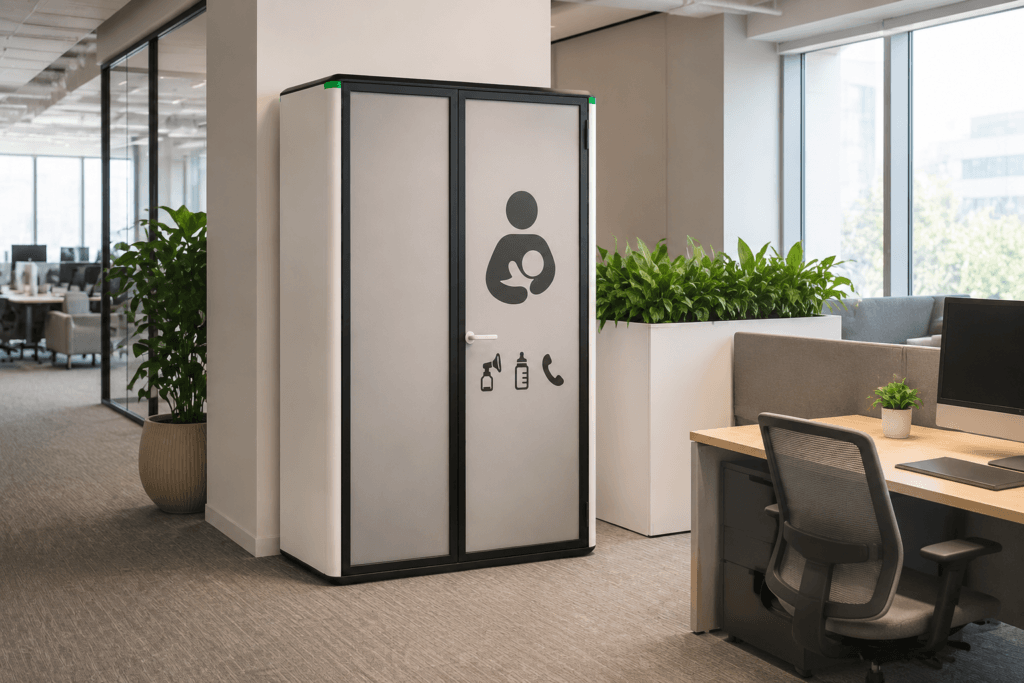
Uma cabine de amamentação não é a única forma de facilitar a extração de leite no trabalho. Uma sala específica e bem planeada pode funcionar bem quando o edifício já dispõe do espaço adequado.
Uma «pod» começa a fazer sentido quando a entidade patronal se depara com um destes problemas:
- Nenhum quarto vago pode continuar a ser destinado exclusivamente à amamentação.
- A renovação demoraria demasiado tempo.
- A disposição do escritório poderá sofrer alterações.
- É necessário cobrir vários andares ou zonas.
- Uma sala de bem-estar partilhada continua a causar conflitos de horários.
- O empregador pretende um processo definido de aquisição de produtos, em vez de um projeto de construção.
- O espaço necessita de sistemas integrados de privacidade, alimentação elétrica, iluminação e ventilação, bem como de um controlo intuitivo por parte do utilizador.
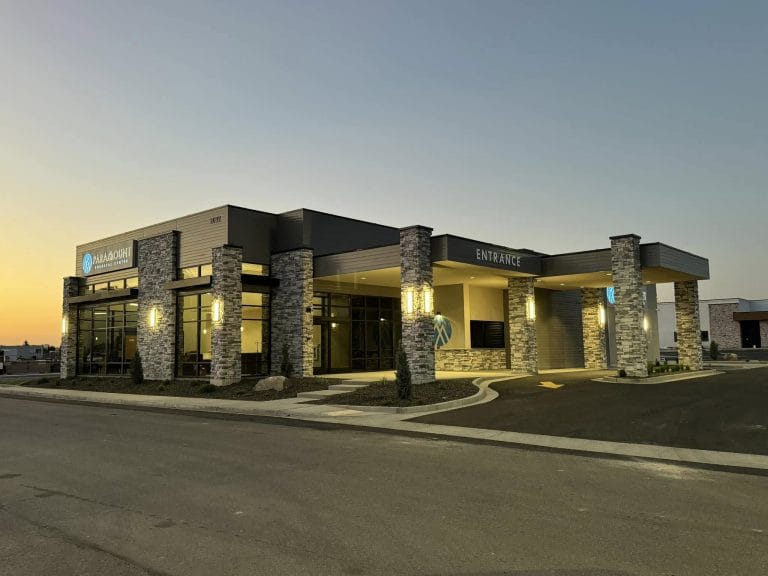
Para ver um exemplo concreto de instalação, consulte o Estudo de caso da cápsula de lactação do Paramount Surgical Center para compreender como uma unidade de saúde criou um espaço privado para extração de leite sem ter de iniciar um projeto completo de construção de uma sala.
Lista de verificação de ações do empregador
Antes de atualizar uma sala ou comprar um pod, confirme os seguintes pontos:
- Identifique os utilizadores previstos, os turnos, os andares e os possíveis períodos de sobreposição.
- Medir a distância a pé a partir das principais zonas de trabalho.
- Verifique se há privacidade visual em relação aos corredores, câmaras, vidros e áreas públicas.
- Adicione uma fechadura interior e um indicador de ocupação.
- Decida se a sala é exclusiva, de utilização prioritária ou sujeita a marcação.
- Providenciar assentos, superfícies, energia elétrica, iluminação e ventilação.
- Crie um fluxo de trabalho de limpeza com um responsável designado.
- Decida como será gerida a conservação do leite materno no local de trabalho.
- Formar os gestores para que não questionem, apressem ou interrompam as pausas para amamentação.
- Estabelecer uma ligação entre o plano de espaço, a política de recursos humanos, a análise jurídica e a manutenção das instalações.
As melhores dicas para extrair leite no trabalho não se destinam apenas aos colaboradores. Os empregadores podem aliviar grande parte do fardo, garantindo que o espaço esteja bem equipado antes mesmo de alguém ter de pedir ajuda.
FAQ
O que devem os empregadores disponibilizar para a extração de leite no local de trabalho?
Para as entidades patronais norte-americanas abrangidas, o Recursos «Pump at Work» do Departamento do Trabalho dos EUA Explique que o espaço destinado à extração de leite deve ser um local diferente da casa de banho, protegido da vista e livre de intrusões. Do ponto de vista das instalações, um espaço adequado também necessita de assentos, tomada elétrica, uma superfície estável, acesso para limpeza, planeamento do armazenamento do leite, ventilação, iluminação e regras claras de acesso. Os empregadores devem solicitar ao departamento de RH ou a um consultor jurídico que analise as orientações federais, juntamente com os requisitos estaduais, locais e da empresa aplicáveis.
Quais são as dicas mais importantes para a extração de leite no local de trabalho, do ponto de vista da entidade patronal?
As melhores dicas do ponto de vista do empregador são: reduzir o tempo de deslocamento, proteger a privacidade, evitar conflitos relacionados com a sala, disponibilizar produtos de limpeza, planear o armazenamento do leite e tornar o espaço suficientemente confortável para uma utilização diária e repetida. Uma sala que existe, mas que é difícil de utilizar, continuará a causar stress.
O armazenamento do leite materno no local de trabalho deve ser feito dentro da sala de extração?
Nem sempre. Um minifrigorífico próprio no interior do quarto pode ser uma boa opção quando o espaço o permite, mas um frigorífico próprio nas proximidades pode ser a melhor solução em espaços compactos. A entidade patronal deve estabelecer regras claras relativas ao armazenamento, à rotulagem, ao acesso e à limpeza, com base nas orientações de saúde em vigor e na política interna.
Uma funcionária pode extrair leite enquanto trabalha?
Algumas funcionárias podem optar por verificar mensagens ou realizar tarefas leves durante uma sessão de extração de leite, mas os empregadores não devem conceber o espaço com base na multitarefa. A prioridade é um espaço privado, funcional e confortável, onde a funcionária possa extrair leite sem ser interrompida, observada ou pressionada.
É necessário um espaço de amamentação para extrair leite no trabalho?
Não. Não é obrigatório dispor de uma cabina de amamentação. Uma sala específica pode servir, desde que seja privada, esteja disponível, esteja limpa e seja funcional. Uma cabina torna-se útil quando o local de trabalho não dispõe de uma sala adequada, necessita de uma implementação mais rápida ou pretende um espaço móvel e especificamente concebido para a extração de leite.