Resposta rápida
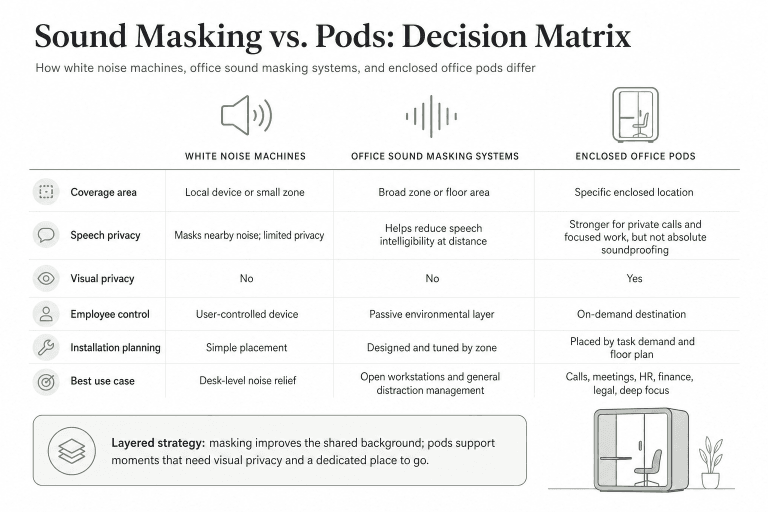
As distrações no escritório provêm geralmente de quatro fontes: conversas nas proximidades, movimento visual, interrupções imprevistas e alternância entre dispositivos digitais. A melhor solução não consiste numa única regra ou num único produto. Comece por identificar o tipo de distração e, em seguida, combine a divisão em zonas, regras de comportamento, cabines telefónicas, espaços de trabalho individuais, espaços para reuniões e espaços de escritório onde a tarefa exija verdadeira privacidade ou concentração.
Última atualização: 9 de julho de 2026 | Autor: Richard | Tempo estimado de leitura: 11 minutos
Por que as distrações no escritório exigem uma solução de planejamento do espaço
Um escritório movimentado pode parecer produtivo, mas, sem darmos por isso, vai minando a concentração. As chamadas de vendas estendem-se até às secretárias. As conversas com os Recursos Humanos parecem estar à vista de todos. Os programadores perdem tempo de trabalho concentrado porque as conversas nas proximidades lhes desviam constantemente a atenção. As salas de reuniões ficam ocupadas por videochamadas individuais, deixando as pequenas equipas sem espaço para se reunirem.
É por isso que a distração no local de trabalho deve ser encarada como um problema de planeamento do espaço, e não apenas como um problema de comportamento. As pessoas continuam a precisar de colaboração, mas também precisam de locais onde as chamadas, as conversas confidenciais, as pequenas reuniões e o trabalho que exige concentração não tenham de disputar o mesmo espaço de secretárias abertas.
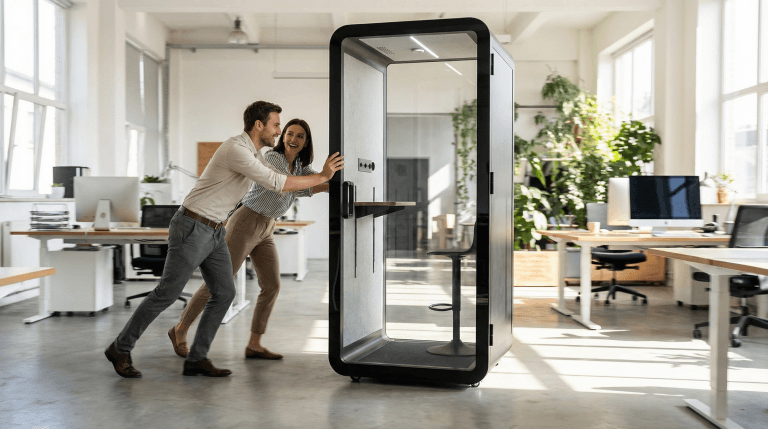
Se já está a comparar soluções de espaços de trabalho fechados, comece pelo B&H Ergonomics cápsulas de escritório como uma categoria mais ampla de privacidade e foco. Chamadas individuais, trabalho concentrado e discussões em pequenos grupos podem exigir, cada um, uma cabine mais especializada.
O que se considera uma distração no escritório?
As distrações no escritório são situações recorrentes que interrompem a concentração, reduzem a privacidade ou obrigam as pessoas a mudar de tarefa antes de estarem preparadas para tal.
Entre os exemplos mais comuns contam-se:
- chamadas telefónicas locais;
- conversas paralelas ao lado das secretárias;
- pessoas que passam pelas áreas de interesse;
- perguntas rápidas que interrompem o trabalho de concentração;
- reuniões por vídeo em secretárias abertas;
- alertas por chat e e-mail;
- salas de reuniões a serem utilizadas para chamadas individuais;
- conversas confidenciais que decorrem em locais onde outras pessoas podem ouvir.
Nem todas as distrações têm o mesmo custo. Um ruído de fundo breve pode ser irritante, mas uma interrupção que obriga alguém a parar, reorientar-se e recuperar a concentração pode ter um custo muito mais elevado.
Estudo sobre espaços de trabalho abertos publicado pela Sociedade Real constatou que a interação presencial diminuiu depois de os colaboradores terem passado a trabalhar em espaços de trabalho mais abertos, enquanto a comunicação eletrónica aumentou. A investigação de Gloria Mark sobre interrupções, citada por UC Irvine, é frequentemente citado por mostrar quanto tempo as pessoas podem demorar a retomar uma tarefa depois de terem sido interrompidas.
A lição prática é simples: se o design do escritório continuar a obrigar as pessoas a mudanças de contexto não planeadas, o problema não será resolvido pedindo a todos que “se concentrem mais”.”
Os quatro principais tipos de distrações no local de trabalho
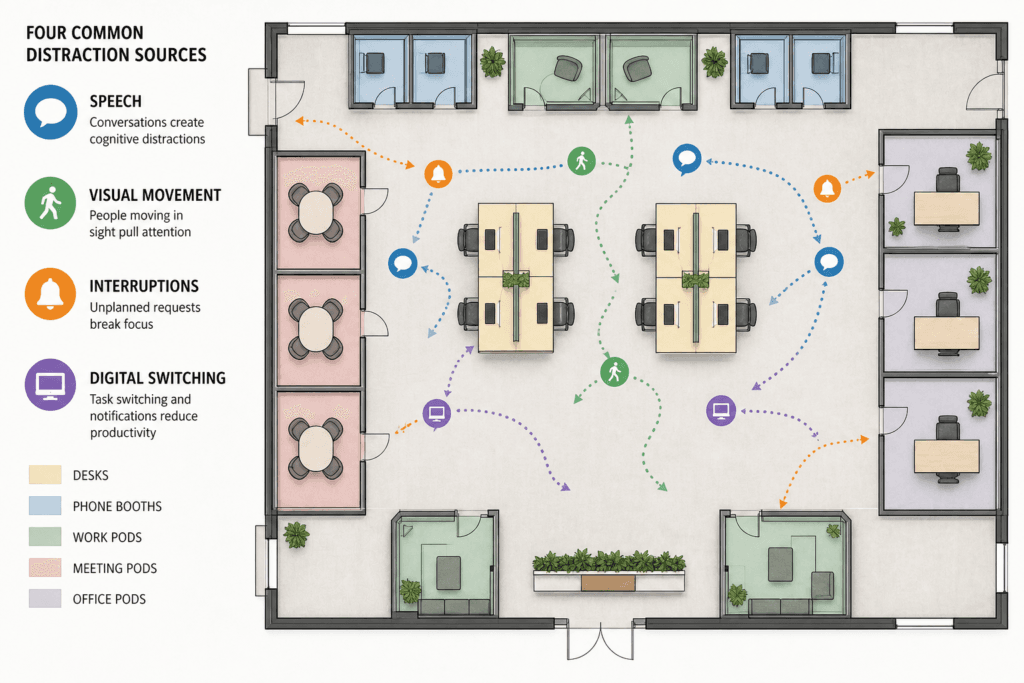
A maioria das distrações no local de trabalho divide-se em quatro categorias. É importante identificar o tipo, pois cada uma requer uma solução diferente.
| Tipo de distração | O que parece | Por que é que isso prejudica o trabalho | Melhor primeira resposta |
|---|---|---|---|
| Distração da fala | chamadas, conversas paralelas, reuniões nas proximidades | palavras compreensíveis desviam a atenção | transferir chamadas e conversas para espaços fechados |
| Distração visual | pessoas a passar junto às secretárias, movimento junto às estações de trabalho | o cérebro está constantemente a analisar o ambiente | vias de circulação separadas das secretárias de trabalho individual |
| Distração de interrupção | toques no ombro, “perguntas rápidas”, visitas inesperadas | interrompe a continuidade da tarefa | criar regras de silêncio e zonas de concentração bem visíveis |
| Distração digital | alertas de chat, alternância de e-mail, notificações de reuniões | dispersa a atenção entre as várias ferramentas | definir normas da equipa para mensagens urgentes e não urgentes |
Quando analiso os problemas de distração no escritório, costumo começar pela conversa e pelas interrupções. São os aspetos mais fáceis de subestimar, porque, no momento, parecem insignificantes. Mas, quando se repetem ao longo do dia, alteram a forma como as pessoas utilizam o escritório.
Por que é que os escritórios em plano aberto tornam as distrações mais difíceis de controlar
Um escritório em plano aberto não significa automaticamente que o escritório seja ruim. O problema começa quando se espera que a mesma área aberta dê suporte a todos os modos de trabalho.
Um representante comercial precisa de falar com clareza durante as chamadas. Um gestor de RH pode precisar de discutir a remuneração. Um programador pode precisar de duas horas de concentração ininterrupta. Uma equipa de projeto pode precisar de uma pequena reunião sem ter de ocupar a maior sala de conferências. Se todas essas tarefas forem realizadas no mesmo espaço de trabalho, a distração torna-se estrutural.
Os escritórios em plano aberto costumam aumentar as distrações de três formas:
- Elas eliminam as barreiras. A fala, o movimento e a atividade espalham-se pelo chão.
- Eles misturam tarefas incompatíveis. Chamadas, trabalho concentrado e colaboração rápida competem em um único ambiente compartilhado.
- Elas ocultam a demanda por espaço privativo. As salas de reunião são usadas para chamadas individuais porque não há opções privativas menores em quantidade suficiente.
É por isso que orientações abrangentes para ambientes de trabalho, como os recursos da GSA para reconfiguração de espaços de trabalho, costumam enfatizar a flexibilidade e a modularidade, em vez de um único layout fixo para todas as tarefas. Um escritório melhor oferece às pessoas uma escolha de ambientes.
Matriz de diagnóstico das distrações no escritório
Antes de comprar produtos ou reformular as regras do escritório, faça um diagnóstico do problema principal. A solução errada pode parecer ativa, mas mudar muito pouco.
| O que dizem os funcionários | Provável causa raiz | Departamento comum | Melhor primeira jogada | Quando é necessário um espaço fechado |
|---|---|---|---|---|
| “Ouço chamadas o dia todo.” | distração causada pela fala em chamadas feitas na mesa | vendas, suporte, recrutamento | afastar as chamadas das mesas | usar cabines para chamadas recorrentes e reuniões por vídeo |
| “As pessoas conseguem ouvir conversas confidenciais.” | baixa privacidade da fala | RH, finanças, liderança | pare de usar mesas abertas para assuntos confidenciais | use cabines telefônicas ou pequenos pods de reunião |
| “Não consigo realizar um trabalho de concentração profunda.” | sobreposição de conversas, movimentação e interrupções | engenharia, design e analistas | crie zonas silenciosas e regras para interrupções | use pods de trabalho para proteger a concentração |
| “As salas de reunião estão sempre ocupadas.” | salas grandes usadas para chamadas individuais | equipes de escritório mistas | separe as chamadas individuais da demanda por reuniões em grupo | use cabines telefônicas para chamadas individuais e pods de reunião para equipes pequenas |
| “O escritório parece causar distrações em todos os lugares.” | ausência de zoneamento por atividade | equipes em escritório aberto | mapeie os modos de trabalho barulhento, silencioso e privado | use pods para escritório como uma camada mais ampla de privacidade e concentração |
[Insert image: open office distraction diagnosis map with labeled zones and solution paths]
Prompt de imagem: Planta profissional de um escritório B2B mostrando quatro fontes de distração: conversas, movimentação visual, interrupções e alternância digital, com zonas identificadas para mesas, cabines telefônicas, pods de trabalho, pods de reunião e pods para escritório, estilo editorial clean, proporções precisas, sem certificações fictícias e sem alegações exageradas de isolamento acústico.
O objetivo não é tornar o escritório silencioso. O objetivo é tornar o escritório honesto. Uma área de colaboração pode ser movimentada. Uma área de vendas pode ter a energia das chamadas. Uma área de concentração deve proteger o foco. Uma conversa confidencial não deve acontecer no meio do escritório.
Associe o problema ao tipo certo de cabine de escritório
Um erro comum na compra é tratar todos os espaços fechados como se fossem iguais. É preferível associar a categoria de produto ao modo de trabalho real.
Cabines telefónicas para chamadas e videoconferências
Utilize uma cabine telefónica quando o problema for a fala de uma só pessoa: chamadas de vendas, apoio ao cliente, chamadas de recrutamento, chamadas a fornecedores e videoconferências.
Um cabina telefónica de escritório ajuda porque afasta a fala da área das secretárias. Também preserva a capacidade das salas de reunião. Se uma pessoa estiver numa videochamada de 20 minutos, normalmente não precisa de uma sala de conferências para quatro pessoas.
As cabines telefónicas são especialmente úteis quando:
- as chamadas ocorrem várias vezes por dia;
- as equipas próximas se queixam de conversas ouvidas;
- as videoconferências exigem um fundo mais limpo;
- as salas de reunião estão a ser ocupadas por chamadas individuais.
Pods de trabalho para trabalho profundo e concentração
Utilize um pod de trabalho quando o principal problema for o trabalho concentrado. Isto é comum entre programadores, analistas, designers, redatores e qualquer pessoa que necessite de longos períodos de concentração.
A cápsula de trabalho não deve ser tratado como um espaço de recompensa. É uma ferramenta de trabalho. Proporciona aos colaboradores um local definido para se afastarem de conversas, movimento e interrupções informais quando a tarefa exige continuidade.
Os pods de trabalho são mais adequados quando:
- os colaboradores necessitam de sessões de trabalho profundo;
- a interrupção é mais prejudicial do que o ruído geral;
- a equipa necessita de uma opção de concentração dentro do escritório;
- o trabalho remoto está a tornar-se a única forma de as pessoas protegerem a concentração.
Pods de reunião para pequenas reuniões
Use pods de reunião quando equipes pequenas precisarem de privacidade sem ocupar grandes salas de conferência. Isso é especialmente relevante para reuniões individuais com gestores, discussões de projetos, chamadas híbridas, conversas de liderança e rápidas revisões de equipe.
A cápsula de reunião não é apenas uma sala menor. É uma forma de adequar o tamanho do espaço ao tamanho da reunião. Quando a combinação de pods é adequada, as grandes salas de reunião permanecem disponíveis para grupos maiores.
Pods de escritório para um planejamento mais abrangente de privacidade e foco
Use pods de escritório como a categoria mais abrangente quando o escritório precisar de uma combinação de espaços para privacidade, foco, chamadas e colaboração em pequenos grupos. Em muitos projetos, a resposta final não é um único tipo de cabine. É uma combinação planejada.
O guia de cápsulas para escritório é o próximo passo mais indicado quando você ainda está decidindo quantos espaços fechados serão necessários, quais tamanhos terão e quais casos de uso farão parte do plano.
Planejamento da combinação de pods por departamento: uma única proporção não atende a todas as equipes
Um dos erros mais fáceis de cometer é comprar a mesma proporção de pods para todos os departamentos. Equipes diferentes criam e vivenciam as distrações de maneiras diferentes.
Uma equipe de vendas pode precisar de mais cabines telefônicas porque o volume de chamadas é alto. O RH pode precisar de espaços privativos para tratar de remuneração, entrevistas e conversas com funcionários. A equipe de engenharia pode precisar de mais espaços protegidos para foco. Uma equipe de liderança ou operações pode precisar de capacidade para pequenas reuniões.
Use esta matriz de planejamento como ponto de partida.
| Departamento ou equipe | Principal problema de distração | Prioridade de pods mais adequada | Nota de planeamento |
|---|---|---|---|
| Vendas | chamadas demais nas mesas | cabinas telefónicas | considere o volume diário de chamadas, não apenas o número de funcionários |
| RH / Pessoas | conversas sobre remuneração, entrevistas e funcionários ouvidas por outras pessoas | cabines telefônicas e pods de reunião | a demanda por privacidade pode ser menor em volume, mas maior em sensibilidade |
| Engenharia / Programação | trabalho profundo interrompido por conversas e movimento | cápsulas de trabalho | planear sessões de concentração mais longas, não apenas chamadas curtas |
| Apoio ao Cliente | chamadas recorrentes e ruído de fundo | cabinas telefónicas | colocar cabines suficientemente perto para serem utilizadas sem perturbar os fluxos de trabalho |
| Equipas de Projeto | pequenas discussões a utilizar salas grandes | cápsulas de reunião | libertar salas grandes oferecendo às equipas pequenas um espaço dimensionado de forma adequada |
| Escritório Aberto Geral | necessidades mistas de chamadas, concentração e privacidade | cápsulas de escritório | utilizar uma combinação equilibrada em vez de um único tipo de produto |
[Insert image: department-based office pod planning matrix for different teams]
Prompt de imagem: Infografia empresarial que apresenta o planeamento de pods de escritório por departamento para vendas, RH, engenharia, apoio ao cliente e equipas de projeto, com cabines para chamadas, pods de trabalho, pods de reunião e pods de escritório de maior dimensão associados às necessidades de cada departamento, estilo corporativo limpo, sem logótipos falsos, sem alegações de produtividade não comprovadas.
Se pretender uma proporção realista, comece pelos padrões de trabalho. Quantas pessoas fazem chamadas diariamente? Que equipas tratam de conversas sensíveis? Com que frequência as salas de reunião ficam ocupadas por chamadas de uma só pessoa? Que departamentos precisam de trabalho profundo no escritório, em vez de em casa?
Essas respostas são mais importantes do que uma fórmula universal de pods por colaborador.
Utilize Evidências Acústicas, Não Alegações Genéricas de Insonorização
A redução de distrações depende da tarefa, da divisão, do produto e da instalação. Por isso, as alegações acústicas devem ser específicas.
Para pods e cabines de escritório, os compradores devem perguntar:
- Que método de ensaio acústico é utilizado?
- Does the evidence apply to the complete product, not just a material?
- Is the goal speech privacy, focus, meeting quality, or broad noise comfort?
- How does the product handle ventilation, glass, seals, and door closure?
- What site conditions could affect performance?
O ISO 23351-1 standard is especially relevant because it addresses speech level reduction for furniture ensembles and enclosures. That makes it more useful for office pods and booths than vague “soundproof” language.
For example, Elite-S achieved ISO 23351-1 Class A acoustic performance with 33 dB speech level reduction. In B&H factory testing under controlled conditions, Elite-S showed approximately 40 dB sound level difference. Acoustic results vary by test method, installation, site conditions, and measurement setup.
That wording matters. A good pod can improve speech privacy and reduce distraction, but it should not be described as total silence or complete sound blocking.
U.S. Project Note: Sprinkler and Fire Coordination
For some U.S. projects, especially larger enclosed pods or room-in-room installations, buyers should review fire, egress, electrical, and sprinkler coordination early.
UL Solutions guidance on modular rooms discusses issues such as egress doors, fire detection, suppression, ceiling type, and emergency lighting. NFPA describes NFPA 13 as the standard for sprinkler system installation.
For projects that require it, B&H Ergonomics can discuss sprinkler head integration as an optional configuration. Final approval should still be coordinated with the local AHJ, sprinkler contractor, landlord, and project team.
This is not a detail to leave until the end. If the pod plan affects fire protection or building coordination, it should be part of the specification conversation before purchase.
A 30-Day Plan to Reduce Distractions in the Office
You do not need to redesign the whole office at once. Start with a focused audit and solve the highest-friction work modes first.
Week 1: Identify the Main Distraction Types
Walk the office and record:
- where calls happen;
- where people go for privacy;
- which meeting rooms are used by one person;
- which departments complain most about focus;
- where walk-by movement crosses focus desks;
- which conversations should not happen in the open.
Do not start with the question, “How many pods should we buy?”
Start with, “Which work modes are currently homeless?”
Week 2: Map Distractions by Department
Separate teams by work pattern.
Sales and support may need more call capacity. HR may need private conversation space. Engineering may need protected focus time. Managers may need compact spaces for one-on-one conversations. Mixed teams may need broader office pods that support several work modes.
This step prevents the common mistake of buying a visually balanced mix that does not match actual demand.
Week 3: Pilot Rules and Placement
Before finalizing the full layout, test simple changes:
- move call-heavy seats away from focus desks;
- create quiet blocks for deep work;
- reserve phone booths for calls and video meetings;
- move solo calls out of large meeting rooms;
- discourage long conversations beside desk banks;
- place pods where people will actually use them.
Good placement is part of adoption. If a booth is too far away, people keep taking calls at their desks.
Week 4: Review Demand and Request a Quote
After the pilot, review what changed.
Are meeting rooms easier to book? Are sales calls less disruptive? Does HR have a private place for sensitive conversations? Do programmers have a realistic focus option inside the office?
Once you know the pattern, you can request a quote with better information: departments, headcount, primary distractions, desired pod types, floor plan constraints, acoustic priorities, sprinkler needs, and target use cases.
When Office Pods Are the Right Next Step
Office pods are usually worth considering when the office has recurring privacy and focus problems that layout changes alone cannot solve.
They are a strong fit when:
- calls happen at desks because there is nowhere else to go;
- meeting rooms are overloaded by solo calls;
- HR, finance, leadership, or recruiting conversations need privacy;
- employees leave the office to do deep work;
- the workplace needs flexible enclosed space without a full renovation;
- different departments need different privacy and focus settings.
They are not the first answer for every problem. If the main issue is echo or background noise, start with an plano de redução de ruído em escritórios abertos. If the issue is poor team adjacency, fix the layout. If the issue is notification overload, set digital norms. But if the task itself needs enclosure, an open desk cannot do that job.
Conclusão final
Distractions in the office are not only a productivity issue. They are a design, privacy, and work-mode problem.
The strongest solution starts with diagnosis. Identify whether the main issue is speech, movement, interruption, digital switching, meeting room misuse, or confidential work in the open. Then match the solution to the task: phone booths for calls, work pods for deep focus, meeting pods for small group privacy, and office pods for broader workplace privacy and focus planning.
If your team is ready to compare options, request a quote from B&H Ergonomics with your department mix, floor plan constraints, call volume, focus needs, and sprinkler requirements. The better the diagnosis, the better the pod plan.
FAQ
Quais são as distrações mais comuns no escritório?
As distrações mais comuns no escritório são conversas nas proximidades, chamadas telefónicas, videoconferências, pessoas a passar junto às secretárias, perguntas inesperadas, ruído das reuniões e alertas digitais. Nos escritórios em plano aberto, as distrações e interrupções causadas pela conversa são frequentemente as mais prejudiciais, pois quebram a concentração e obrigam as pessoas a recomeçar tarefas complexas.
Como é que se reduzem as distrações num escritório em plano aberto?
Para reduzir as distrações num escritório em plano aberto, comece por identificar a principal fonte. Recorra à divisão em zonas para tarefas ruidosas e silenciosas, transfira as chamadas para cabines telefónicas, proteja o trabalho de concentração profunda com cabines de trabalho ou zonas silenciosas, utilize cabines de reunião para pequenas discussões e estabeleça regras para interrupções e alertas digitais. Um plano em várias camadas funciona melhor do que um único produto.
Os cubículos de escritório são úteis para combater as distrações no local de trabalho?
As cabines de escritório são úteis quando o problema das distrações exige uma barreira física. São especialmente úteis para chamadas, videoconferências, conversas confidenciais, trabalho que exija concentração e pequenas reuniões. Devem ser selecionadas com base no tipo de tarefa, nas características acústicas, na localização, na ventilação e na procura por parte dos departamentos, em vez de serem consideradas uma melhoria genérica do escritório.
Qual é a diferença entre uma cabina telefónica, um espaço de trabalho e um espaço de reunião?
Uma cabina telefónica é ideal para chamadas individuais e videoconferências. Um espaço de trabalho individual é mais adequado para trabalho de concentração profunda, foco e tarefas individuais mais longas. Um espaço de reunião foi concebido para discussões em pequenos grupos, reuniões híbridas e colaboração privada. Os espaços de escritório podem referir-se à categoria mais ampla de soluções fechadas que garantem privacidade e concentração no local de trabalho.
De quantos espaços de trabalho uma equipa precisa?
Não existe uma proporção universal. Uma equipa de vendas pode precisar de mais cabines telefónicas devido ao elevado volume de chamadas. O departamento de RH pode precisar de menos espaços, mas de maior privacidade. O departamento de engenharia pode precisar de mais capacidade para trabalhar concentrado. Comece por analisar os padrões de trabalho de cada departamento, a frequência das chamadas, a procura por salas de reunião, as necessidades de privacidade e a procura por trabalho de concentração profunda antes de solicitar um orçamento.