In breve
I pannelli acustici per ufficio riducono eco, riverbero e suono riflesso nei luoghi di lavoro con superfici rigide. I pannelli fonoassorbenti per uffici possono rendere più tranquille sale riunioni, stanze vetrate e aree collaborative aperte, ma da soli non creano una privacy vocale affidabile. Se le conversazioni vicine restano comprensibili, il problema riguarda l’isolamento acustico o la privacy vocale, non soltanto l’assorbimento sonoro.
Ultimo aggiornamento: 16 luglio 2026 | Autore: William | Revisione: Richard | Tempo di lettura stimato: 9 minuti
Che cosa sono i pannelli acustici per ufficio?
I pannelli acustici per ufficio sono materiali fonoassorbenti usati per controllare il suono riflesso all’interno del luogo di lavoro. Possono essere installati come pannelli a parete, baffle a soffitto, schermi da scrivania, divisori sospesi o schermi acustici autoportanti.
La parola chiave è assorbimento. Un pannello contribuisce a ridurre l’energia sonora dopo che il suono lo raggiunge. Non sigilla una stanza, non blocca ogni percorso di trasmissione del suono e non trasforma un ufficio aperto in una stanza privata.
Questa distinzione conta perché inizialmente i reclami sul rumore in ufficio spesso sembrano simili. Una sala riunioni vetrata dal suono aspro e pieno di eco può trarre beneficio da pannelli acustici a parete. Un responsabile finanziario che svolge chiamate riservate in un’area aperta necessita di un altro tipo di soluzione.
Che cosa fanno bene i pannelli acustici per ufficio
I pannelli acustici per ufficio funzionano al meglio quando il problema principale è il suono riflesso, spesso in spazi con pareti in vetro, soffitti a vista, pavimenti in cemento, arredi in metallo o tavoli di grandi dimensioni. Se si stanno valutando tende insieme ai pannelli, verificare cosa tende fonoassorbenti possono e non possono fare. Confrontarne l'idoneità in base alla superficie e al problema della stanza, senza considerare né un assorbitore né una tenda come prova che le conversazioni nelle vicinanze diventeranno private.
Sono utili quando i dipendenti dicono:
- “Questa stanza ha eco.”
- “Le videochiamate hanno un suono aspro.”
- “L’ufficio sembra rumoroso anche quando nessuno urla.”
- “Il suono rimbalza sul vetro.”
- “A fine giornata questa stanza risulta affaticante.”
In queste situazioni, i pannelli fonoassorbenti per ufficio possono migliorare il comfort acustico riducendo il riverbero e rendendo più chiaro il parlato nell’area trattata. Sono particolarmente utili in sale riunioni, aule di formazione, reception, zone collaborative e uffici aperti con superfici rigide.
Che cosa non possono fare i pannelli acustici per ufficio
I pannelli acustici non rendono insonorizzato un ufficio. Inoltre, non impediscono in modo affidabile al parlato di propagarsi tra scrivanie, stanze o aree di lavoro aperte.
Questo è il primo errore d’acquisto da evitare: un team continua ad aggiungere materiali morbidi quando il vero problema non è l’eco, ma il fatto che le persone comprendono conversazioni che non dovrebbero sentire.
Assorbimento e isolamento acustico svolgono funzioni diverse:
| Termine acustico | Che cosa significa | Esempio in ufficio |
|---|---|---|
| Assorbimento sonoro | Riduce il suono riflesso all’interno di una stanza | I pannelli a parete riducono l’eco in una sala riunioni vetrata |
| Controllo del riverbero | Riduce il tempo di persistenza del suono in uno spazio | Dopo il trattamento, una stanza rigida ha un suono meno aspro |
| Isolamento acustico | Riduce la trasmissione del suono tra spazi | Una stanza o un involucro limita la dispersione sonora |
| Privacy vocale | Rende le conversazioni più difficili da comprendere fuori dall’area prevista | Le chiamate sensibili non sono comprensibili nelle vicinanze |
Se il problema è “la stanza è troppo riverberante”, i pannelli acustici per ufficio possono essere il primo passo giusto. Se il problema è “riesco a sentire ogni parola”, è improbabile che i soli pannelli risolvano il vero problema; utilizzare il confronto tra postazione insonorizzata e cabina acustica per ufficio quando si decide se una parete divisoria o un ambiente completamente chiuso soddisfa il requisito di privacy.
Matrice dai sintomi del rumore in ufficio alle soluzioni
Prima di acquistare pannelli acustici, identifica il vero problema di rumore. La soluzione acustica corretta dipende dall’esperienza dei dipendenti, non soltanto da quanto rumoroso sembra lo spazio.
| Sintomo nel luogo di lavoro | Probabile problema acustico | Migliore primo intervento |
|---|---|---|
| La sala riunioni ha eco | Suono riflesso | Pannelli acustici per ufficio, baffle a soffitto, finiture morbide |
| Le chiamate hanno un suono aspro o affaticante | Riverbero e superfici rigide | Pannelli acustici a parete, più verifica di microfono e disposizione della stanza |
| Le conversazioni vicine interrompono la concentrazione | Comprensibilità del parlato | Suddivisione in zone, distanza, regole comportamentali o spazio chiuso per concentrarsi |
| Le chiamate private avvengono alle scrivanie | Mancanza di privacy vocale | Spazio chiuso dedicato alle chiamate |
| L’intero piano sembra rumoroso | Problema misto di comfort acustico | Pannelli, suddivisione in zone, mascheramento sonoro e punti chiusi selezionati |
| Le persone escono dall’ufficio per telefonare | Mancanza di un luogo affidabile per chiamate private | Aree chiuse per telefonare o concentrarsi prima di coprire altre pareti |
Questa matrice evita di acquistare in eccesso il prodotto sbagliato. I pannelli sono validi quando la stanza è troppo riflettente, ma meno efficaci quando l’ufficio necessita di separazione, riservatezza o un luogo controllato per le chiamate.
Pannelli acustici, insonorizzazione e cabine per ufficio a confronto
I pannelli acustici riducono le riflessioni all'interno di una stanza, mentre l'isolamento acustico e gli spazi di lavoro chiusi risolvono la separazione tra ambienti. Utilizzare il confronto cabina privacy rispetto ai pannelli acustici quando la decisione d'acquisto riguarda il miglioramento dell'acustica generale della stanza, la predisposizione di un ambiente riservato per le chiamate o la combinazione di entrambe le soluzioni. La specifica corretta parte da questa esigenza; un'unica etichetta di prodotto o un solo valore acustico non possono rispondere a tutte e tre le domande.
Per questo tali prodotti non vanno valutati con la stessa metrica. I pannelli acustici sono normalmente valutati mediante dati relativi all’assorbimento. Ad esempio, ASTM C423 è uno standard usato per misurare l’assorbimento sonoro in una camera riverberante, pertinente al confronto delle prestazioni dei materiali assorbenti. I sistemi di arredo chiusi sono valutati più come ambienti acustici completi, in cui vetri, guarnizioni, struttura delle pareti, percorsi di ventilazione e installazione influiscono sul risultato. ISO 23351-1 si usa per la riduzione del livello del parlato di insiemi di arredi e involucri, non per un singolo assorbitore a parete o baffle a soffitto.
| Opzione | Ideale per | Poco efficace per | Uso tipico in ufficio |
|---|---|---|---|
| Pannelli acustici per ufficio | Ridurre eco e suono riflesso | Creare conversazioni private | Sale riunioni, uffici vetrati, zone con superfici rigide |
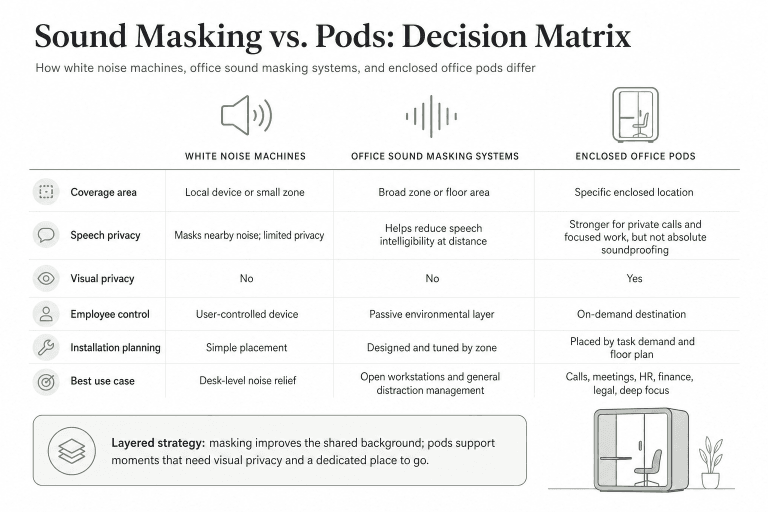
| Mascheramento sonoro | Rendere il parlato meno fastidioso mediante un suono di fondo | Creare separazione fisica | Uffici aperti con moderata distrazione dovuta al parlato |
| Suddivisione della disposizione in zone | Separare attività rumorose e silenziose | Risolvere da sola il riverbero di una stanza rigida | Zone per chiamate, concentrazione e collaborazione |
| Cabine acustiche chiuse per ufficio | Creare un luogo dedicato per chiamate private, concentrazione o piccole riunioni | Trattare l’eco dell’intera stanza | Chiamate private, riunioni ibride, lavoro concentrato |
Per i team che necessitano di chiamate private, videoriunioni o aree per il lavoro concentrato, cabine acustiche per ufficio sono generalmente più adatti che aspettarsi che i pannelli funzionino come una stanza chiusa.
Elite-S di B&H Ergonomics ha ottenuto prestazioni acustiche di Classe A ISO 23351-1 con una riduzione del livello del parlato di 33 dB. Nei test di fabbrica B&H in condizioni controllate, Elite-S ha mostrato una differenza di livello sonoro di circa 40 dB. I risultati acustici variano secondo metodo di prova, installazione, condizioni del sito e configurazione di misura.
Dove funzionano meglio i pannelli acustici per ufficio
I pannelli acustici sono particolarmente adatti quando lo spazio ha superfici riflettenti e l’obiettivo è il comfort, la chiarezza o una minore fatica acustica.
Le posizioni adatte includono:
- sale riunioni vetrate
- aree collaborative con soffitto a vista
- aule di formazione
- reception e aree d’attesa
- sale conferenze con superfici rigide
- aree aperte condivise con riverbero eccessivo
- sezioni di parete vicine a punti di riflessione rumorosi
Il posizionamento conta. Un piccolo pannello decorativo su una parete potrebbe non modificare abbastanza la stanza. Un piano migliore considera dimensioni della stanza, altezza del soffitto, superfici rigide, posizione dei parlanti, disposizione delle scrivanie e punti in cui il suono rimbalza.
Quali dati chiedere prima di acquistare pannelli fonoassorbenti per ufficio
Non approvare pannelli acustici soltanto in base al colore, al tessuto o a una vaga dichiarazione di “riduzione del rumore”. Richiedi dati coerenti con il prodotto e con il modo in cui sarà installato.
Usa questa checklist prima dell’acquisto:
- Quale classificazione acustica viene fornita per il materiale del pannello?
- La classificazione è stata misurata con lo stesso spessore e metodo di montaggio proposti?
- La dichiarazione riguarda l’assorbimento sonoro, non l’insonorizzazione?
- Il fornitore spiega dove devono essere collocati i pannelli?
- Vengono considerati anche soffitto, pavimento, vetri, mobili e disposizione?
- I requisiti di incendio, pulizia, montaggio e manutenzione sono documentati per il luogo di lavoro?
- Il risultato sarà riesaminato dopo l’installazione?
Per le dichiarazioni di assorbimento, i dati NRC o SAA possono aiutare a confrontare i materiali, ma non dimostrano che le conversazioni diventeranno private. Se l’obiettivo è la privacy, l’ufficio necessita di un piano separato per privacy vocale o isolamento acustico.
Quando i pannelli non bastano per la privacy vocale
I pannelli non bastano quando l’ufficio richiede conversazioni riservate, periodi protetti di concentrazione o una separazione più controllata dalle attività circostanti.
Può servire una soluzione più efficace quando:
- le chiamate di risorse umane, finanza, ufficio legale o direzione avvengono a scrivanie aperte
- i dipendenti lasciano regolarmente il piano per telefonare
- le videoriunioni disturbano i team vicini
- i responsabili evitano conversazioni sensibili perché l’ufficio è troppo esposto
- il personale segnala di comprendere ogni chiamata vicina
- le riunioni ibride richiedono un luogo prevedibile anziché un angolo libero
In questi casi, la domanda migliore non è “Quanti altri pannelli ci servono?”, ma “Dove dovrebbe svolgersi il lavoro privato?”
Molti uffici necessitano di entrambi i livelli. I pannelli possono rendere più tranquilla la stanza condivisa. Gli spazi chiusi possono creare destinazioni affidabili per chiamate, lavoro concentrato e piccole riunioni.
Raccomandazione pratica
Considererei i pannelli acustici per ufficio un intervento mirato per il comfort acustico, non una soluzione universale al rumore in ufficio.
Scegli i pannelli quando la stanza è rigida, riflettente, piena di eco o affaticante. Richiedi dati sull’assorbimento, conferma il posizionamento e assicurati che il piano di installazione corrisponda alle superfici che causano realmente il problema.
Non scegliere i pannelli come risposta principale quando il problema è il parlato riservato, le chiamate continue alle scrivanie o la mancanza di uno spazio privato. In tal caso, parti dal comportamento lavorativo: chi necessita di privacy, con quale frequenza, per quanto tempo e se serve uno spazio individuale per chiamate, una cabina per concentrarsi o un piccolo ambiente per riunioni.
Per una pianificazione più ampia dell’open space, può essere utile confrontare i pannelli anche con la suddivisione in zone e il mascheramento sonoro prima di decidere dove collocare spazi chiusi. Un piano a più livelli funziona normalmente meglio che chiedere a un solo prodotto di risolvere ogni tipo di rumore.
FAQ
I pannelli acustici rendono insonorizzato un ufficio?
No. I pannelli acustici riducono il suono riflesso all’interno di una stanza, ma non creano un confine acustico sigillato. Possono rendere più tranquillo il suono della stanza, ma non devono essere considerati una soluzione di insonorizzazione.
I pannelli fonoassorbenti sono adatti agli uffici aperti?
Sì, quando l’ufficio aperto presenta eco, superfici rigide o fatica acustica. Sono meno efficaci quando il problema principale è il parlato udibile. In tal caso possono servire separazione della disposizione, mascheramento sonoro o uno spazio di lavoro privato e chiuso.
I pannelli acustici a parete migliorano la privacy vocale?
Soltanto in misura limitata. Possono ridurre le riflessioni che fanno sembrare rumorosa una stanza, ma non impediscono in modo affidabile agli ascoltatori vicini di comprendere il parlato. La privacy vocale richiede normalmente distanza, separazione, chiusura, mascheramento o un piano acustico più ampio.
Dove devono essere installati i pannelli acustici per ufficio?
Devono essere collocati dove il suono riflesso causa problemi, ad esempio presso pareti vetrate, sale riunioni rigide, aree con soffitto a vista o zone collaborative. Il posizionamento deve corrispondere a forma della stanza, materiali delle superfici, altezza del soffitto e problema acustico.
Pannelli acustici e cabine per ufficio possono essere usati insieme?
Sì. I pannelli possono migliorare l’ambiente acustico condiviso, mentre le cabine per ufficio offrono spazi dedicati a chiamate private, lavoro concentrato e piccole riunioni. Risolvono aspetti diversi del problema del rumore sul luogo di lavoro.