Szybka odpowiedź
Panele akustyczne do biura redukują echo, pogłos i dźwięki odbite w miejscach pracy z twardymi powierzchniami. Panele dźwiękochłonne do przestrzeni biurowych mogą sprawić, że sale konferencyjne, przeszklone pomieszczenia i otwarte strefy współpracy będą odczuwalnie spokojniejsze, ale same w sobie nie zapewniają niezawodnej prywatności rozmów. Jeśli ludzie nadal rozumieją pobliskie rozmowy, problemem jest izolacja akustyczna lub prywatność rozmów, a nie tylko pochłanianie dźwięku.
Ostatnia aktualizacja: 16 lipca 2026 | Autor: William | Recenzja: Richard | Szacowany czas czytania: 9 minut
Czym są panele akustyczne do biur?
Panele akustyczne do biura to materiały dźwiękochłonne stosowane do kontrolowania dźwięków odbitych wewnątrz miejsca pracy. Mogą być montowane jako panele ścienne, przegrody sufitowe, ekrany biurkowe, wiszące przegrody lub wolnostojące ekrany akustyczne.
Kluczowym słowem jest „pochłanianie”. Panel pomaga zmniejszyć energię dźwięku po dotarciu dźwięku do jego powierzchni. Nie uszczelnia pomieszczenia, nie blokuje każdej drogi przenoszenia się dźwięku ani nie zmienia otwartego biura w prywatne pomieszczenie.
To rozróżnienie ma znaczenie, ponieważ skargi na hałas w biurze często początkowo brzmią podobnie. Przeszklona sala konferencyjna, która wydaje się ostra i pogłosowa, może skorzystać z akustycznych paneli ściennych. Dyrektor finansowy prowadzący poufne rozmowy w otwartej przestrzeni potrzebuje innego rodzaju rozwiązania.
W czym wyróżniają się panele akustyczne do biur
Panele akustyczne do biur sprawdzają się najlepiej, gdy głównym problemem jest dźwięk odbity, często w przestrzeniach ze szklanymi ścianami, odsłoniętymi sufitami, betonowymi podłogami, metalowymi meblami lub dużymi stołami. Jeśli oprócz paneli rozważane są zasłony, sprawdź, co kurtyny dźwiękochłonne mogą, a czego nie mogą zapewnić. Porównaj ich przydatność do danej powierzchni i problemu w pomieszczeniu, nie traktując ani materiałów pochłaniających dźwięk, ani zasłon jako dowodu, że pobliskie rozmowy staną się prywatne.
Są one przydatne, gdy pracownicy mówią:
- “W tym pomieszczeniu jest echo.”
- “Rozmowy wideo brzmią ostro.”
- “W biurze panuje hałas, nawet gdy ludzie nie krzyczą”.”
- “Dźwięk odbija się od szyby.”
- “Pod koniec dnia to pomieszczenie wydaje się męczące.”
W takich sytuacjach panele dźwiękochłonne do przestrzeni biurowych mogą poprawić komfort akustyczny poprzez ograniczenie pogłosu i zwiększenie wyrazistości mowy w obrębie zaadaptowanej przestrzeni. Są szczególnie przydatne w salach konferencyjnych, salach szkoleniowych, recepcjach, strefach współpracy oraz biurach otwartych z twardymi powierzchniami.
Czego nie potrafią panele akustyczne do biura
Panele akustyczne nie zapewniają izolacji akustycznej w biurze. Nie zapobiegają też skutecznie przenoszeniu się dźwięków mowy między biurkami, pomieszczeniami lub w otwartych przestrzeniach roboczych.
To pierwszy błąd zakupowy, na który zwróciłbym uwagę: zespół nadal dodaje miękkie materiały, podczas gdy rzeczywistym problemem nie jest echo. Prawdziwy problem polega na tym, że ludzie rozumieją rozmowy, których nie powinni słyszeć.
Pochłanianie dźwięku i izolacja akustyczna to dwie różne rzeczy:
| Termin akustyczny | Co to oznacza | Przykład biura |
|---|---|---|
| Pochłanianie dźwięku | Ogranicza odbicie dźwięku w pomieszczeniu | Panele ścienne redukują echo w przeszklonej sali konferencyjnej |
| Kontrola pogłosu | Skraca czas, przez jaki dźwięk rozchodzi się w pomieszczeniu | Po zastosowaniu adaptacji akustycznej twarde pomieszczenie wydaje się mniej ostre |
| Izolacja akustyczna | Zmniejsza przenoszenie dźwięku między pomieszczeniami | Pomieszczenie lub zabudowana kabina ogranicza przenikanie dźwięku |
| Prywatność mowy | Sprawia, że rozmowy są trudniejsze do zrozumienia poza zamierzonym obszarem. | W pobliżu rozmowy poufne są niezrozumiałe |
Jeśli problem brzmi: “pomieszczenie ma zbyt długi pogłos”, panele akustyczne do biura mogą być właściwym pierwszym krokiem. Jeśli problem brzmi: “słyszę każde słowo”, same panele prawdopodobnie nie rozwiążą rzeczywistego problemu; skorzystaj z porównania kabina dźwiękoszczelna a kabina biurowa przy podejmowaniu decyzji, czy przegroda czy pełna zabudowa odpowiada wymaganiom dotyczącym prywatności.
Macierz objawów hałasu biurowego i rozwiązań
Przed zakupem paneli akustycznych określ rzeczywisty problem z hałasem. Właściwe rozwiązanie akustyczne do biura zależy od tego, czego doświadczają pracownicy, a nie tylko od tego, jak głośna wydaje się przestrzeń.
| Problem w miejscu pracy | Prawdopodobny problem akustyczny | Najlepszy pierwszy krok |
|---|---|---|
| W sali konferencyjnej występuje pogłos | Dźwięk odbity | Biurowe panele akustyczne, przegrody sufitowe, miękkie wykończenia |
| Rozmowy brzmią ostro lub męcząco | Pogłos i twarde powierzchnie | Akustyczne panele ścienne oraz analiza mikrofonu i układu pomieszczenia |
| Rozmowy w pobliżu utrudniają koncentrację | Zrozumiałość mowy | Strefowanie, zwiększenie odległości, zasady zachowania lub zamknięta przestrzeń do pracy w skupieniu |
| Prywatne rozmowy odbywają się przy biurkach | Brak prywatności rozmów | Dedykowana zamknięta przestrzeń do rozmów |
| Na całym piętrze panuje hałas | Problem związany z komfortem akustycznym w pomieszczeniach o zróżnicowanej akustyce | Panele, strefowanie układu, maskowanie dźwięku oraz wybrane zamknięte strefy |
| Ludzie wychodzą z biura, aby odbyć rozmowę | Brak niezawodnego miejsca do prowadzenia prywatnych rozmów | Zamknięte strefy do rozmów telefonicznych lub pracy w skupieniu przed zwiększeniem pokrycia ścian panelami |
Ta macierz pomaga uniknąć nadmiernych zakupów niewłaściwego produktu. Panele są wartościowe, gdy samo pomieszczenie jest zbyt pogłosowe. Są mniej skuteczne, gdy biuro potrzebuje separacji, poufności lub kontrolowanego miejsca do prowadzenia rozmów.
Panele akustyczne a izolacja akustyczna a kabiny biurowe
Panele akustyczne ograniczają odbicia dźwięku w pomieszczeniu, natomiast izolacja akustyczna i zamknięte przestrzenie do pracy zapewniają oddzielenie między przestrzeniami. Skorzystaj z porównania kabin zapewniających prywatność i paneli akustycznych gdy decyzja zakupowa dotyczy tego, czy poprawić ogólną akustykę pomieszczenia, zapewnić prywatne miejsce do rozmów telefonicznych, czy połączyć oba rozwiązania. Właściwa specyfikacja zaczyna się od tego zadania; jedna nazwa produktu lub jeden parametr akustyczny nie odpowie na wszystkie trzy pytania.
Dlatego tych produktów nie należy oceniać według tych samych kryteriów. Panele akustyczne są zwykle oceniane na podstawie danych dotyczących pochłaniania dźwięku. Na przykład ASTM C423 to norma stosowana do pomiaru pochłaniania dźwięku w komorze pogłosowej, co ma znaczenie przy porównywaniu właściwości materiałów w zakresie pochłaniania dźwięku. Zamknięte systemy meblowe ocenia się bardziej jako kompletne środowiska akustyczne, w których na wynik wpływają przeszklenia, uszczelki, konstrukcja ścian, drogi wentylacyjne i instalacja. ISO 23351-1 stosuje się do oceny redukcji poziomu mowy przez zestawy meblowe i obudowy, a nie przez pojedynczy absorber ścienny lub przegrodę sufitową.
| Opcja | Najlepsze zastosowania | Słabsze zastosowania | Typowe zastosowanie w biurze |
|---|---|---|---|
| Panele akustyczne do biura | Redukcja echa i dźwięku odbitego | Tworzenie warunków do prywatnych rozmów | Sale spotkań, przeszklone biura, strefy z twardymi powierzchniami |
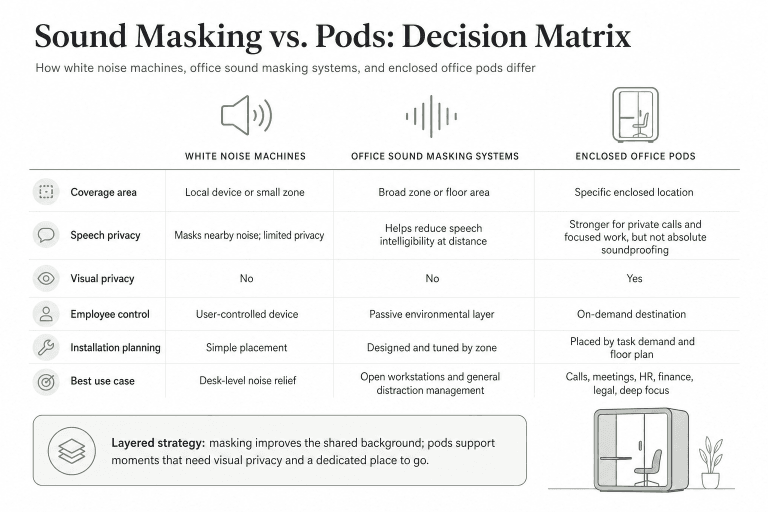
| Maskowanie dźwięku | Ograniczanie rozpraszającego wpływu mowy za pomocą dźwięku tła | Tworzenie fizycznej separacji | Biura typu open space z umiarkowanym poziomem rozpraszania przez rozmowy |
| Podział przestrzeni na strefy | Oddzielanie głośnych i cichych aktywności | Samodzielne rozwiązywanie problemu pogłosu w pomieszczeniu o twardych powierzchniach | Strefy rozmów telefonicznych, strefy skupienia, strefy współpracy |
| Zamknięte budki biurowe | Tworzenie wydzielonego miejsca do prywatnych rozmów telefonicznych, pracy w skupieniu lub małych spotkań | Redukcja pogłosu w całym pomieszczeniu | Prywatne rozmowy telefoniczne, spotkania hybrydowe, praca w skupieniu |
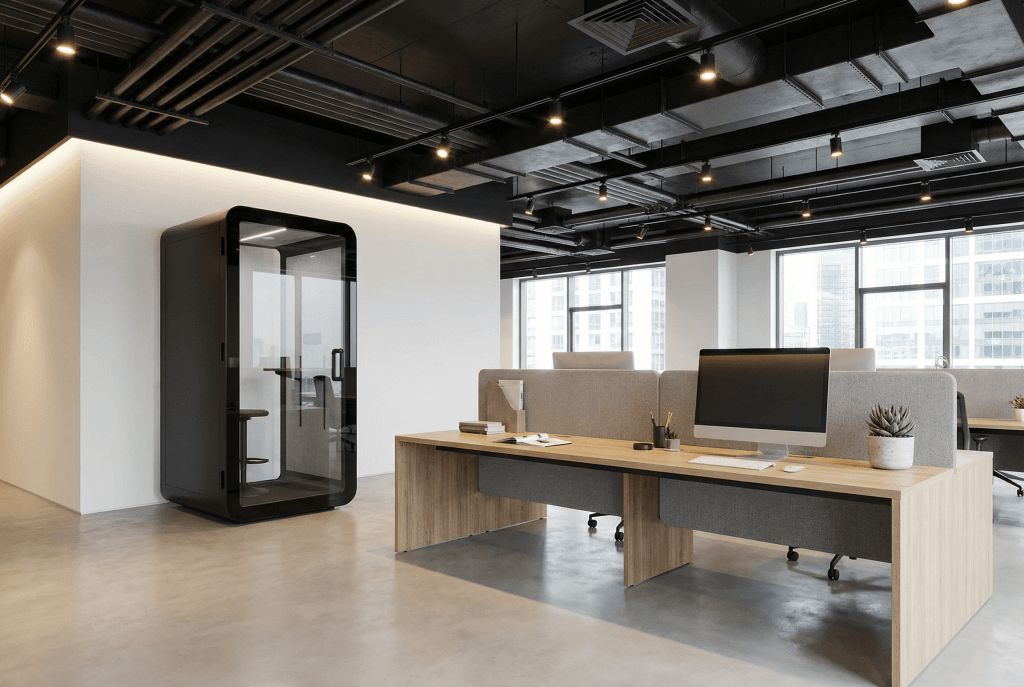
Dla zespołów, które potrzebują miejsc do prywatnych rozmów telefonicznych, spotkań wideo lub pracy w skupieniu, akustyczne kapsuły biurowe zwykle są lepszym rozwiązaniem niż oczekiwanie, że panele będą działać jak zamknięte pomieszczenie.
B&H Ergonomics Elite-S osiągnął klasę A parametrów akustycznych zgodnie z ISO 23351-1, z redukcją poziomu mowy o 33 dB. W testach fabrycznych B&H przeprowadzonych w kontrolowanych warunkach model Elite-S wykazał różnicę poziomu dźwięku wynoszącą około 40 dB. Wyniki akustyczne różnią się w zależności od metody badania, instalacji, warunków w miejscu użytkowania i konfiguracji pomiarowej.
Gdzie biurowe panele akustyczne zwykle sprawdzają się najlepiej
Panele akustyczne do biur są dobrym rozwiązaniem, gdy w przestrzeni występują powierzchnie odbijające dźwięk, a celem jest komfort, wyrazistość dźwięku lub mniejsze zmęczenie akustyczne.
Dobre lokalizacje obejmują:
- szklane sale spotkań
- strefy współpracy z odsłoniętym sufitem
- sale szkoleniowe
- recepcje i poczekalnie
- sale konferencyjne z twardymi powierzchniami
- wspólne otwarte przestrzenie ze zbyt dużym pogłosem
- fragmenty ścian w pobliżu miejsc, w których występują uciążliwe odbicia dźwięku
Rozmieszczenie ma znaczenie. Niewielki dekoracyjny panel na jednej ścianie może nie zmienić akustyki pomieszczenia w wystarczającym stopniu. Lepszy plan uwzględnia wielkość pomieszczenia, wysokość sufitu, twarde powierzchnie, lokalizację głośników, układ biurek oraz miejsca, od których odbija się dźwięk.
O jakie dane poprosić przed zakupem paneli dźwiękochłonnych do przestrzeni biurowych
Nie zatwierdzaj paneli akustycznych do biur wyłącznie na podstawie koloru, tkaniny lub ogólnego stwierdzenia o “redukcji hałasu”. Poproś o dane odpowiadające produktowi i sposobowi jego montażu.
Przed zakupem skorzystaj z tej listy kontrolnej:
- Jaki parametr akustyczny podano dla materiału panelu?
- Czy parametr zmierzono dla tej samej grubości i metody montażu, które są proponowane?
- Czy deklaracja dotyczy pochłaniania dźwięku, a nie wygłuszenia?
- Czy dostawca wyjaśnia, gdzie należy umieścić panele?
- Czy uwzględniane są również sufit, podłoga, przeszklenia, meble i układ przestrzeni?
- Czy wymagania dotyczące ochrony przeciwpożarowej, czyszczenia, montażu i konserwacji są udokumentowane dla miejsca pracy?
- Czy efekt zostanie oceniony po instalacji?
W przypadku deklaracji dotyczących pochłaniania dźwięku dane NRC lub SAA mogą pomóc w porównaniu materiałów, ale wartości te nie dowodzą, że rozmowy staną się prywatne. Jeśli celem jest prywatność, biuro potrzebuje odrębnego planu zapewnienia prywatności rozmów lub izolacji akustycznej.
Kiedy panele nie wystarczają do zapewnienia prywatności rozmów
Panele to za mało, gdy w biurze potrzebne są poufne rozmowy, czas na skupienie się w spokoju lub lepsza izolacja od otaczającego zgiełku.
Silniejszy środek może okazać się konieczny, gdy:
- Rozmowy dotyczące kadr, finansów, kwestii prawnych lub spraw związanych z kierownictwem odbywają się przy otwartych biurkach
- pracownicy regularnie opuszczają halę produkcyjną, aby odebrać telefony
- Spotkania wideo przeszkadzają pobliskim zespołom
- kierownicy unikają rozmów o drażliwych sprawach, ponieważ biuro jest zbyt widoczne
- pracownicy narzekają, że słyszą każdą rozmowę prowadzoną w pobliżu
- spotkania hybrydowe wymagają przewidywalnego miejsca, a nie wolnego kąta
W takich przypadkach lepszym pytaniem nie jest: “Ile jeszcze paneli nam potrzeba?”, lecz: “Gdzie powinny odbywać się prace prywatne?”.”
Wiele biur potrzebuje obu warstw. Panele mogą wyciszyć wspólną przestrzeń. Zamknięte przestrzenie mogą zapewnić niezawodne miejsca do rozmów, pracy wymagającej skupienia i małych spotkań.
Zalecenia praktyczne
Panele akustyczne do biur traktowałbym jako ukierunkowane rozwiązanie poprawiające komfort akustyczny, a nie uniwersalny sposób na hałas w biurze.
Wybierz panele, gdy pomieszczenie jest twarde, odbijające dźwięk, pogłosowe lub męczące w użytkowaniu. Poproś o dane dotyczące pochłaniania dźwięku, potwierdź rozmieszczenie i upewnij się, że plan instalacji odpowiada rzeczywistym powierzchniom powodującym problem.
Nie wybieraj paneli jako głównego rozwiązania, gdy problemem są poufne rozmowy, ciągłe rozmowy telefoniczne przy biurkach lub brak prywatnej przestrzeni do pracy. W takiej sytuacji zacznij od sposobu pracy: kto potrzebuje prywatności, jak często, na jak długo oraz czy potrzebuje jednoosobowej przestrzeni do rozmów, budki do pracy w skupieniu czy małej zamkniętej przestrzeni do spotkań.
W przypadku szerszego planowania biura typu open space warto również porównać panele z podziałem na strefy i maskowaniem dźwięku, zanim zdecydujesz, gdzie powinny znaleźć się zamknięte przestrzenie. Plan warstwowy zwykle sprawdza się lepiej niż oczekiwanie, że jeden produkt rozwiąże każdy rodzaj problemu z hałasem.
FAQ
Czy panele akustyczne do biura sprawiają, że biuro jest dźwiękoszczelne?
Nie. Panele akustyczne do biur ograniczają odbicia dźwięku wewnątrz pomieszczenia, ale nie tworzą szczelnej bariery akustycznej. Mogą sprawić, że w pomieszczeniu będzie ciszej, ale nie należy ich traktować jako rozwiązania dźwiękoizolacyjnego.
Czy panele akustyczne do przestrzeni biurowych sprawdzają się w biurach typu open space?
Tak, gdy w otwartym biurze występuje echo, jest wiele twardych powierzchni lub pojawia się zmęczenie akustyczne. Są mniej skuteczne, gdy głównym problemem jest słyszalność rozmów innych osób. W takim przypadku może być potrzebne rozdzielenie przestrzeni, maskowanie dźwięku lub zamknięta prywatna przestrzeń do pracy.
Czy akustyczne panele ścienne poprawiają prywatność rozmów?
Tylko w ograniczonym zakresie. Panele akustyczne na ścianach mogą zmniejszać odbicia dźwięku, które sprawiają, że pomieszczenie wydaje się głośne, ale nie zapewniają niezawodnego ograniczenia zrozumiałości mowy dla osób znajdujących się w pobliżu. Prywatność rozmów zazwyczaj wymaga zachowania odległości, oddzielenia, zamkniętej przestrzeni, maskowania dźwięku lub szerszego planu akustycznego.
Gdzie należy zamontować panele akustyczne w biurze?
Należy je umieszczać w miejscach, w których odbity dźwięk powoduje problemy, takich jak szklane ściany, pomieszczenia konferencyjne z twardymi powierzchniami, odsłonięte fragmenty sufitu czy strefy współpracy. Sposób rozmieszczenia powinien uwzględniać kształt pomieszczenia, rodzaj materiałów wykończeniowych, wysokość sufitu oraz zgłaszany problem akustyczny.
Czy biurowe panele akustyczne i kapsuły biurowe mogą być stosowane razem?
Tak. Panele mogą poprawić wspólne środowisko akustyczne, natomiast budki biurowe zapewniają wydzielone przestrzenie do prywatnych rozmów, pracy wymagającej skupienia i małych spotkań. Rozwiązują różne aspekty problemu hałasu w miejscu pracy.