Quick Answer
The best phone booth glass depends on how much visual privacy your office needs. Clear glass keeps the booth open and visible, frosted glass gives constant privacy, switchable smart glass changes from clear to opaque, and privacy film is usually better for retrofit fixes than new booth projects.
Last Updated: July 9, 2026 | Author: Richard | Estimated Reading Time: 7 minutes
Why Phone Booth Glass Matters
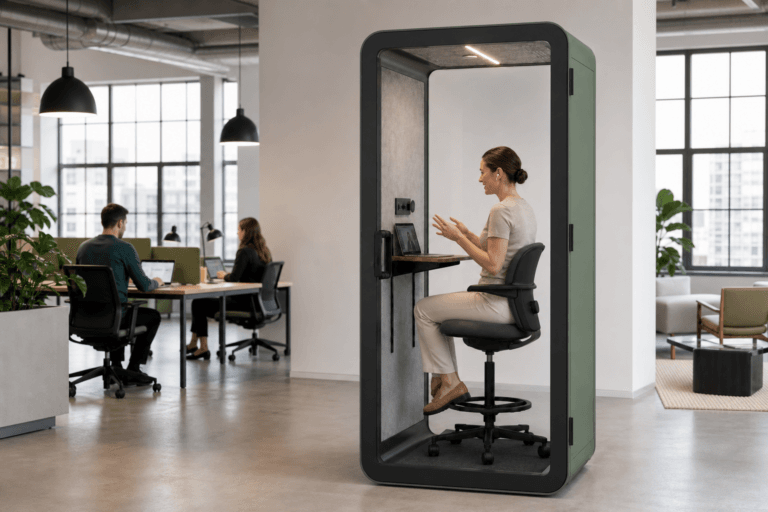
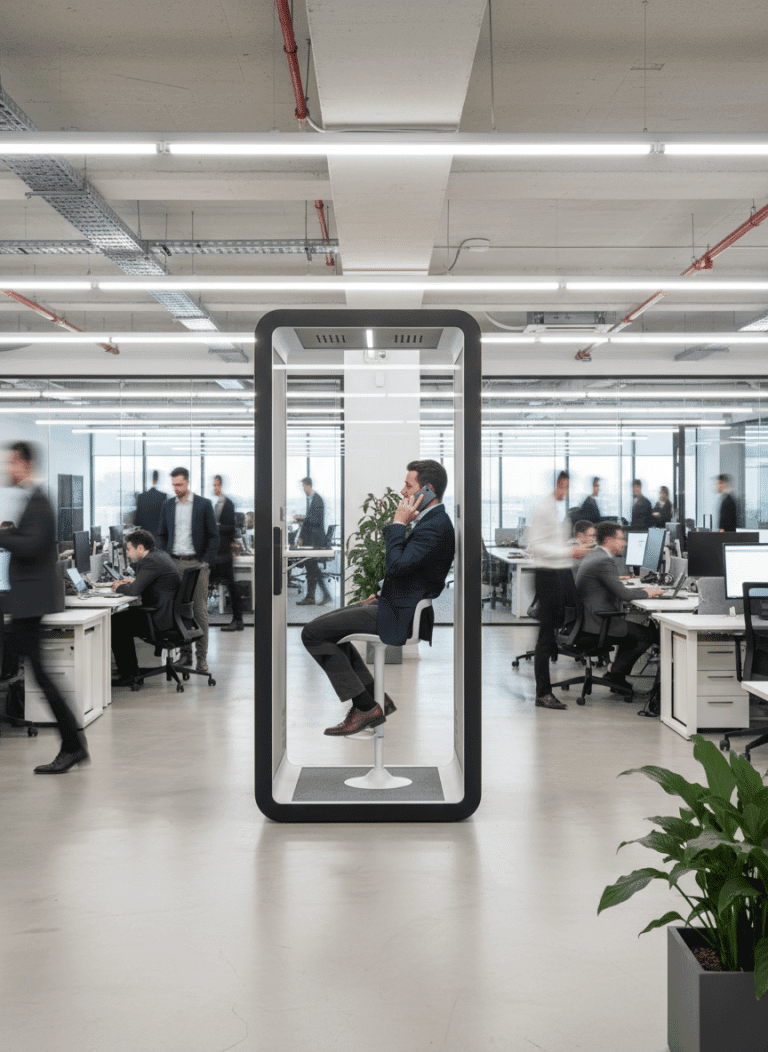
When buyers compare an office phone booth, they often start with acoustic privacy. That makes sense, but it is only half of the user experience. If the person inside feels watched, exposed, or visible from a busy corridor, the booth may stay empty even if the sound reduction is good.
That is why phone booth glass matters. The glass affects visibility, comfort, maintenance, interior light, cleaning, branding, and the way the booth fits into the office design. At B&H Ergonomics, standard phone booth glass is clear, while frosted glass and switchable smart glass are optional upgrades across all series. Custom frosting, logo patterns, and gradient film are also available with an additional cost, including single-unit customization.
What Problem Should Phone Booth Glass Solve?
Before choosing glass, define the privacy problem clearly. A booth near a quiet wall may not need the same glass as a booth placed beside a main walkway, reception area, legal team, HR room, or executive office.
I usually look at four questions:
| Question | Why It Matters |
|---|---|
| Will people walk directly past the booth? | High-traffic placement increases the need for visual privacy. |
| Will users handle private calls or screen content? | Visual privacy can matter as much as speech privacy. |
| Does the office want an open design look? | Clear or switchable glass may fit better than full frosting. |
| Is the booth new or already installed? | Integrated glass is usually better for new projects; film can help retrofit existing booths. |
If you are still comparing booth types, start with the broader phone booth for office guide before finalizing glass.
The Four Main Phone Booth Glass Options
Clear Glass
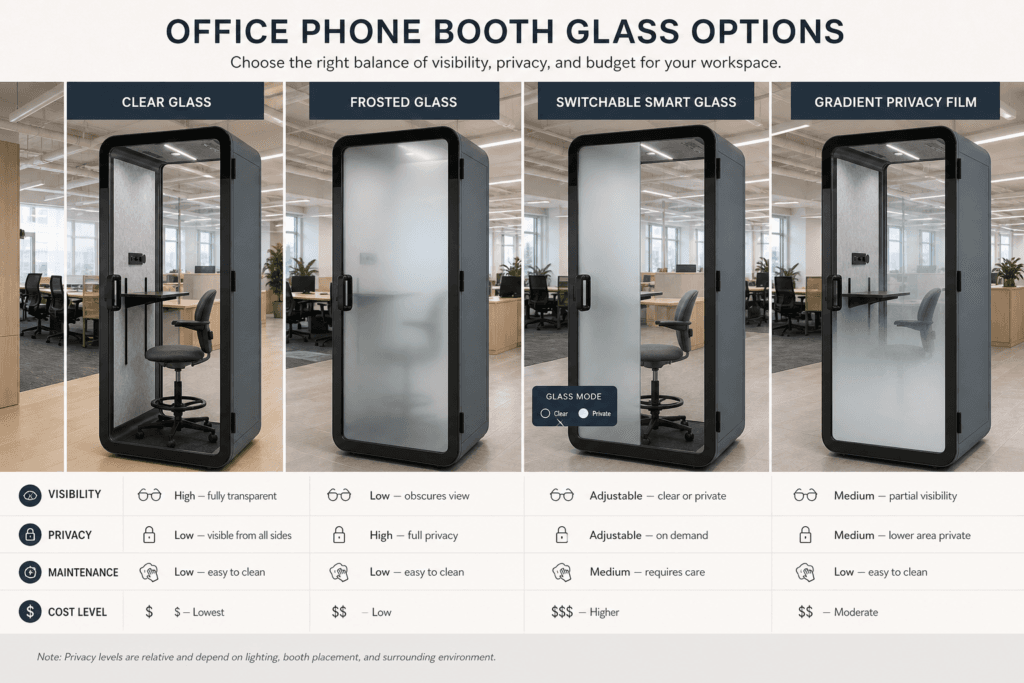
Clear glass is the standard choice for B&H Ergonomics phone booths. It keeps the booth visually open, supports a lighter office look, and makes the interior feel less enclosed. It is a practical default when the booth sits in a low-traffic area or when visibility is useful for safety, occupancy awareness, or workplace design consistency.
The tradeoff is simple: clear glass does not provide visual privacy. If the user is on a confidential video call, reviewing sensitive documents, or trying to focus while people pass by, clear glass may create a “fishbowl” feeling.
Frosted Glass
Frosted glass is the most straightforward upgrade when the booth needs constant privacy. It diffuses sightlines while still allowing light to pass through, so the booth can feel private without becoming dark.
Frosted glass is usually the strongest fit for HR calls, legal discussions, management conversations, sales calls, and focus work in busy open offices. It is also simple for users because there is no switch, setting, or behavior change. The privacy is always there.
Switchable Smart Glass
Switchable smart glass is the flexible option. It can change between transparent and opaque states, giving the office an open look when privacy is not needed and a private enclosure when someone is inside.
Most switchable privacy glass used in office interiors is based on polymer-dispersed liquid crystal technology. PDLC materials can shift between a transparent state and a translucent privacy state when an electric field changes how the liquid-crystal domains scatter light. For technical background, see this PDLC switchable privacy glass reference.
This option is useful for executive areas, visitor-facing spaces, hybrid work zones, or offices that want both design transparency and private-use comfort. Because smart glass adds cost and electrical complexity, it should be chosen for a clear use case, not just because it feels premium.
Privacy Film
Privacy film can be useful when a clear-glass booth is already installed and the office needs a lower-cost retrofit. It can add frosting, gradient effects, or branding without replacing the booth glass.
For new booth projects, I would usually treat film as a secondary option rather than the first specification. Integrated frosted glass or switchable smart glass tends to look cleaner, last longer, and feel more intentional than a later retrofit.
Frosted Glass vs Smart Glass: Which Should You Choose?
| Option | Best For | Main Advantage | Main Tradeoff |
|---|---|---|---|
| Clear glass | Low-traffic areas, open design layouts | Bright, visible, standard configuration | Weak visual privacy |
| Frosted glass | Constant privacy in busy offices | Simple, private, low-effort for users | Less transparent office look |
| Switchable smart glass | Multi-use or executive spaces | Flexible clear/opaque control | Higher cost and electrical dependency |
| Privacy film | Retrofit fixes or branding | Customizable and lower initial cost | Can look less integrated if poorly applied |
For most private call booths in open offices, frosted glass is the most balanced choice. It solves the real user discomfort without asking the user to remember a control. For premium spaces where the office wants transparency part of the time, switchable smart glass makes more sense.
What Should Buyers Check Before Specifying Phone Booth Glass?
A glass decision should not stop at “clear or frosted.” Ask the supplier to confirm:
- Whether clear glass is standard or upgraded.
- Whether frosted glass and switchable smart glass are available for the selected booth series.
- Whether custom frosting, logo, or gradient film can be applied to one unit or only bulk orders.
- Whether added glass options affect lead time, price, cleaning instructions, or warranty terms.
- Whether the glass specification is suitable for the office’s local safety and installation expectations. For U.S. projects, the CPSC safety standard for architectural glazing materials is a useful reference point for glazing used in doors and other architectural products.
- Whether privacy film is factory-applied or installed after delivery.
For B&H Ergonomics phone booths, clear glass is standard. Frosted glass and switchable smart glass can be selected across all series. Custom frosting, logo, and gradient film are available at additional cost, even for one unit.
How Glass Choice Connects to Acoustic Privacy
Glass is not only a visual design element. It also affects how buyers think about privacy as a whole. A booth can reduce speech distraction and still fail the user if the person inside feels exposed. The stronger choice is to plan acoustic privacy and visual privacy together.
If your main concern is speech privacy, review the office phone booth acoustics guide alongside this glass decision. Acoustic results vary by test method, installation, site conditions, and measurement setup, so avoid judging a booth by one vague “soundproof” claim.
How to Match Glass to Office Placement
| Office Placement | Recommended Glass Direction |
|---|---|
| Main walkway or reception area | Frosted glass or switchable smart glass |
| HR, legal, or management zone | Frosted glass or switchable smart glass |
| Low-traffic focus corner | Clear glass or partial frosting |
| Executive office area | Switchable smart glass or custom gradient frosting |
| Brand-facing showroom or client space | Clear glass with custom logo/gradient film, or smart glass |
| Existing clear booth with privacy complaints | Retrofit privacy film or gradient film |
The right choice is not always the most expensive option. If a booth is used mainly for private calls beside a busy corridor, frosted glass may outperform smart glass because it is always private. If the booth is in a client-facing area and needs to look open when empty, smart glass may justify the extra cost.
When Is Custom Frosting or Logo Film Worth It?
Custom glass treatment is worth considering when the booth must match a branded workplace, support wayfinding, or reduce visibility without making the door feel visually heavy. A gradient film can shield the user’s face and screen area while keeping the upper or lower part more open.
For procurement teams, the key point is cost clarity. Custom frosting, logo patterns, and gradient film usually require an added fee. B&H Ergonomics can support single-unit customization, but buyers should confirm artwork, placement, color, privacy level, and production timing before ordering.
Buyer Checklist Before Requesting a Quote
Use this checklist before finalizing phone booth glass:
| Check | Buyer Decision |
|---|---|
| Standard configuration | Is clear glass acceptable for this placement? |
| Privacy need | Does the user need constant or on-demand privacy? |
| Design goal | Should the booth look open, private, branded, or premium? |
| Placement | Is the booth near a corridor, public area, or sensitive team? |
| Customization | Do you need logo, gradient film, or custom frosting? |
| Budget | Is the upgrade cost justified by user comfort and office use? |
| Maintenance | Can the facilities team clean and maintain the selected glass type? |
| Quote details | Are glass option, artwork, cost, and lead time confirmed in writing? |
If the answer is unclear, ask for a layout review before ordering. Glass is easier to specify correctly before production than to fix after the booth is installed.
How B&H Ergonomics Helps Buyers Choose
B&H Ergonomics supports clear glass, frosted glass, switchable smart glass, and custom glass treatments across its phone booth series. For most offices, the decision should be based on placement, privacy level, buyer budget, and how the booth will actually be used.
If you are planning multiple booths, compare the glass choice together with booth size, ventilation, lighting, power access, acoustic privacy, and interior layout. For broader design decisions, the office phone booth design guide can help connect glass choice with office aesthetics and user acceptance.
For a project quote, prepare your floor plan, booth quantity, preferred glass option, customization requirements, and any logo or gradient artwork files. That gives the supplier enough information to recommend a realistic configuration instead of a generic booth package.
FAQ
What is the best phone booth glass for office privacy?
Frosted glass is usually the best balanced option for constant office privacy. It reduces direct visibility, works without user controls, and suits busy open-office placements. Switchable smart glass is better when the booth needs to look transparent sometimes and private at other times.
Is clear glass enough for an office phone booth?
Clear glass can work in low-traffic areas or offices that prioritize visibility and openness. It is less suitable for HR calls, legal conversations, confidential video meetings, or booths placed beside busy walkways.
Can B&H Ergonomics provide smart glass for all phone booth series?
Yes. B&H Ergonomics can provide switchable smart glass as an optional upgrade across all phone booth series. Buyers should confirm price, production timing, and electrical requirements during the quote stage.
Can a company order custom frosting or logo film for just one booth?
Yes. B&H Ergonomics can support custom frosting, logo treatment, or gradient film for one unit, with an additional customization cost. Buyers should provide artwork and confirm placement before production.
Is privacy film a good choice for new phone booths?
Privacy film can be useful for branding or retrofit fixes, but for new phone booth projects, integrated frosted glass or switchable smart glass usually looks cleaner and feels more intentional. Film quality, installation, edge finish, and cleaning requirements should be confirmed before ordering.