Quick Answer
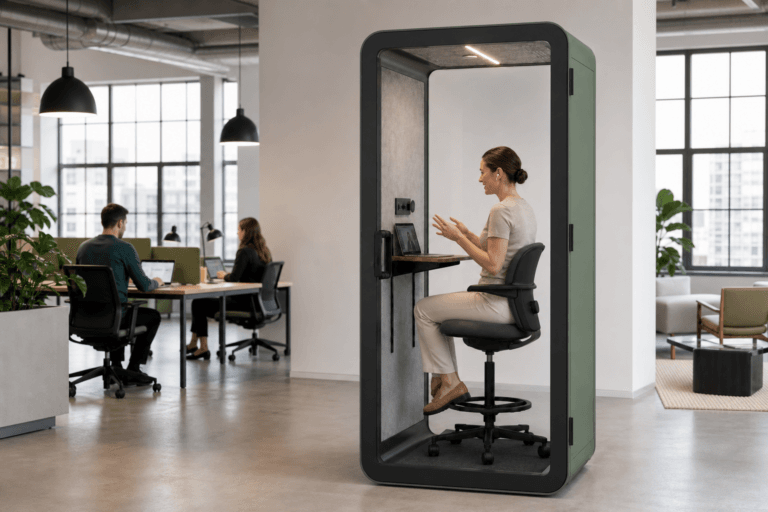
Office phone booth relocation should match the floor, route, glass, and power setup. A short same-floor move may use heavy-duty casters, but long-fiber carpet, elevators, glass handling, electrical disconnection, or cross-building relocation usually requires disassembly or professional installers.
Last Updated: July 9, 2026 | Author: Richard | Estimated Reading Time: 8 minutes
Why Office Phone Booth Relocation Needs a Plan
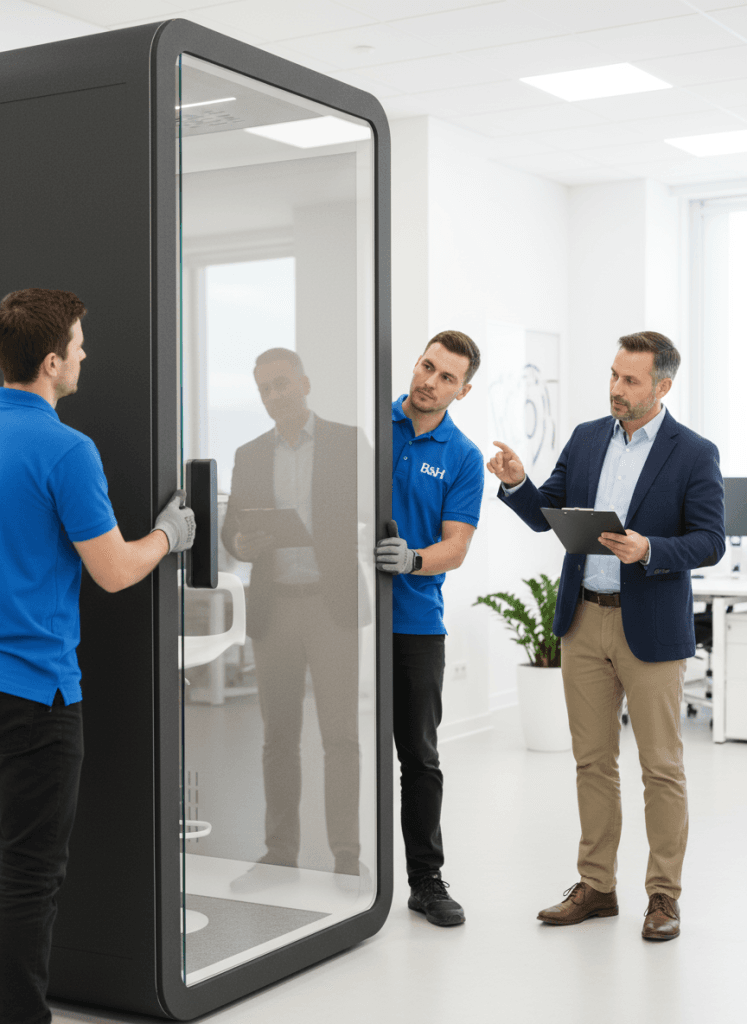
Office phone booths are modular, but they are not ordinary furniture. A booth has glass, panels, seals, hardware, ventilation, lighting, and power components that need to line up again after the move. If a facility team treats it like a cabinet on wheels, the booth may still stand upright, but the door, seams, fan, or acoustic privacy may not work the way buyers expect.
This guide is for facility managers, workplace teams, operations managers, and procurement teams planning to move an installed booth inside an office. If the relocation reveals that the existing booth no longer fits the space, compare replacement options in the B&H Ergonomics office telephone booth category after the move plan is clear.
When Can an Office Phone Booth Be Moved Without Full Disassembly?
A short, same-floor move is the only case where rolling the booth may be practical. B&H Ergonomics single-person phone booths are equipped with heavy-duty casters that can help with short-distance movement on a suitable hard, level surface.
That does not mean every office floor is safe for rolling. Do not slide or roll the booth across long-fiber carpet. Deep carpet can increase drag, pull unevenly on the base, catch the caster path, and make the booth harder to control. It can also encourage the team to push harder than they should, which is when frames, panels, and door alignment are most likely to suffer.
I would treat rolling as a controlled micro-move, not a relocation method for every situation.
Use the caster option only when all of these are true:
- The booth stays on the same floor.
- The route is short, flat, clean, and free of thresholds.
- The floor is hard, smooth, and level.
- The booth does not need to enter an elevator.
- The door swing, wall clearance, power cord, and ventilation path can be checked immediately after the move.
- The team can stop if the booth tilts, drags, twists, or becomes difficult to control.
If the move involves stairs, elevators, a new building, tight turns, glass removal, wiring, or long-fiber carpet, plan for partial or full disassembly instead.
Roll, Partially Disassemble, or Hire Installers?
The right relocation method depends less on distance alone and more on risk. A booth that moves 20 feet over smooth flooring may be low risk. A booth that moves 20 feet across thick carpet and a narrow doorway may not be.
| Relocation scenario | Default method | Why |
|---|---|---|
| Same room, hard level floor, short distance | Roll carefully on casters | Lowest handling risk if the booth moves freely and remains level |
| Same floor, longer route with thresholds or tight turns | Partial disassembly or installer review | Door, glass, base, and panel alignment are easier to protect when stress is reduced |
| Long-fiber carpet route | Do not roll as the main method | Carpet drag can make movement uneven and difficult to control |
| Different floor in the same building | Professional installers recommended | Elevator movement, glass handling, and reassembly checks add risk |
| Cross-building relocation | Professional installers strongly recommended | Transport protection, labeling, hardware control, and reassembly quality matter more |
| Booth with glass/electrical work required | Professional installers or qualified personnel | Glass and electrical components should not be treated as general furniture handling |
Pre-Move Checklist for Facility Managers
Before anyone touches the booth, build a small relocation packet. This is what prevents a simple move from becoming a parts hunt.
Confirm the Booth and Move Route
- Record the booth model, size, and original installation date if available.
- Photograph the booth from all sides.
- Photograph door hinges, glass edges, panel seams, power connections, fan outlets, and any visible labels.
- Measure doorways, corridors, turns, elevator openings, and the new booth location.
- Check whether the route includes long-fiber carpet, thresholds, ramps, uneven flooring, or temporary floor protection.
- Confirm where power will come from in the new location.
- Mark the final door swing and user access clearance.
Decide Who Should Handle the Move
An in-house facility team may be able to manage a short same-floor caster move. For cross-floor moves, cross-building moves, glass handling, or electrical disconnection, professional installers are the safer default.
This is not only about labor skill. It is about protecting the booth as a working acoustic privacy product. A booth that is slightly twisted, uneven, or misaligned may create door rub, visible seams, fan noise, or reduced speech privacy.
If the booth is hardwired or any electrical work is required, use qualified personnel and follow local site rules. Do not ask a general moving team to disconnect or reconnect electrical components unless they are qualified to do that work.
How to Protect Glass, Panels, Hardware, and the Building
The most common relocation mistakes are not dramatic. They are small control failures: unlabelled hardware, a glass panel set down flat, a door leaned against a wall, a missing screw replaced with the wrong fastener, or a booth rolled across a surface where the casters cannot move cleanly.
Protect the Booth Components
- Keep glass vertical and padded during handling.
- Do not drag panels across the floor.
- Keep door assemblies supported and protected from twisting.
- Label hardware by panel or location, not only by size.
- Keep screws, connectors, caps, and small parts in sealed bags.
- Photograph each bag next to the part or panel it belongs to.
- Do not substitute generic screws for structural hardware unless the manufacturer confirms the replacement.
Protect the Building
- Clear the route before the move begins.
- Use floor protection where carts, dollies, or panels will pass.
- Protect wall corners, elevator doors, and door frames.
- Avoid moving during peak office traffic.
- Keep the new location free of furniture and cable clutter.
For general workplace material handling safety, facility teams can also review OSHA’s Materials Handling and Storage guidance. Manufacturer instructions and site safety rules should still control the actual booth move.
Reassembly Checks After Office Phone Booth Relocation
Reassembly is where the move either succeeds or quietly creates future complaints. Do not judge the project finished only because the booth is standing.
Use this post-move check before returning the booth to employees:
| Check | What to inspect | Why it matters |
|---|---|---|
| Floor level | Booth sits evenly without rocking | An uneven base can affect door alignment and panel seams |
| Door swing | Door opens, closes, and latches smoothly | Door rub or latch resistance usually means alignment needs attention |
| Panel seams | Panels sit flush without visible stress | Gaps can reduce acoustic privacy and create fit issues |
| Glass | No chips, edge stress, or loose mounting points | Glass damage can worsen after repeated door use |
| Power | Lights, outlets, and switches work normally | Electrical issues should be found before users return |
| Ventilation | Fan runs and airflow is unobstructed | Comfort problems often appear after relocation if vents are blocked |
| User clearance | Entry, exit, and door swing are unobstructed | A booth can be assembled correctly but placed poorly |
What to Do If Screws or Hardware Are Missing
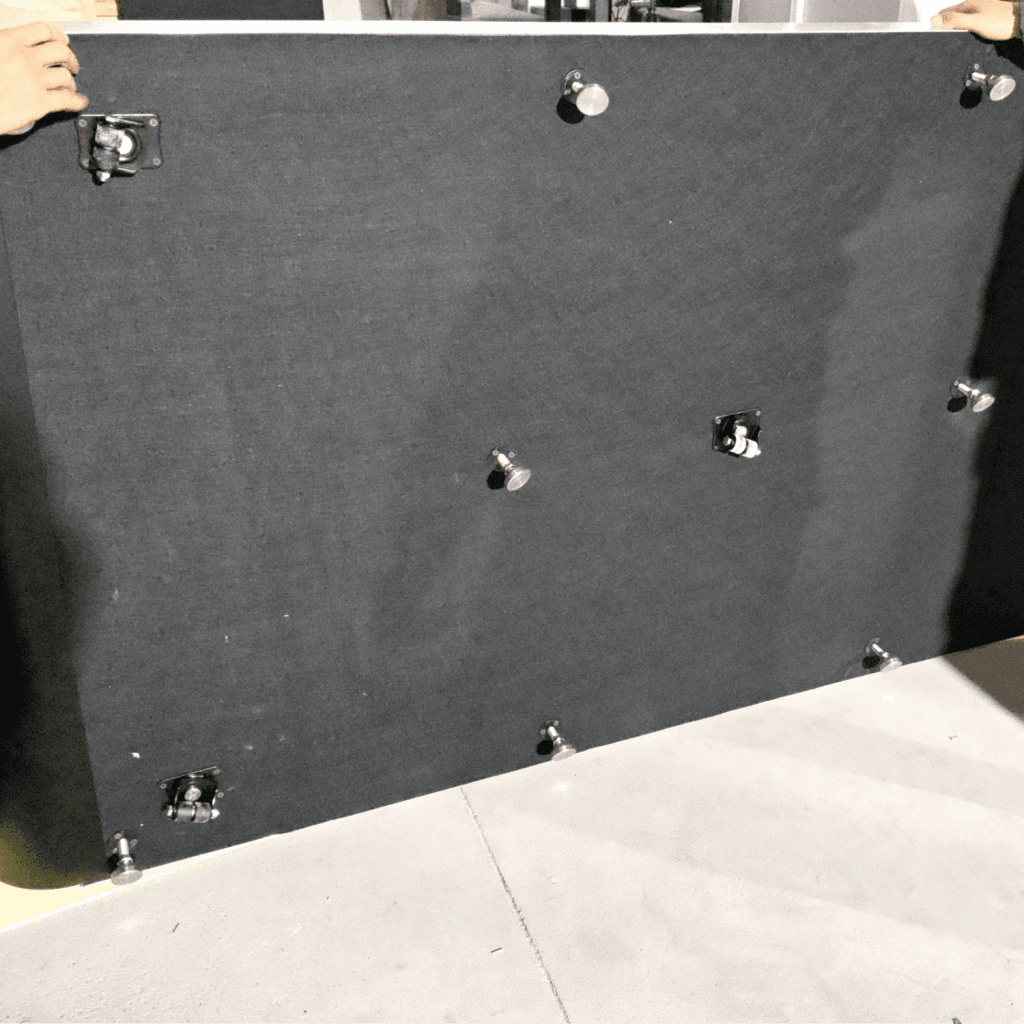
Do not improvise with random hardware from a maintenance drawer. A screw that looks similar may have the wrong thread, length, head type, or strength for the panel location.
If a screw, connector, cap, hinge part, or other fitting is missing after relocation, B&H Ergonomics can help confirm replacement parts by booth model or clear part photos. The best request includes:
- Booth model or order reference if available.
- Photos of the missing part location.
- Photos of matching parts from the other side of the booth.
- Approximate quantity needed.
- Notes on whether the booth is already reassembled or still open.
This keeps the conversation specific and reduces the risk of installing the wrong hardware.
Document the Move So the Next Relocation Is Easier
The first relocation is usually the hardest because the team has to rediscover details that should have been documented during installation. After the booth is moved, create a simple facility record so the next move is faster and safer.
The record should include:
- Booth model and location.
- Date of relocation.
- Final floor surface and any carpet limitations.
- Photos of panel seams, door alignment, power point, fan, and outlet.
- Notes on any missing or replaced hardware.
- Names of the internal team or installer who handled the move.
- Any issues found during the post-move test.
This record is also useful when you contact B&H Ergonomics about replacement parts. A clear model reference and photos of the affected location are easier to act on than a general description such as “we lost a screw during the move.”
When This Is Not a DIY Project
A DIY move may look cheaper on paper, but the risk changes quickly when the route becomes complicated. I would not treat the following as casual in-house moves:
- The booth must travel between floors.
- The booth must be transported to a different building.
- Glass panels or doors need to be removed.
- Any electrical disconnection or reconnection is required.
- The booth must cross long-fiber carpet.
- The team does not have the original installation instructions.
- The booth has visible damage, door rub, uneven seams, or missing hardware before the move starts.
In those cases, professional installers can reduce the risk of damage, downtime, misalignment, and repeated troubleshooting after the booth is back in service.
For a related planning resource, see the B&H Ergonomics office phone booth installation checklist. If your question is whether to assemble a new booth yourself in the first place, read the DIY office phone booth assembly guide instead.
A Practical Relocation Workflow
For most facility teams, the safest workflow is simple:
- Identify the booth model and move route.
- Decide whether the booth can roll on casters or needs disassembly.
- Avoid rolling across long-fiber carpet.
- Photograph all hardware, seams, power points, and door alignment.
- Label parts before removal.
- Protect glass, panels, walls, floors, and elevators.
- Reassemble on a level surface.
- Test the door, lighting, outlet, fan, ventilation, and user clearance.
- Contact B&H Ergonomics with model details or photos if replacement hardware is needed.
- Update the facility record so the next relocation is easier.
If the move is part of a larger workplace change, B&H Ergonomics can help review the booth type, location, and next purchase path so the relocated booth still supports private calls, video meetings, and focused work in the new layout.
FAQ
Can an office phone booth be moved without taking it apart?
Sometimes. A short same-floor move on a hard, level surface may be possible with heavy-duty casters on a B&H Ergonomics single-person phone booth. If the move involves long-fiber carpet, elevators, glass handling, electrical work, or a different building, plan for disassembly or professional installer support.
Can a phone booth roll across carpet?
Do not roll a phone booth across long-fiber carpet. Deep carpet can create drag, uneven resistance, and control problems during movement. If the route includes thick carpet, treat the move as a higher-risk relocation and use another method.
When should a facility team hire professional installers?
Hire professional installers when the booth moves between floors, crosses buildings, requires glass or door handling, needs electrical disconnection, or has to be disassembled and reassembled. Professional handling is also the safer choice when the original installation documents are missing.
What should we test after relocating a phone booth?
Test the door swing, latch, panel seams, glass, floor level, power, lighting, fan, ventilation, outlet access, and user clearance. A booth can look assembled while still having alignment or comfort problems that affect daily use.
Can B&H Ergonomics help identify missing replacement hardware?
Yes. If screws or hardware are missing after a move, B&H Ergonomics can help confirm replacement parts by booth model or clear photos. Include photos of the missing location, matching parts, and the booth model when available.