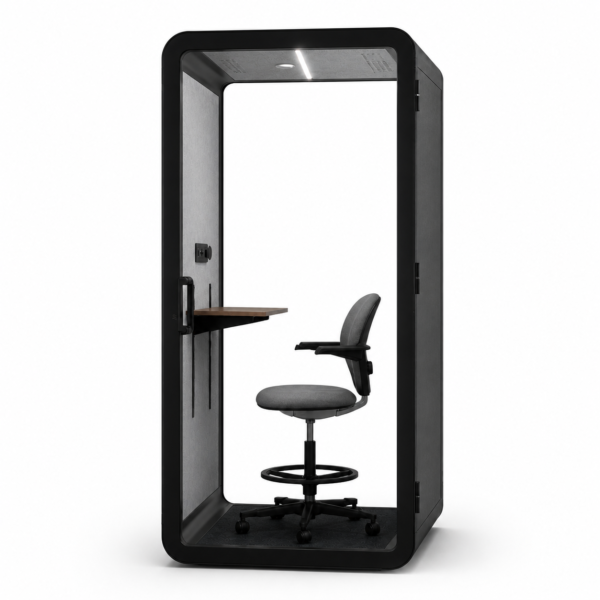
Office phone booth
Best for short, frequent privacy needs where the user usually brings a laptop or phone.
- Private calls and video meetings
- Sales, support, HR, and interviews
- High-turnover individual use

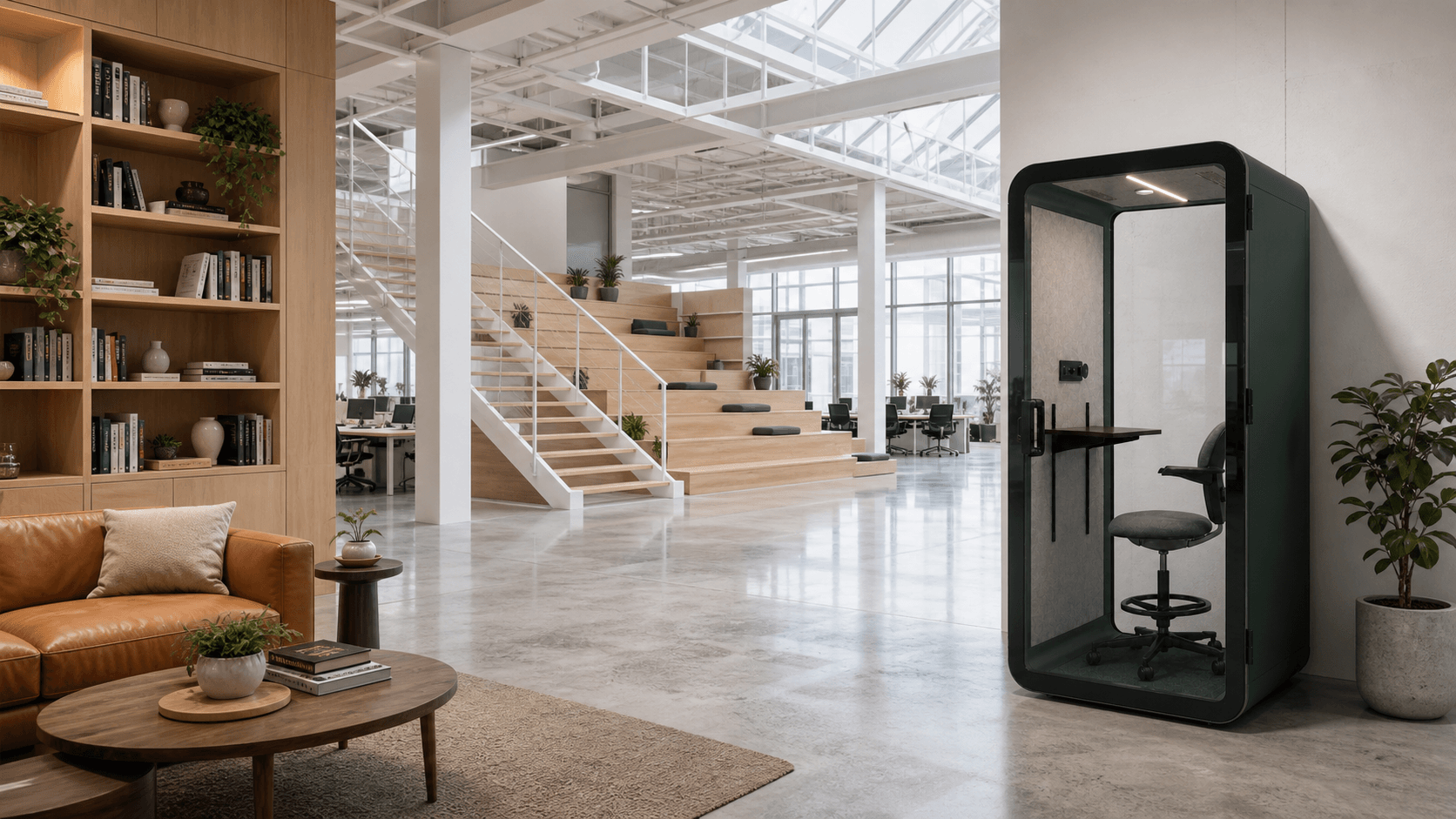
Office pod selection guide
Choose the right pod by work behavior, capacity, placement, comfort, and project requirements. This guide gives facility and procurement teams a practical path from the first privacy problem to a clearer office pod quote.
Quick answer
An office pod is a modular enclosure for calls, focused work, small meetings, or confidential conversations. The best choice depends on what people need to do inside it, how long they stay, how many users arrive at peak times, and what the building will allow.
Use this page for planning and selection. When you are ready to compare available models or request a project quote, continue to the B&H Ergonomics office pods collection.
1. Pick the format
A phone booth, work pod, and meeting pod are not interchangeable. Use the dominant work behavior and expected session length to narrow the category before comparing finishes or features.
Best for short, frequent privacy needs where the user usually brings a laptop or phone.
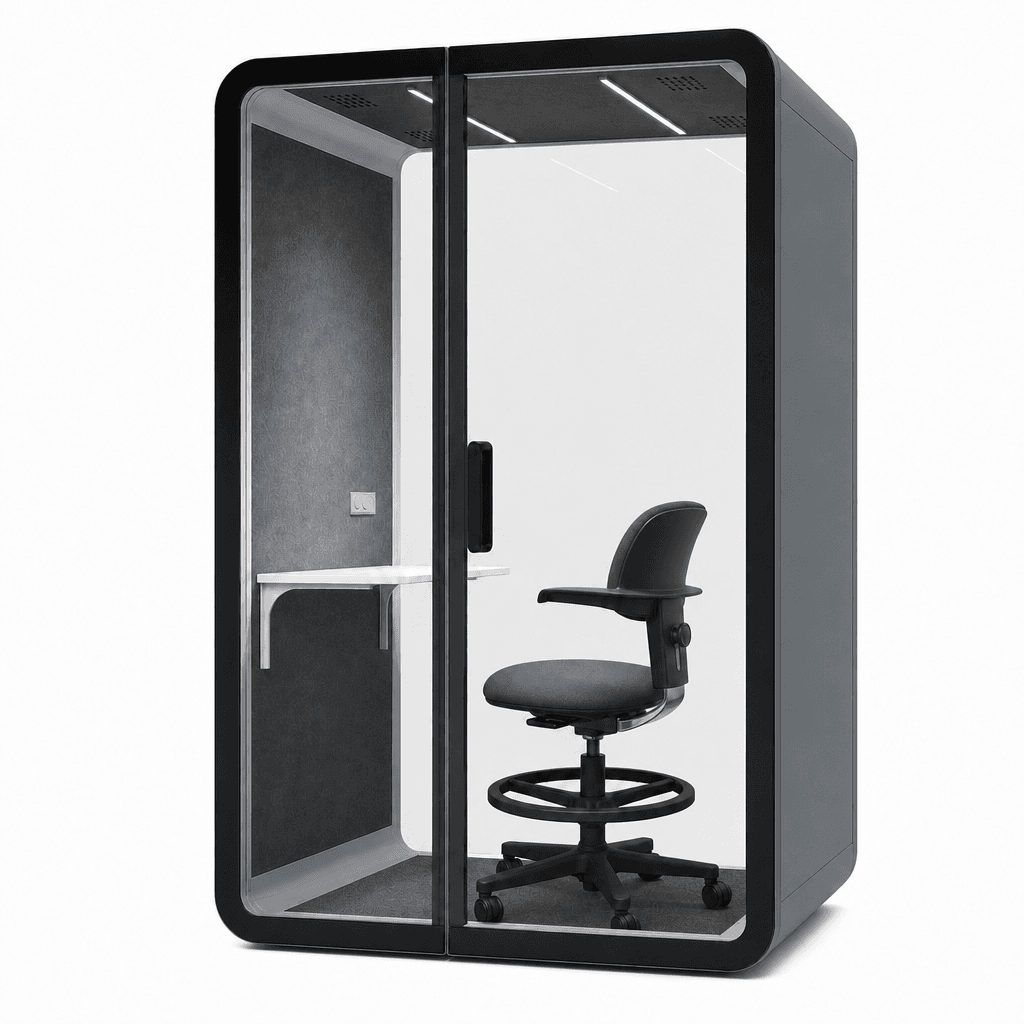
Best for longer solo sessions or one-to-one work that needs a real workstation feel.
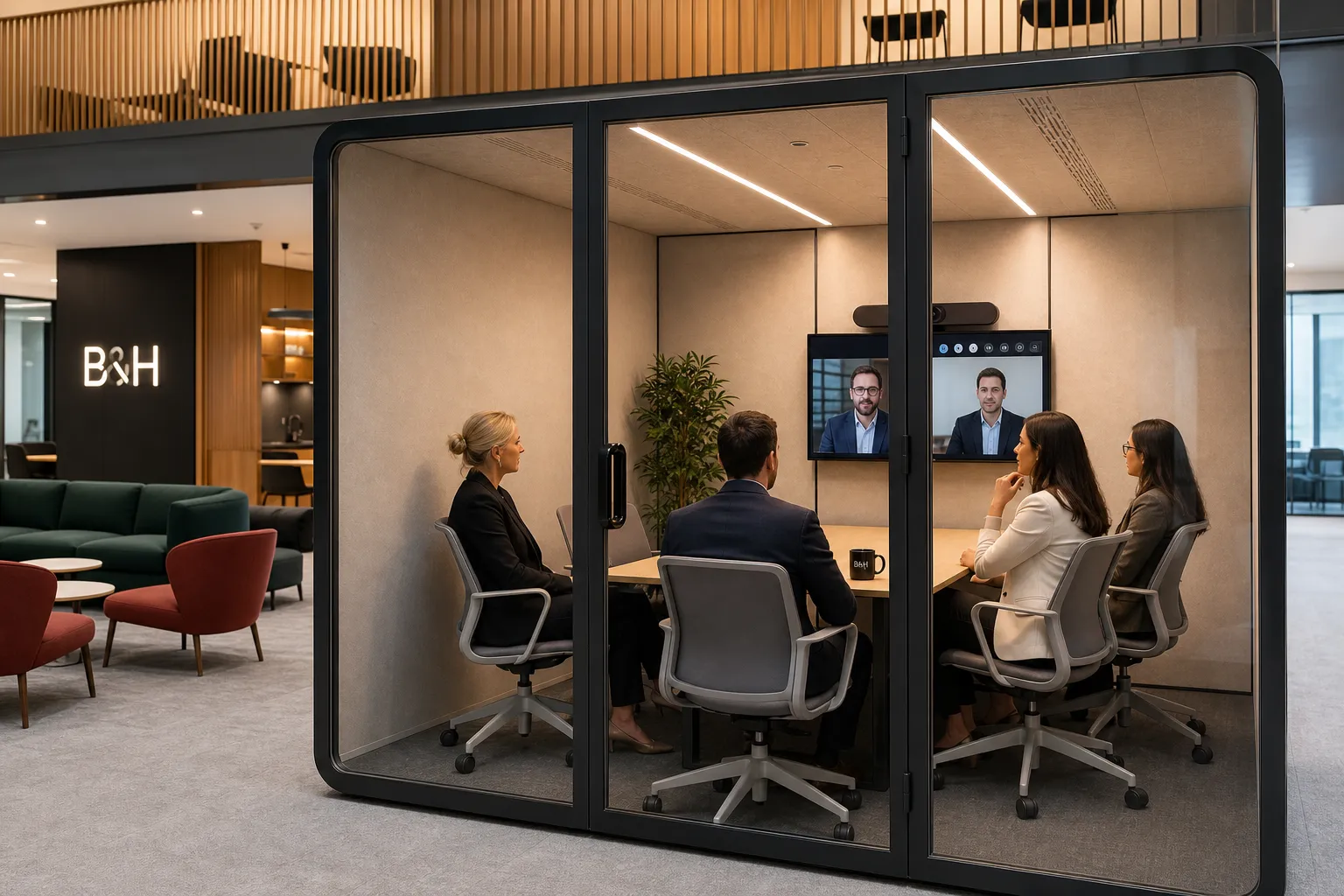
Best for small-group discussions when large meeting rooms are overbooked or oversized.
2. Match the work
The strongest office pod selection starts with a behavior question, not a product photo. Map the main task to the capacity and comfort level it actually requires.
3. Plan the quantity
A 100-person office does not automatically need a fixed pod ratio. Observe when calls, focus sessions, and small meetings overlap, then plan a pilot that can be measured and adjusted.
| Observed signal | Likely issue | Useful first move |
|---|---|---|
| Calls spill into hallways | Private call capacity is too low or too far from the team. | Test one-person booths near the highest-call department. |
| HR or finance talks happen in public areas | Confidential conversations lack a dependable room. | Prioritize a booth or work pod with an agreed privacy policy. |
| Quiet work is hard to find | Open-plan noise is interrupting longer individual tasks. | Test work pods with comfortable seating and controllable airflow. |
| Large meeting rooms hold two people | The room supply is mismatched to the meeting size. | Add small meeting capacity so larger rooms stay available. |
| One pod is always occupied | Demand is higher than available capacity, or use cases are mixed. | Measure peak occupancy, then add capacity or split pod types. |
4. Check the layout
Place the pod near the team that needs it, while protecting circulation, comfort, and the practical route from delivery point to final position.
Phone booths can sit closer to high-call teams. Work pods need a calmer zone where users can stay longer. Meeting pods need enough approach and circulation space for groups, screens, and bags.
For healthcare, education, public buildings, and enterprise projects, treat the layout as a coordination item with the building owner or qualified local professional.
5. Check daily comfort
A pod that looks useful but feels hot, dim, noisy, or cramped will not become dependable workplace infrastructure. Review the inside as carefully as the outside.
| Area | What to confirm | Why it affects adoption |
|---|---|---|
| Ventilation | Airflow path, fan noise, inlet and outlet positions, and service access. | Stale air or a loud fan reduces the value of an enclosed workspace. |
| Lighting | Useful brightness, face lighting for video calls, and control options. | Poor lighting makes longer work and video calls less comfortable. |
| Power | Outlet locations, USB charging, and device placement. | Users should not have to leave the pod to charge or connect equipment. |
| Ergonomics | Interior width, desk depth, seat movement, screen distance, and posture. | Longer sessions need a real working position rather than a narrow call stance. |
6. Read acoustic claims carefully
Acoustic performance depends on the complete enclosure, door seals, glass, floor, ventilation paths, installation, and the surrounding room. Ask which test method was used and whether the result applies to the full product.
For standards context, ISO 23351-1:2020 describes a speech level reduction method for furniture ensembles and enclosures. It is useful context, but a lab result should not be treated as a universal promise for every office.
7. Build a comparable quote
A quote is easier to compare when it shows what is included, where delivery ends, and who owns the remaining site work.
Next step
Private calls, longer focus work, and small-group collaboration belong to different product categories. Start with the category that matches the work behavior you observed.
8. Prepare the request
Collect these details before requesting a quote so the recommendation can match the real project.
Questions buyers ask
An office pod creates enclosed privacy inside an existing workplace. Common uses include calls, video meetings, focused individual work, interviews, HR conversations, and small meetings.
There is no universal ratio. Observe peak call, focus, and meeting demand for one to two weeks, separate the demand by department, and use a pilot layout before expanding.
Place it close to the team that will use it most, away from avoidable noise, and with clear power, circulation, door-swing, cleaning, delivery, and building-coordination checks.
No product should be treated as completely soundproof in every environment. Ask for the test method, full-product result, seal design, ventilation design, and installation assumptions. A practical goal is better speech privacy.
Sometimes. Requirements depend on the building, region, electrical configuration, fire-safety expectations, placement, and use case. Confirm project-specific requirements with the building owner or a qualified local professional.
Continue planning

 EN
EN  DE
DE  NL
NL  FR
FR  ES
ES  PL
PL  PT
PT  IT
IT  EN_GB
EN_GB