Quick Answer
The Paramount Surgical Center lactation pod case study shows how one Care-OM lactation pod helped a Twin Falls, Idaho surgical center create a more convenient private pumping space for breastfeeding employees and customers. The pod was placed in a lounge/waiting area and delivered under a door-to-door shipping term that included freight, duties, and unloading service.
Last Updated: June 8, 2026 | Author: William | Review: Richard | Estimated Reading Time: 7 minutes
Project Snapshot
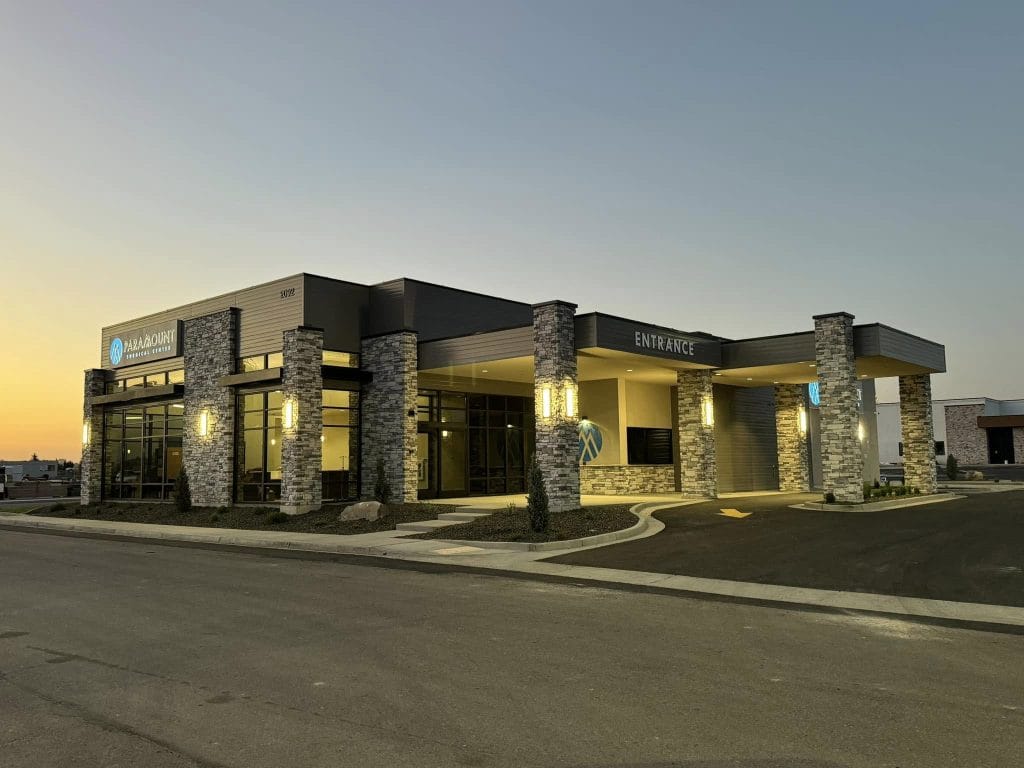
Paramount Surgical Center is an outpatient surgical center in Twin Falls, Idaho. For this project, the facility selected one Care-OM lactation pod from B&H Ergonomics to improve access to a private pumping space inside the building.
| Project Detail | Information |
|---|---|
| Customer | Paramount Surgical Center |
| Location | Twin Falls, Idaho, US |
| Product | 1 Care-OM lactation pod |
| Placement | Lounge / waiting area |
| Main user need | A more convenient private space for breastfeeding employees and customers to pump |
| Trading term | Door-to-door shipping to 2092 Dawson Dr., Twin Falls, ID 83301, US |
| Included service scope | Shipping cost, customs duties, and unloading service |
This was not a large renovation project. It was a focused facility upgrade: one dedicated pod, placed where people could reach it without turning pumping into a stressful search for an available room.
The Problem: Pumping Was Too Inconvenient
In many healthcare facilities, the issue is not whether people care about nursing mothers. The issue is space.
A surgical center may have waiting areas, prep spaces, recovery areas, administrative offices, and staff rooms, but that does not mean there is always a suitable private space available at the moment an employee or customer needs to pump. A room might be occupied. A break room might not feel private enough. A restroom is not an appropriate pumping solution.
For Paramount Surgical Center, the pain point was practical: breastfeeding employees and customers needed a more convenient place to express milk when they were inside the facility.
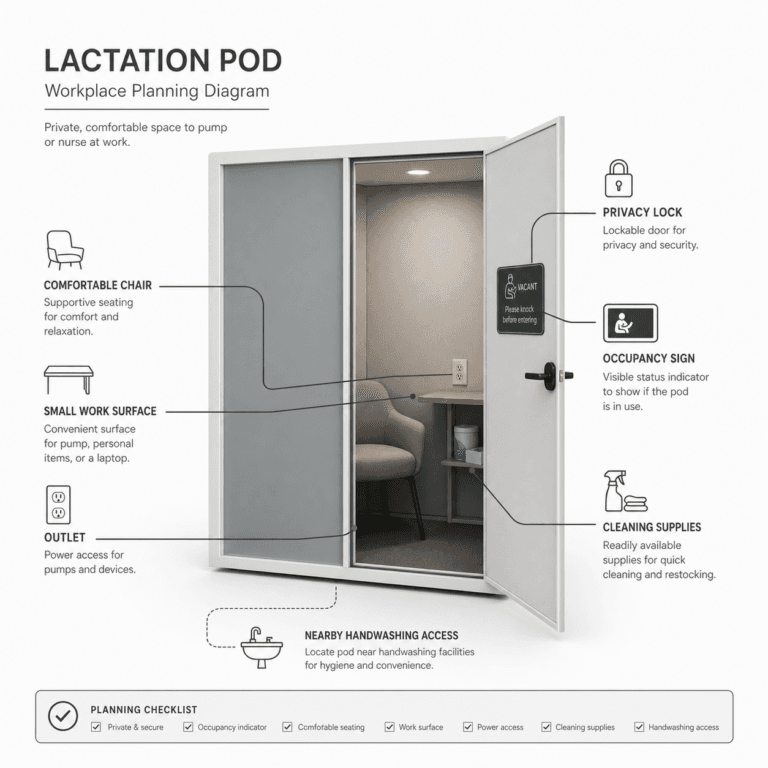
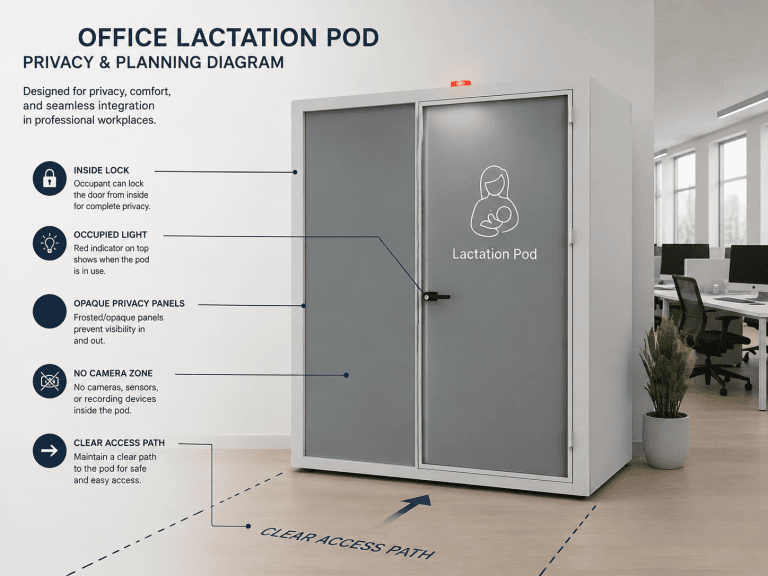
That made the project a good fit for a Care-OM lactation pod. Instead of asking the building to permanently give up an enclosed room, the pod created a dedicated use space inside an existing lounge/waiting area.
Why the Care-OM Lactation Pod Fit This Use Case
A surgical center needs a lactation space that feels intentional, clean, and easy to access. I would not treat this as a decorative amenity. In a healthcare setting, the better question is: can the space be placed where users can actually find it, use it, and return to their day with less friction?
For this project, the Care-OM lactation pod supported four practical goals:
| Facility Need | How the Pod Helped |
|---|---|
| Privacy | Created a dedicated enclosed space for pumping instead of relying on an improvised room |
| Convenience | Placement in a lounge/waiting area made the pod easier to access |
| Minimal disruption | The project did not depend on building a permanent lactation room from scratch |
| Procurement simplicity | Door-to-door shipping included freight, customs duties, and unloading service |
The main lesson is simple: a lactation space does not have to be hidden away to be useful. It has to be private enough for the user, placed thoughtfully, and easy for the facility team to manage.
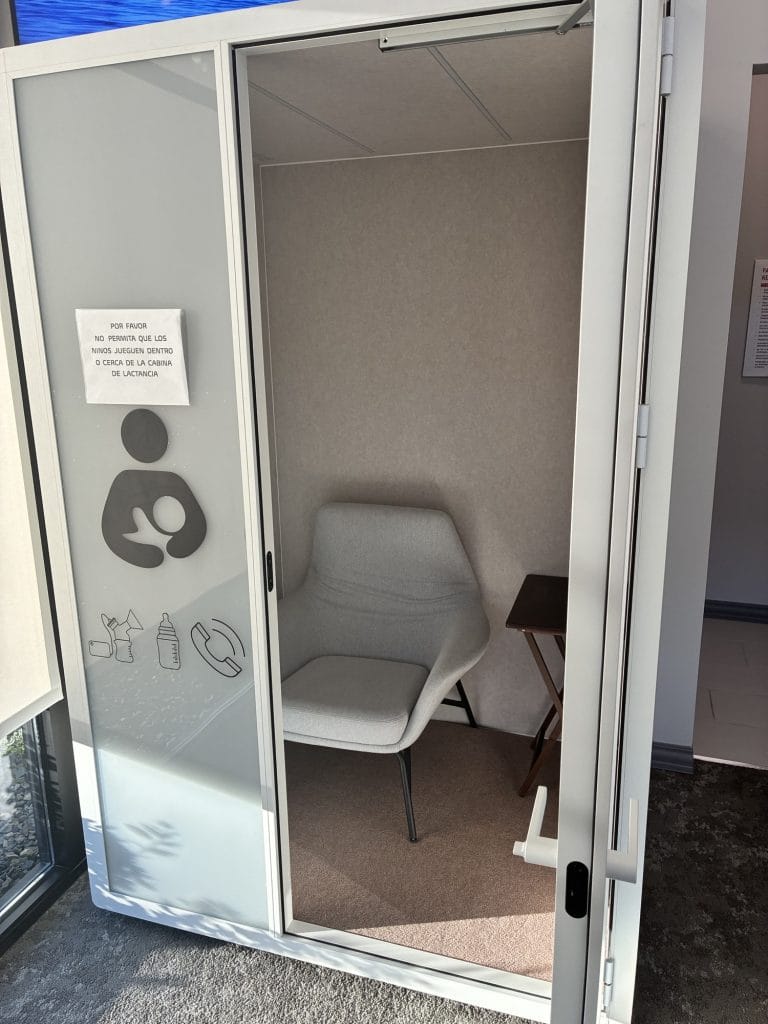
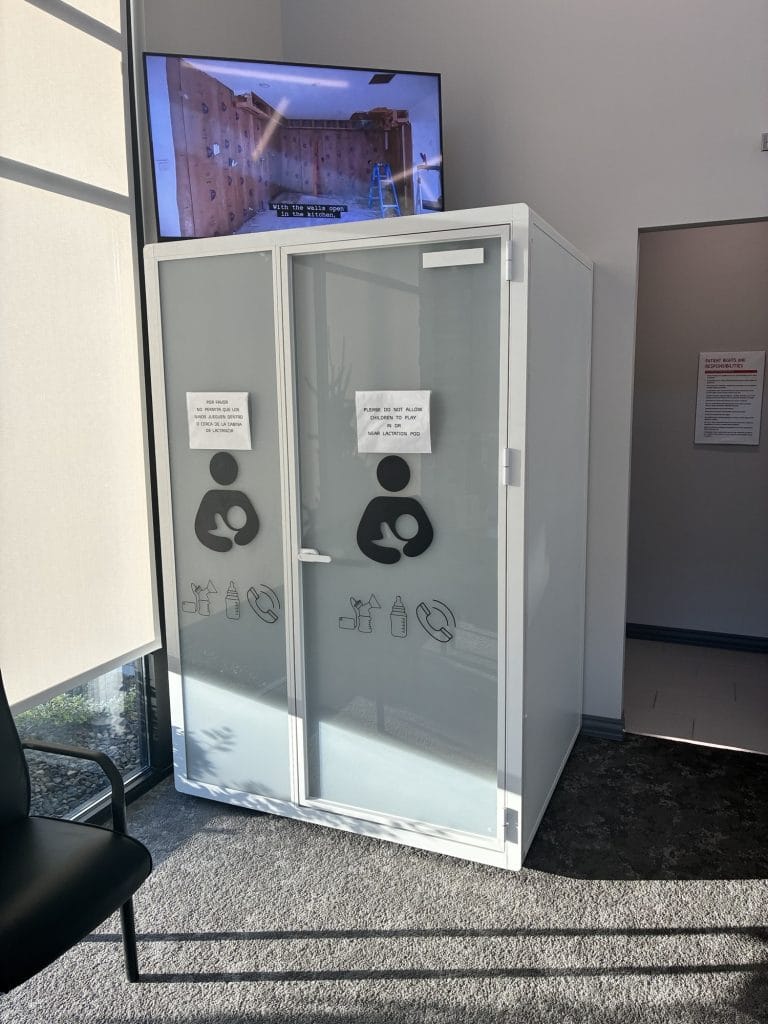
Placement Strategy: Lounge / Waiting Area
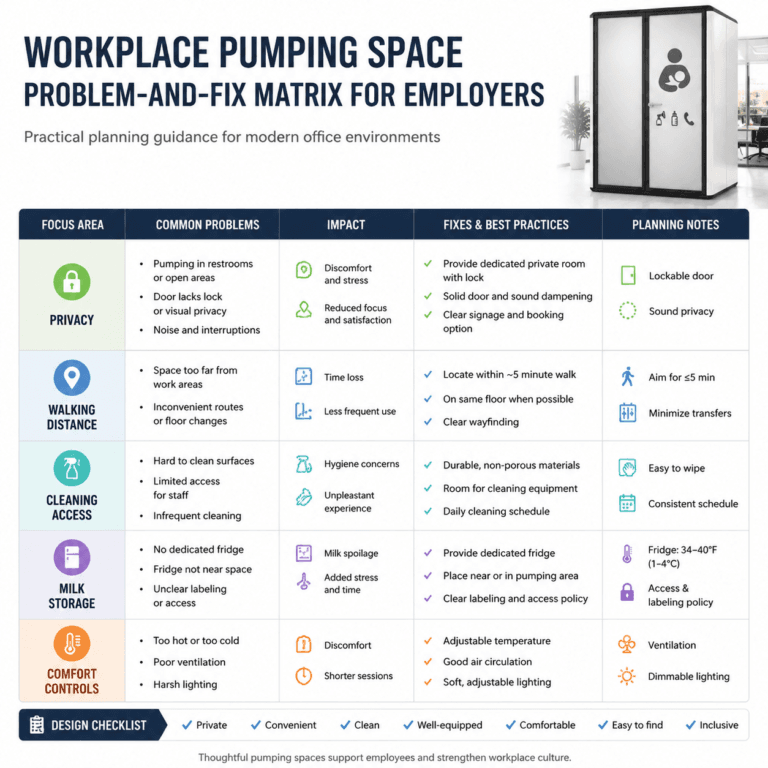
The lounge/waiting area placement is important. A lactation pod can fail as a user experience if it is technically available but practically hard to reach.
For a surgical center, an effective placement should usually balance three things:
- close enough that employees or customers do not have to walk far;
- discreet enough that the user does not feel exposed while entering or leaving;
- separate enough from high-traffic movement so the pod does not block circulation.
A lounge or waiting area can work well when the pod is positioned with clear access, sensible sightlines, and enough surrounding space for safe movement. It also allows the facility to support both staff and customer needs without converting a clinical room or administrative office into a shared pumping space.
The U.S. Department of Labor explains that many nursing workers need a place to pump that is not a bathroom, is shielded from view, and is free from intrusion in its Fact Sheet #73A. For buyers, that guidance is a useful starting point, but each facility should still review its own obligations with HR, legal, and compliance advisors.
Delivery Scope: Why Door-to-Door Terms Mattered
For international or cross-border procurement, the pod itself is only part of the buying decision. The delivery scope can determine whether the project feels smooth or messy.
For Paramount Surgical Center, the trading term was door-to-door shipping to 2092 Dawson Dr., Twin Falls, ID 83301, US. The included scope covered:
- shipping cost;
- customs duties;
- delivery to the destination;
- unloading service.
That matters because many facility buyers do not want a procurement process that stops at the port, the warehouse, or the curb. When freight, duties, and unloading are included, the purchasing team has a clearer view of the delivered project cost and fewer handoff points to manage.
What Other Surgical Centers Can Learn
This project is useful because it is small, specific, and repeatable. A surgical center does not always need a major construction project to improve lactation support.
| Buyer Question | Practical Takeaway |
|---|---|
| Do we need to build a permanent room? | Not always. A pod may be a practical option when the facility has usable space but limited enclosed rooms. |
| Where should the pod go? | Start with an accessible lounge, waiting area, staff area, or nearby low-traffic zone. |
| Who can use it? | Paramount Surgical Center planned around both employees and customers needing a private pumping space. |
| What should procurement confirm? | Product size, placement clearance, delivery scope, unloading responsibility, and final destination terms. |
| What should compliance teams review? | Federal, state, local, and workplace-specific lactation accommodation obligations. |
If a facility is comparing options, lactation pod options for healthcare facilities can be reviewed alongside room conversion, wellness room scheduling, and permanent build-out plans.
Planning Checklist for Healthcare Buyers
Before ordering a lactation pod for a surgical center, clinic, or outpatient care facility, I usually look at the project in two layers: user experience and delivery execution.
Use this checklist before final purchase approval:
- Confirm who the pod is intended to support: employees, patients, visitors, or all three.
- Choose a placement area that is accessible but not exposed.
- Measure the intended location, surrounding clearance, and path of delivery.
- Confirm whether the pod will sit near power access.
- Review cleaning expectations with the facility team.
- Confirm whether delivery includes customs duties, final-mile shipping, and unloading.
- Ask whether the supplier can provide product dimensions, packing details, and delivery coordination.
- Review workplace lactation obligations with internal HR, legal, or compliance advisors.
For more general planning context, B&H Ergonomics also maintains a workplace lactation room requirements guide.
FAQ
Can a lactation pod be placed in a waiting room or lounge area?
Yes, a lactation pod can be placed in a waiting room or lounge area when the location has enough space, a sensible circulation path, and appropriate privacy planning. The key is to make the pod accessible without placing the user in an exposed or disruptive position.
Is one lactation pod enough for a small surgical center?
One pod may be enough for a smaller facility with limited simultaneous demand, but the right number depends on staff size, customer use, schedules, and how often the space is needed. Facilities with higher demand may need more than one location or a scheduling process.
Why not just use an empty room?
An empty room may work if it is private, available when needed, functional for pumping, and not a bathroom. The challenge is that rooms often have competing uses. A dedicated pod helps reduce scheduling conflict and makes the lactation space more visible as a planned facility resource.
What should buyers confirm before ordering a lactation pod?
Buyers should confirm product dimensions, intended placement, power access, delivery path, unloading responsibility, shipping terms, duties, cleaning expectations, and any internal facility rules. For healthcare environments, it is also wise to involve facilities, HR, procurement, and compliance stakeholders early.
Can shipping, duties, and unloading be included in one door-to-door term?
Yes. In this Paramount Surgical Center project, the trading term included door-to-door shipping to Twin Falls, Idaho, with shipping cost, customs duties, and unloading service included. Buyers should always confirm exactly what is included in the written quotation before placing an order.