Quick Answer
Focus spaces are dedicated office areas that protect concentration, privacy, and call quality inside a busy workplace. In a hybrid office, they should include a mix of quiet zones, call booths, enclosed solo spaces, and small private meeting areas so employees can move between collaboration and deep work without leaving the office.
Last Updated: June 29, 2026 | Author: Richard | Estimated Reading Time: 8 minutes
Why Focus Spaces Matter Now
Open offices were built to make collaboration easier. The problem is that most workdays are not only collaboration.
Employees still need to write, code, analyze, review numbers, handle private conversations, and join video calls. If the office cannot support those tasks, people learn a simple lesson: go home when the work matters.
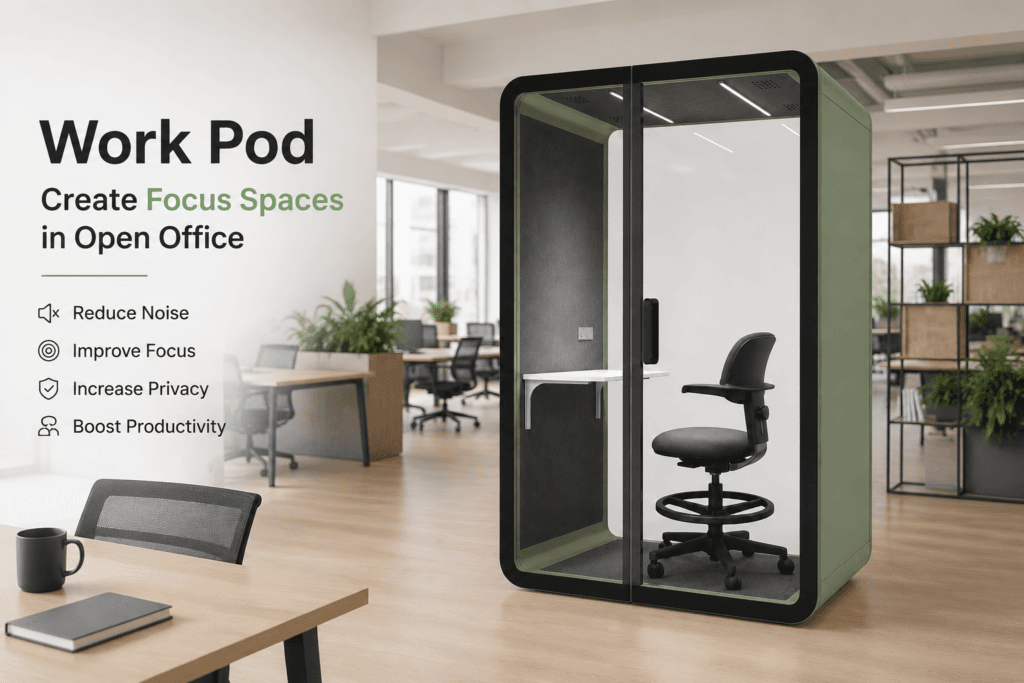
That is where focus spaces come in. A good focus space plan gives people somewhere to work without nearby chatter, typing noise, visual movement, or unexpected interruptions. For HR, finance, management, and sales teams, it also gives them a place to speak without turning sensitive conversations into background noise for the whole floor.
The goal is not to make the office silent. The goal is to make the office usable for more than one kind of work.
What Counts as a Focus Space?
A focus space is any planned office setting designed to reduce interruption and support concentration or privacy.
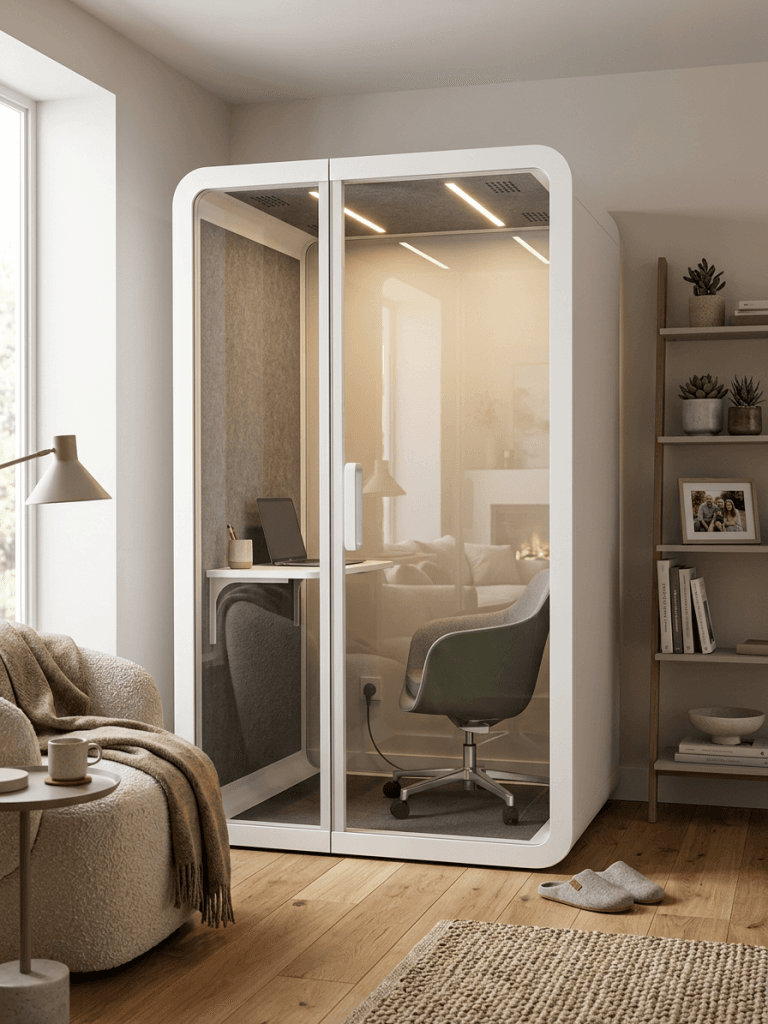
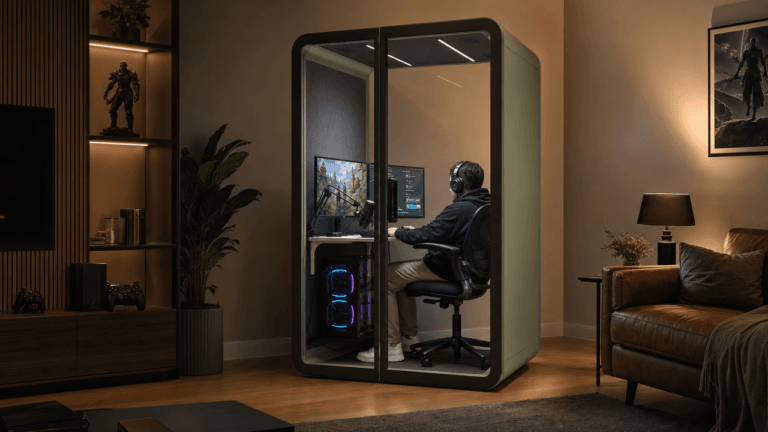
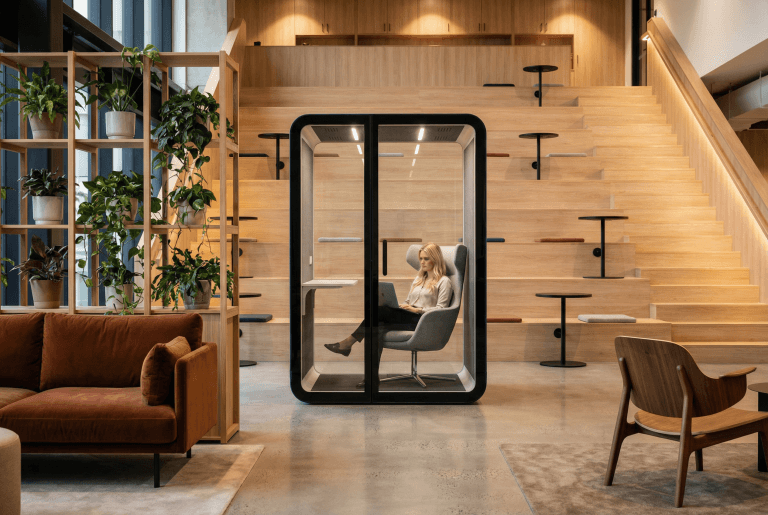
That can include a quiet desk zone, a small room, a phone booth, a solo enclosed pod, a two-person private work area, or a compact meeting enclosure. The right choice depends on the task.
| Focus Space Type | Best For | When It Works |
|---|---|---|
| Quiet zone | Reading, writing, light focus | The team respects quiet rules and privacy is not required |
| Phone booth | Short calls and video meetings | The main problem is speech noise and call background |
| Enclosed solo space | Deep work, confidential solo work, long laptop sessions | Employees need stronger acoustic and visual separation |
| Two-person private space | HR talks, manager check-ins, interviews, finance reviews | The task needs privacy but not a full meeting room |
| Small meeting enclosure | Hybrid meetings, leadership discussions, client calls | Several people need privacy and better meeting acoustics |
For individual deep work or compact private conversations, B&H Ergonomics focus pods are the most relevant commercial category. Short calls are better matched to office phone booths, while enclosed collaboration usually needs meeting pods.
The Four Problems Focus Spaces Should Solve
1. Open-Office Distraction
The most common complaint is simple: people cannot think.
A nearby conversation, a keyboard rhythm, someone walking past, or a casual question can break the mental thread. Research on auditory distraction in open-plan offices also shows why intelligible speech can be especially disruptive in shared work environments.
A focus space gives employees a clear place to do work that needs continuity.
2. Confidentiality and Privacy
Some office work should not happen in public.
HR conversations, finance reviews, compensation discussions, management check-ins, client negotiations, and leadership calls all need privacy. A focus space helps protect both the speaker and the people nearby who should not overhear sensitive content.
Use precise language here. A pod or booth may improve speech privacy and reduce distraction, but do not describe it as completely soundproof unless the claim is backed by the right test method and evidence. Acoustic results vary by test method, installation, site conditions, and measurement setup.
3. Video Meetings and High-Frequency Calls
Hybrid work turned the office into a broadcast environment. Employees now speak to remote colleagues, customers, vendors, and candidates throughout the day.
A good call-focused space should support:
- a quiet background;
- comfortable ventilation;
- usable lighting;
- power access;
- a professional camera background;
- enough space for laptop work;
- a booking policy that prevents all-day squatting.
4. Flexible Space Planning
Permanent rooms can solve privacy, but they reduce flexibility. If the team moves, grows, downsizes, or changes seating plans, built rooms can become expensive constraints.
Modular focus spaces are often easier to relocate or reconfigure. UL Solutions describes modular office rooms as a way to restore privacy in open workplaces, which is relevant when hybrid teams need movable enclosed space.
How Many Focus Spaces Does an Office Need?
A practical starting point is one focus space for every 15 employees. I would use that as a baseline, not a fixed rule.
Different teams need different ratios.
| Team Type | Focus Space Planning Rule |
|---|---|
| General office team | Start around 1:15, then adjust by actual usage |
| Software, engineering, design, analysis, writing | Add more deep-work spaces because interruption recovery is costly |
| Sales, recruiting, customer success | Add more phone booths because call volume is the pressure point |
| HR, finance, management | Prioritize privacy spaces over simple quiet zones |
| Hybrid leadership teams | Mix private call spaces with small meeting enclosures |
The ratio should follow work type. A team of programmers may need more protected focus capacity than a general admin team. A sales team may need fewer deep-work pods but more call booths. A finance team may need privacy more than seating quantity.
If usable floor area is still uncertain, the office space calculator can estimate total workspace requirements before you reserve space for quiet zones and enclosed pods.
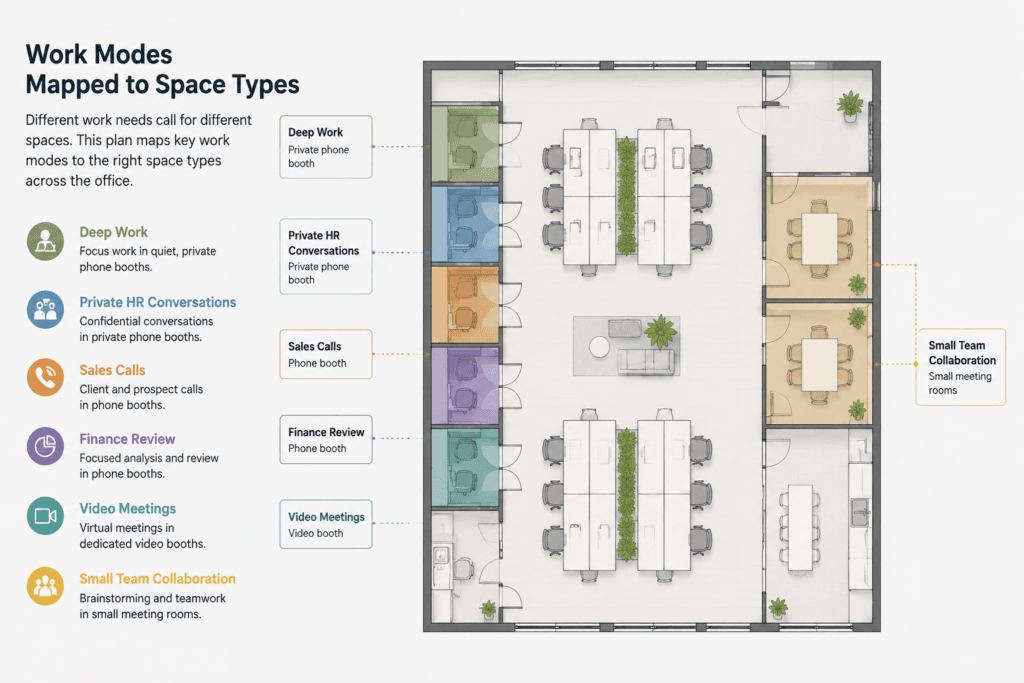
A Better Planning Method: Map Work Modes First
Do not start by asking, “How many pods should we buy?”
Start with the work.
| Work Mode | Main Risk | Better Space Choice |
|---|---|---|
| Coding, writing, analysis | Interruption and visual distraction | Deep focus space or work pod |
| HR or finance conversation | Confidentiality | Private pod or small enclosed room |
| Sales call | Background noise and call spillover | Phone booth |
| Executive video meeting | Privacy, background, call quality | Private enclosed space |
| Team discussion | Meeting room shortage | Meeting pod |
| Quiet admin work | Light noise | Quiet zone |
This prevents overbuying one product type and under-solving the real workplace problem.
Where to Place Focus Spaces
Placement is just as important as quantity.
A focus space near the wrong area becomes hard to use. Put a deep-work space beside the kitchen, and employees will avoid it. Hide a call booth too far from the team, and people will keep taking calls at their desks.
Use these placement rules:
- Put call spaces near teams with frequent scheduled meetings.
- Put deep-work spaces close to focus-heavy teams, but away from noisy collaboration zones.
- Put HR and finance privacy spaces where confidential users can access them without feeling exposed.
- Avoid printers, pantry areas, reception traffic, and main walkways.
- Leave enough clearance for doors, maintenance, cleaning, and circulation.
- Confirm power, ventilation, and data needs before final placement.
- Make the spaces visible enough that employees know they are allowed to use them.
For larger planning across booths, work pods, and meeting pods, compare B&H Ergonomics office pods by use case before choosing a final mix.
When a Quiet Zone Is Enough
A quiet zone can work when the issue is light distraction and the team already respects shared rules.
Use a quiet zone when:
- people need short focus blocks;
- confidential speech is not involved;
- employees are not taking calls;
- visual distraction is manageable;
- the office culture supports quiet behavior;
- acoustic panels, layout, and policy can solve most of the problem.
A quiet zone is usually not enough when people need private speech, long video calls, sensitive conversations, or strong visual separation.
When an Enclosed Pod Makes More Sense
An enclosed pod becomes the better option when the work needs a stronger boundary.
Choose an enclosed focus space when:
- interruptions are reducing high-value work;
- confidential conversations happen regularly;
- employees need a consistent video meeting background;
- call noise is spreading across the open office;
- teams need movable space instead of permanent construction;
- people need a clear “do not disturb” signal.
A pod does not replace good workplace policy. It makes the policy easier to follow because the boundary is visible.
Why Modular Focus Spaces Can Beat New Construction
A permanent room may be right for stable offices with long-term floor plans. But many hybrid offices change too quickly for every privacy need to become a construction project.
| Factor | Built Room | Modular Focus Space |
|---|---|---|
| Speed | Slower planning and construction | Faster deployment in many projects |
| Disruption | Contractors, dust, noise, downtime | Lower disruption in typical office updates |
| Flexibility | Fixed to one location | Often movable or reconfigurable |
| Future office changes | Harder to adapt | Easier to relocate when teams move |
| Best use | Permanent high-demand rooms | Flexible hybrid workplace support |
For leased offices, growing teams, and companies that frequently adjust seating, modularity is not a minor feature. It is part of the business case.
Focus Space Procurement Checklist
Before requesting a quote, collect these details:
- peak daily headcount, not just total employee count;
- teams with the strongest focus, call, or privacy demand;
- expected use: calls, deep work, HR, finance, management, interviews, or meetings;
- preferred quantity and approximate ratio;
- floor plan or placement sketch;
- power and data availability;
- required occupancy: one person, two people, or small group;
- typical session length;
- ventilation and lighting expectations;
- whether the space may need to move later;
- delivery address and installation constraints.
How to Keep Focus Spaces From Becoming Private Offices
One common worry is that employees will camp in the best spaces all day.
That is a policy problem, not a reason to avoid focus spaces.
Set simple rules:
- Phone booths are for short calls.
- Work pods are for deep work, private laptop work, and compact 1:1 conversations.
- Meeting pods are for small group work.
- Quiet zones are not for calls.
- Long sessions should be bookable, but not unlimited.
- Usage should be reviewed after 30, 60, and 90 days.
If every pod is booked all day, demand is real. If people avoid them, check location, comfort, booking friction, or whether the mix matches actual work patterns.
A Simple Focus Space Plan for a 60-Person Office
For a balanced 60-person hybrid office, I would not start with one product type. I would start with a mixed plan.
| Need | Example Starting Mix |
|---|---|
| Frequent calls | 3-4 phone booths |
| Deep individual work | 3-5 work pods, more for engineering or analysis teams |
| Confidential 1:1 conversations | 1-2 two-person private spaces |
| Small hybrid meetings | 1-2 meeting pods |
| Light focus | Quiet zone with clear behavior rules |
This is only a starting model. The better plan comes from real usage data after launch.
The Best Focus Spaces Support the Whole Workday
The office has to compete with home for focus, but it also has something home does not: people, culture, tools, and fast collaboration.
A strong focus space plan lets employees use both sides of the office. They can join a team discussion, step away for protected work, take a private call, and return to collaboration without losing the day to noise.
That is the real value. Focus spaces do not make the office quieter for the sake of quiet. They make the office more usable.
For planning help, send B&H Ergonomics your team size, floor plan, primary use cases, privacy needs, and target quantity. The team can help compare phone booths, work pods, meeting pods, and broader office pod options for the way your workplace actually operates.
FAQ
What are focus spaces in the office?
Focus spaces are dedicated office areas designed for concentration, private calls, confidential conversations, or low-interruption work. They can include quiet zones, phone booths, work pods, small rooms, and meeting pods.
Are focus spaces the same as work pods?
No. Work pods are one type of focus space. Focus spaces are the broader workplace category. A work pod is usually used for longer solo work, private laptop tasks, or compact 1:1 conversations.
How many focus spaces should an office have?
A practical starting point is about one focus space for every 15 employees, then adjust by team type. Deep-work teams often need more focus capacity, while call-heavy teams may need more phone booths.
Where should focus spaces be located?
Place them near the teams that need them, but away from kitchens, printers, main walkways, and loud collaboration areas. Confidential spaces should feel accessible without exposing the user.
Should we build rooms or use modular focus spaces?
Use built rooms when the need is permanent and the floor plan is stable. Use modular focus spaces when the office needs faster deployment, lower disruption, future relocation, or flexibility as teams change.